

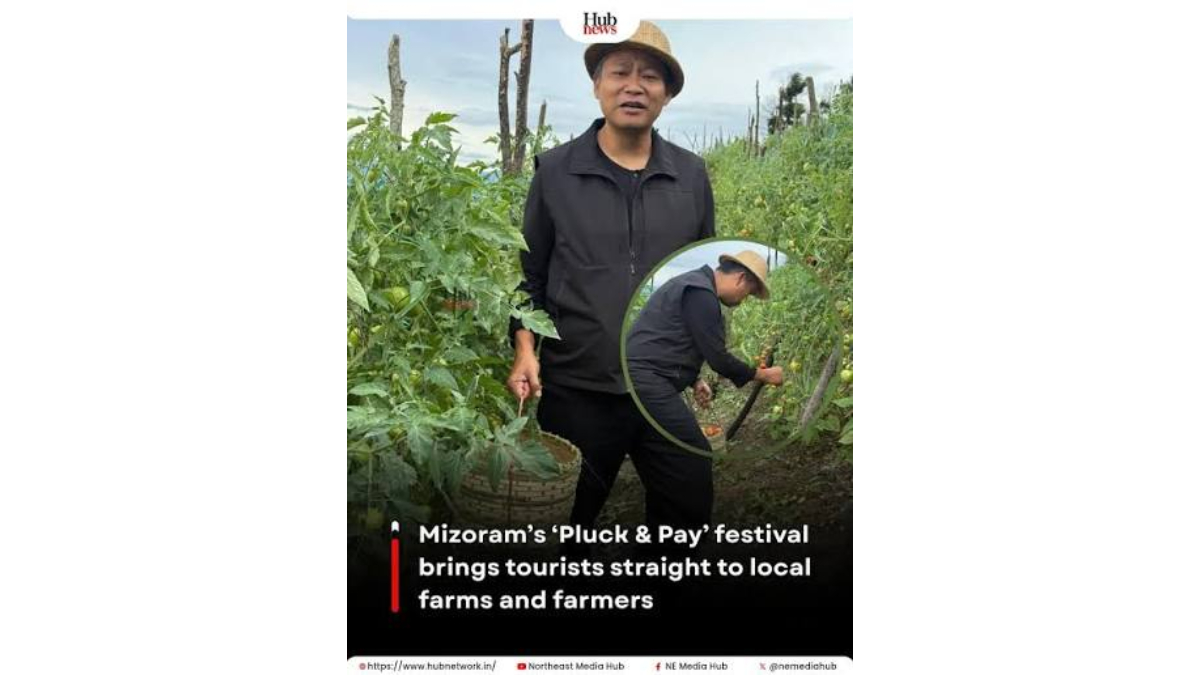
Mizoram tourism has entered a new phase with the launch of the state’s first ‘Pluck & Pay’ Festival in Tualte and Chawngtlai villages of Khawzawl district. The three-day event, being held from September 23 to 25, brings visitors directly to farms, where they can harvest fruits and vegetables and pay for what they pick. The initiative aims to connect tourism with farming, local businesses and rural livelihoods.
Mizoram tourism takes farming to the visitor experience
The festival is jointly organised by the Mizoram Tourism Department and the Office of the Deputy Commissioner, Khawzawl. Under the ‘Pluck & Pay’ model, tourists can visit participating farms, select fresh produce and harvest it themselves before paying for what they collect.
The concept is designed to offer more than conventional sightseeing. It gives visitors an opportunity to experience village life, agriculture and local food while creating an additional market for farming households.
Tourism Minister Lalnghinglova Hmar has said the initiative is part of the government’s wider focus on community-based tourism. He stressed that tourism income should reach the communities that host visitors instead of remaining concentrated around established tourist centres.
Direct benefits for rural communities
A key feature of the festival is the direct connection between visitors and local producers. Instead of simply buying packaged products, tourists can experience the process of entering a farm, picking produce and purchasing it from the source.
The economic impact could also extend beyond agriculture. More visitors to Tualte and Chawngtlai could generate demand for local food, homestays, transport services, guides, handicrafts and cultural performances.
This approach could help villages capture a larger share of visitor spending. It also provides local entrepreneurs with opportunities to showcase products and services linked to the tourism experience.
Festival combines farms, food and culture
The programme goes beyond agricultural activities. Traditional Mizo music and dance, local cuisine, handicrafts and traditional recreational games are among the attractions planned for visitors. Historical and tourist sites in the surrounding areas are also being incorporated into the experience.
Earlier preparations for the event included plans for stalls selling vegetables, fruits and other local products. Cultural and recreational activities were also planned in both villages, with concerts scheduled for the opening and closing evenings.
The festival will open in Tualte and conclude in Chawngtlai, giving both villages a role in the three-day programme. Organisers have also planned publicity aimed at attracting visitors from within Mizoram and outside the state.
A new model for Mizoram tourism
The event comes as Mizoram seeks to expand its tourism offerings beyond traditional attractions. The state has increasingly promoted community-based tourism and a calendar of festivals across different districts.
The ‘Pluck & Pay’ concept fits that strategy by turning existing agricultural landscapes and village activities into part of the visitor experience. Rather than relying entirely on new infrastructure or major tourist attractions, the model uses resources already available within rural communities.
The initiative could also encourage visitors to spend more time in smaller destinations. Longer stays can create wider economic opportunities for accommodation providers, restaurants, drivers, guides, artisans and farmers.
Tourist arrivals show growing potential
The festival is being launched amid a rise in tourist movement in Mizoram. According to figures cited in the state government’s February 2026 budget-session address, Mizoram recorded 6,79,607 tourist visits between April and December 2025, including 9,606 foreign visitors.
The state has also lined up several events as part of its wider tourism calendar. These include the Anthurium Festival at Reiek, Hnahsin Kût in Champhai, Mizoram Travel Fest in Aizawl, Leitlangpui Music Festival, Winter Festival, Tlaizawng Paradise Festival and the Sakawrhmuituai Sunset Event.
For Mizoram tourism, the challenge is now to convert growing visitor numbers into sustained income for communities across the state. The Khawzawl festival offers one way to do that by placing farmers and villages at the centre of the tourism experience.
If the model succeeds, Tualte and Chawngtlai could provide a template for combining agriculture, culture and tourism while giving rural communities a greater role in Mizoram’s expanding visitor economy.