

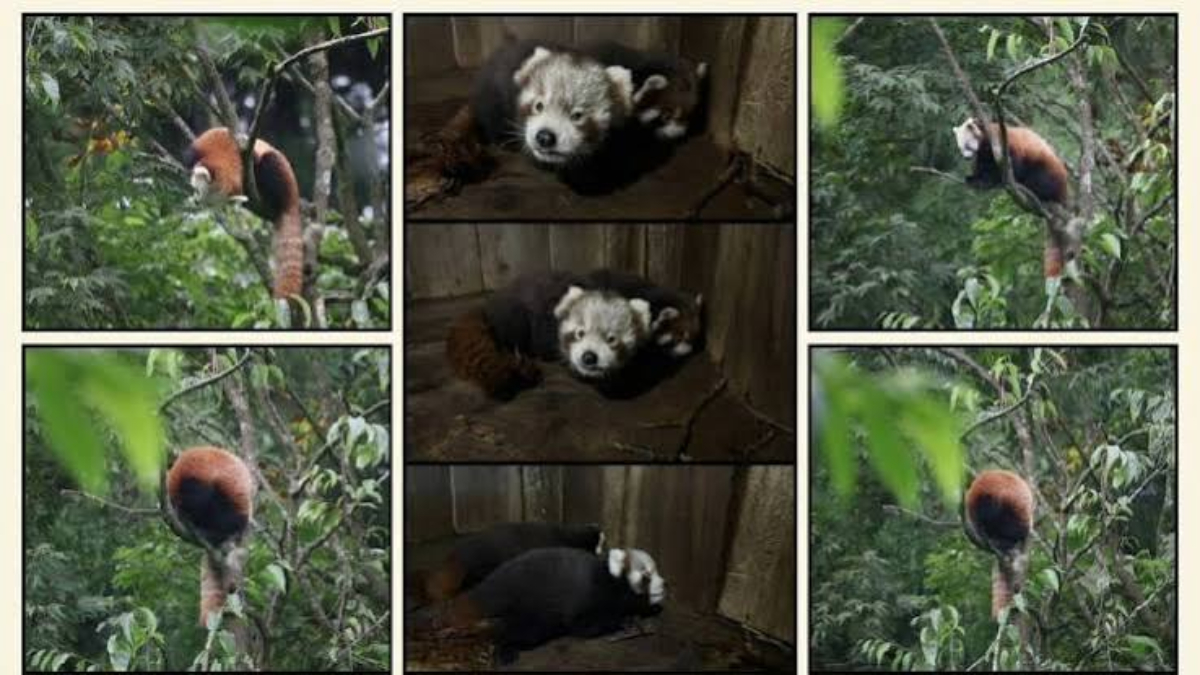
Red panda cubs Nuba and Numa are emerging as a powerful sign of hope for wildlife conservation in the Himalayas after a difficult period for the species at Sikkim’s Himalayan Zoological Park. Born after a seven-year gap in successful births, the brother-sister pair are now growing well, climbing trees and learning natural behaviours under the care of their mother. Their progress has renewed attention on efforts to protect one of the Himalayas’ most threatened mammals.
A rare birth after seven years
Nuba and Numa were born on June 15, 2025, at the Himalayan Zoological Park in Bulbuley, near Gangtok. They are the first litter of their parents, Lucky (II) and Mirak. Their arrival marked an important milestone for the park’s Red Panda Conservation Breeding Programme, which had gone seven years without a successful birth.
The breeding programme, launched in 1997, has faced serious setbacks, including two outbreaks of canine distemper that severely affected the captive red panda population. The latest birth therefore represents more than an addition to the zoo’s population. It is a sign that sustained conservation and veterinary efforts can help rebuild a vulnerable captive population.
Red panda cubs learn vital natural skills
The latest updates on the red panda cubs show that both animals are developing steadily. They now weigh around 3 to 3.5 kg each and have a good appetite. At around five months, they began climbing trees, an important stage because red pandas spend much of their lives in trees.
Conservation officials have also taken a deliberately hands-off approach to their upbringing. Rather than being hand-reared, Nuba and Numa are being raised by their parents. This allows them to learn behaviours such as climbing, exploring and foraging naturally.
The approach is important for conservation breeding because animals need more than good health to retain behaviours that may be useful in natural environments. The cubs have also integrated with the wider red panda group at the park, providing further encouragement to officials monitoring their development.
Why the birth matters for Sikkim
Red pandas face continuing threats from habitat loss and fragmentation across their Himalayan range. Their dependence on forested landscapes makes habitat protection an essential part of long-term conservation.
The species has a particularly important place in Sikkim because the red panda is the state animal. The Himalayan Zoological Park, spread across about 205 hectares at an average elevation of 1,780 metres, provides a naturalistic setting for conservation breeding and wildlife research.
The park’s breeding programme also focuses on maintaining genetic diversity. Animals born under the programme are tracked through national and international studbooks, supporting coordinated breeding decisions and reducing the risks associated with inbreeding.
Protecting Nuba and Numa from disease
The survival of the red panda cubs is being closely monitored because of the history of disease outbreaks at the park. Canine distemper is highly contagious and can be fatal, making strict hygiene and veterinary safeguards essential.
For this reason, officials have kept the cubs away from public viewing. Authorities said public access could be considered only when they are confident that adequate sanitary measures are in place. The animals are expected to remain with their mother for more than a year as they continue developing.
Their birth also came during Sikkim’s monsoon season, when heavy rain can create additional challenges for red panda nesting. Dry nesting areas and limited disturbance helped the family through this vulnerable period.
A broader conservation mission
The story of Nuba and Numa goes beyond the Himalayan Zoological Park. Officials are working towards a dedicated Red Panda Conservation Breeding Centre outside the main zoo complex, with plans to link captive breeding with research and support for conservation in natural habitats.
The park’s current priority is to maintain a healthy founder population that can support future breeding strategies. Nuba and Numa will eventually be assessed for their health, development and breeding compatibility as they mature.
The red panda cubs are also available for adoption through the “My Child From Wild” community campaign, which aims to support animal welfare and conservation education. Such initiatives can help connect people with wildlife protection beyond the zoo itself.
For now, Nuba and Numa remain two young animals quietly growing in the forests of Sikkim. Yet their survival carries a much larger message. After disease, breeding setbacks and years without a successful birth, their progress shows that careful conservation can create new possibilities. Their first climbs, steady growth and natural upbringing offer a hopeful chapter for the future of red pandas in the Himalayas.
Nagaland Police Portal Set for Major Upgrade With Online Complaint Tracking