

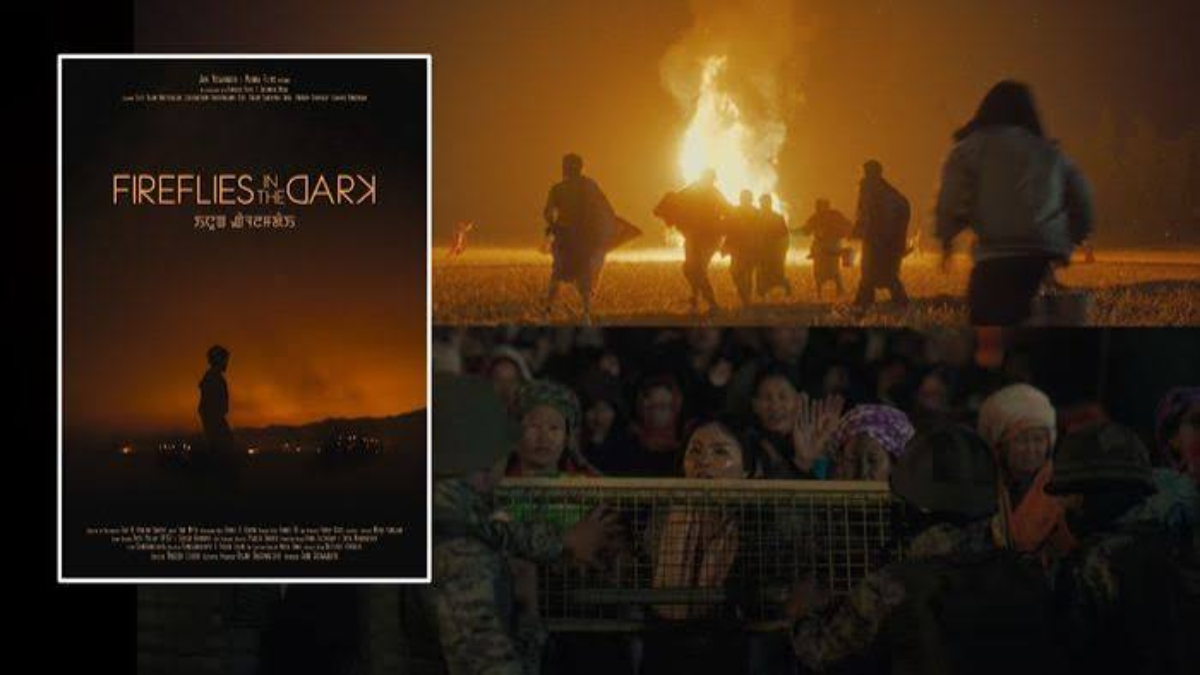
A powerful story of survival, courage and hope has brought Manipur’s painful realities to the international screen. Manipuri film Fireflies in the Dark, also known as Enoong Ngallamdai, made its world premiere at the 2026 Vancouver International Film Festival (VIFF) on October 6. Directed by Yogesh Lohan, the 85-minute feature explores the human cost of the ethnic violence that erupted in Manipur in 2023. Through three interconnected stories, the film highlights the struggles of ordinary people caught in conflict and their determination to survive despite devastating circumstances.
Manipuri Film Fireflies in the Dark Explores the Human Cost of Conflict
The film was screened in the Panorama Cinemas of Asia section of the Vancouver International Film Festival. Its narrative focuses on survival, displacement and the resilience of people whose lives have been disrupted by violence.
Rather than presenting conflict through large-scale action or dramatic spectacle, the film examines its consequences through intimate human experiences. It portrays people confronting fear, separation and uncertainty while trying to protect their loved ones and preserve their humanity.
According to the festival’s official description, the film uses fragmented, non-linear storytelling and intimate handheld cinematography to capture the experiences of people living on the margins of the crisis.
The approach allows the characters’ personal struggles to remain at the centre of the narrative, offering international audiences a closer understanding of the consequences of prolonged ethnic violence in Northeast India.
Three Interwoven Stories Reveal Hope Amid Violence
The film follows three distinct but connected narratives that illustrate different dimensions of the conflict.
The first centres on a pregnant woman struggling to give birth while gunfire surrounds her. Her situation captures the danger faced by civilians and the uncertainty of bringing new life into a place affected by violence.
The second follows a young boy searching for his mother. Accompanied by a displaced stray calf, he navigates a world marked by separation and insecurity. Their journey highlights the vulnerability of children and animals caught in the upheaval.
The third story focuses on a café owner who risks her own safety to shelter people fleeing the violence. Her actions demonstrate how ordinary individuals can offer protection and solidarity when communities face extraordinary challenges.
Together, these stories explore loss and displacement without reducing the people affected to symbols of suffering. The film instead draws attention to their choices, relationships and determination to continue living.
Director Yogesh Lohan Draws on Survivors’ Experiences
Director and co-writer Yogesh Lohan developed the story after travelling to Manipur and meeting survivors of the violence. Their experiences informed the film’s portrayal of trauma, uncertainty and resilience.
Lohan said the survivors’ accounts revealed not only deep pain but also a persistent sense of hope. Their ability to continue despite difficult circumstances became an important influence on the film’s emotional direction.
The production was filmed at real locations across Manipur with support from local communities. This approach helped ground the story in the region’s lived realities.
Producer Jani Viswanath has emphasised that the film does not seek to glorify violence. Instead, it focuses on people struggling to survive after losing their homes, security and familiar ways of life.
The team’s intention was to represent affected communities with sensitivity and avoid turning their suffering into a spectacle. The film’s world premiere marked an important milestone after the challenges involved in bringing the project to the screen.
Cast Brings Together Established and First-Time Actors
The cast includes Bala Hijam Ningthoujam, known for her association with the BAFTA-winning Indian film Boong, alongside Leishangthem Tonthoingambi Devi, Angom Pamdamba Singh, Aheibam Chiranjit, Luwang Yumlembam and Ratan Lai.
The production also features first-time actors from remote villages and refugee camps. Their participation brings additional local perspectives to a story shaped by displacement and community experiences.
Ravi Ranjan Sharma handled cinematography, while Meena Longjam served as creative director. Amrit Pritam and Debajit Changmai worked on sound design, and Daniel B. George composed the original music. Tinni Mitra edited the film, with Rajni Basumatary serving as executive producer.
These contributions support the film’s restrained approach, allowing its characters and surroundings to communicate the emotional weight of the conflict.
Vancouver Premiere Gives Manipur’s Story a Global Platform
The premiere at VIFF places a Manipuri-language feature before an international audience and brings attention to a region whose communities have endured prolonged unrest.
The film’s central message extends beyond Manipur. By showing how people respond to fear, separation and uncertainty, it highlights the importance of compassion and solidarity in situations where violence has damaged social relationships.
For Viswanath, the story also reinforces the belief that violence cannot provide a lasting solution to conflict. Unity, positivity and harmony remain essential to building a peaceful society.
As Enoong Ngallamdai reaches viewers beyond India, its focus remains on the individuals living through the crisis. Through stories of a mother, a lost child and a woman offering shelter, the film seeks to remind audiences that even amid devastation, small acts of courage can preserve hope.
Arunachal Pradesh University Expansion Gets Rijiju’s Strong Backing