

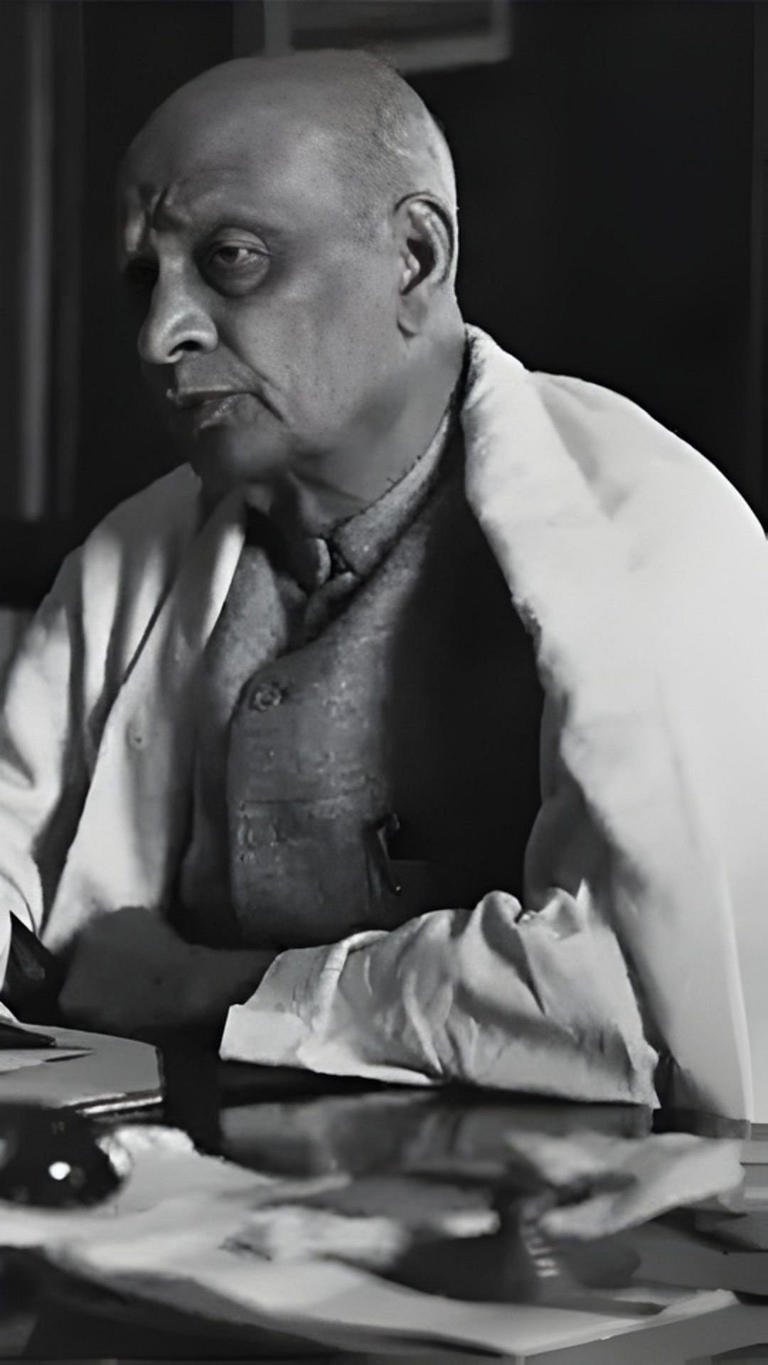
The nation solemnly observes the death anniversary of Sardar Vallabhbhai Patel every year on December 15th. He was an indispensable figure in India’s struggle for freedom and the subsequent political integration of the newly independent nation. Often hailed as the ‘Iron Man of India,’ Patel’s dedication and unyielding resolve shaped the geographical and political contour of modern India. His life offers compelling lessons in leadership and national unity.
Read More: Tripura Ranks 2nd Nationally in Energy Conservation Efforts
Here are some interesting and lesser-known Sardar Vallabhbhai Patel Facts about the statesman:
1. The Origin of the Title ‘Sardar’
The title ‘Sardar,’ which means Chief or Leader, was not inherited. The women of Bardoli bestowed it upon him. Specifically, they conferred the title on him after the successful conclusion of the Bardoli Satyagraha in 1928. This non-violent civil disobedience movement effectively fought against unjust tax hikes imposed by the British. Mahatma Gandhi later popularized the title.
2. The Unrecorded Birthdate
Sardar Patel’s actual date of birth remains unrecorded. Consequently, when he appeared for his matriculation examination, he spontaneously entered October 31, 1875, as his birthdate. India now celebrates this day as Rashtriya Ekta Diwas (National Unity Day).
3. A Late Bloomer in Academics
Patel completed his matriculation at the comparatively late age of 22. Many of his elders then regarded him as an unambitious man destined for a commonplace job. However, he proved them wrong by pursuing law.
4. A Self-Taught Lawyer
He aspired to become a lawyer and studied on his own. Patel borrowed books from other lawyers, passing his examinations within two years. He later traveled to England and completed the 36-month barrister course at Middle Temple Inn in just 30 months, graduating at the top of his class.
5. The Unification Titan
Patel’s most monumental achievement was the integration of over 560 semi-independent princely states into the Indian Union after Independence. This diplomatic and, when necessary, firm approach prevented the country’s fragmentation. Thus, people often compare him to Otto von Bismarck, who unified Germany, earning him the sobriquet ‘Bismarck of India.’
6. Architect of the Civil Services
Patel was instrumental in establishing the modern All India Services (like the IAS and IPS). He famously referred to them as the “steel frame” of the nation. He is therefore remembered as the ‘Patron Saint of India’s Civil Servants.’
7. The Missed Prime Ministership
During the 1946 Congress election for the post of Congress President (who would later lead the interim government), the majority of Pradesh Congress Committees nominated Patel. Nevertheless, he stepped aside at Mahatma Gandhi’s request, paving the way for Jawaharlal Nehru to become the first Prime Minister.
8. Posthumous Bharat Ratna
The nation posthumously honored Sardar Patel with the Bharat Ratna, India’s highest civilian award, in 1991.
9. The World’s Tallest Tribute
The Statue of Unity, the world’s tallest statue, stands 182 meters high in Gujarat. The government unveiled it in 2018 as a lasting tribute to Patel’s service in unifying the nation.
Read More: BJP Discusses Peace, Power, Progress Strategy for Manipur in Delhi