

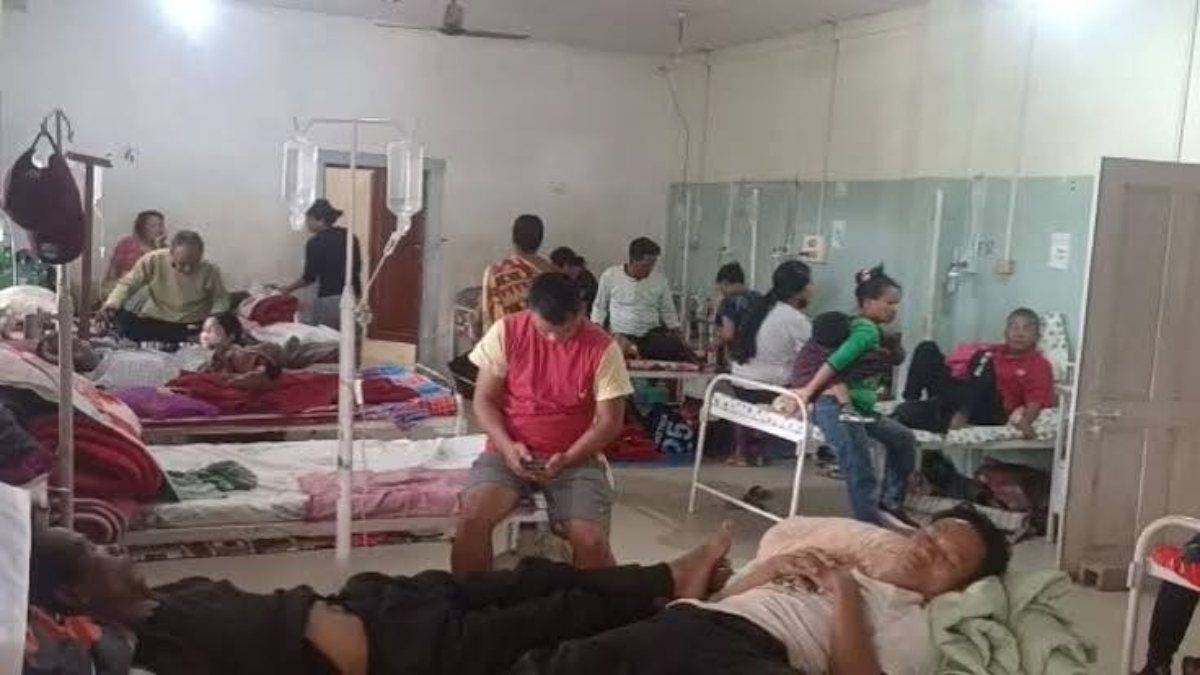
Churachandpur dengue cases have crossed the 750-mark in Manipur, prompting heightened health concerns in the district as authorities review the situation involving dengue, hand, foot and mouth disease (HFMD) and typhoid. The development comes after two deaths were reported in connection with dengue-related illness within a matter of days.
Deputy Commissioner Krishna Kumar, IAS, is the current Deputy Commissioner and District Magistrate of Churachandpur, according to the district administration. The administration’s focus on the emerging health situation comes at a time when the district is dealing with a sharp increase in dengue infections.
Churachandpur dengue cases rise sharply
According to officials cited in local reports, the district has recorded 752 dengue infections so far this year. The figure is more than twice the 332 cases reported during the corresponding period last year, indicating a significant increase in transmission.
The surge has raised concerns about the need for stronger surveillance and preventive action, particularly in areas where mosquito breeding can increase during the rainy season. Dengue is transmitted through the bite of infected mosquitoes, making stagnant water and inadequate vector control important public-health concerns.
The Manipur Health Department’s 2025-26 administrative report had recorded 21 dengue-positive cases among 21 samples tested in Churachandpur during that reporting period. The latest figure of 752 therefore represents a substantial increase compared with the earlier official data.
Two deaths increase health concerns
The situation became more serious after two deaths were reported in Churachandpur within less than three days.
A 13-year-old student from Valveng in New Lamka died on August 22 after developing a high fever. A second death was reported on August 24, involving Lily Lhingboiniang, who died at the Intensive Care Unit of Churachandpur District Hospital after being diagnosed with dengue and typhoid.
The deaths have added urgency to efforts to detect infections early and ensure that patients with severe symptoms receive timely medical attention. The district hospital is among the public health facilities serving the area.
Dengue control measures intensified
Following the rise in cases and the reported deaths, the Malaria Department has intensified mosquito-control measures in affected areas.
Thermal fogging was carried out in Valveng and nearby parts of New Lamka following the death of the teenage student. Officials have also urged residents to use mosquito nets and remove stagnant water from around homes and neighbourhoods.
These measures are aimed at reducing mosquito populations and limiting further transmission. Health workers have stressed that community participation is essential because mosquito breeding sites can develop in water containers, discarded items and other places where water remains stagnant.
HFMD and typhoid add to monitoring needs
Alongside the dengue surge, health authorities are also monitoring concerns related to hand, foot and mouth disease and typhoid. Both conditions require attention to hygiene, early identification of symptoms and appropriate medical care, particularly among children and other vulnerable groups.
The presence of several infectious-disease concerns at the same time makes disease surveillance and coordination between health officials and district authorities especially important. Symptoms such as persistent fever, weakness, vomiting, rashes or other unusual signs should not be ignored, particularly during a period of increased disease activity.
Churachandpur has also previously undertaken public-health initiatives focused on prevention. In June, the district administration reviewed preparations for the Stop Diarrhoea Campaign and stressed hygiene, timely use of ORS and stronger coordination among frontline health and community workers during the monsoon.
Public vigilance remains crucial
The sharp rise in Churachandpur dengue cases highlights the importance of preventive measures at household and community levels. Residents can help reduce mosquito breeding by keeping surroundings clean, avoiding water accumulation and using mosquito protection, particularly during peak mosquito activity.
The district administration’s official website lists Krishna Kumar, IAS, as the Deputy Commissioner and provides contact information for the DC office and Churachandpur District Hospital.
With dengue infections now significantly higher than last year and two deaths reported, continued surveillance will remain important. Coordinated action involving health workers, local authorities and residents could play a key role in containing further transmission while ensuring that suspected cases of dengue, HFMD and typhoid receive timely attention.
Sikkim Tourism wins major excellence award for sustainable travel