

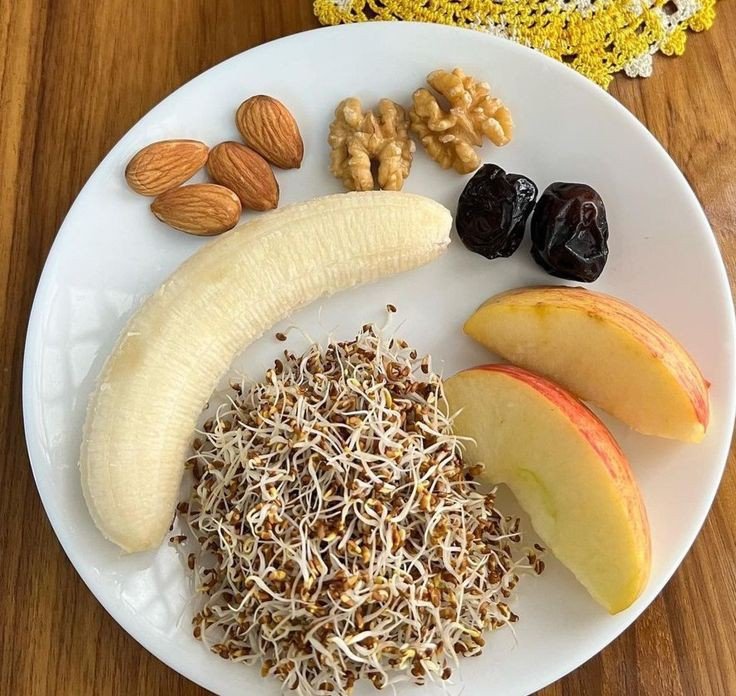
A professor from Ayodhya has stirred controversy on social media with a misleading post about high-protein diets. The post featured an image of a plate filled with a banana, apple slices, almonds, walnuts, dates, and moong sprouts. The professor claimed the meal was high in protein, but critics quickly pointed out the error.
The plate shown in the post included a variety of items. It had a substantial amount of moong sprouts, along with fruits and nuts. Despite the variety, the meal did not have a significant amount of protein. Moong sprouts are relatively high in protein, but the other items, such as fruits and nuts, are not. Social media users were quick to respond, highlighting the meal’s shortcomings.Many people commented on the post, expressing their concerns. They argued that while the plate appeared healthy, it lacked sufficient protein. Protein is a crucial nutrient for muscle growth and repair. The meal’s primary components were carbohydrates and fats, not proteins. This discrepancy led to a flurry of discussions online.The professor’s post was intended to educate people about protein-rich diets. However, it missed the mark. The plate’s composition did not align with the nutritional needs of a high-protein diet. Critics pointed out that foods like chicken, fish, eggs, and legumes are better sources of protein.The reaction from social media users was swift and critical. Many people expressed frustration over the misinformation. They stressed the importance of accurate nutritional information. A high-protein diet typically includes foods that are rich in protein and low in other macronutrients. The professor’s post did not reflect this.Experts also weighed in on the debate. Nutritionists explained the importance of protein in a balanced diet. They noted that while nuts and sprouts contribute to protein intake, they are not enough on their own. A comprehensive high-protein diet includes a variety of protein sources. This ensures adequate intake to meet the body’s needs.The controversy highlights a broader issue of misinformation in health and nutrition. With the rise of social media, inaccurate information can spread quickly. This situation underscores the need for reliable sources and accurate advice. Misinformation can lead to confusion and poor dietary choices.The professor’s post has sparked a wider discussion about nutritional education. Many people are now questioning other diet-related claims they encounter online. The focus is shifting towards ensuring that information is verified and accurate. This incident serves as a reminder of the importance of critical thinking when evaluating health advice.In response to the backlash, the professor defended the post. They argued that the plate contained a range of healthy foods. However, the defense did little to quell the criticism. The core issue remained the same: the plate did not meet the criteria for a high-protein diet.The incident also brings attention to the role of social media in shaping dietary perceptions. While platforms can offer valuable information, they also allow for the spread of misinformation. It is crucial for users to seek information from credible sources and consult with experts when in doubt.As the debate continues, it is clear that more education is needed on what constitutes a high-protein diet. Accurate information and clear guidelines are essential for making informed dietary choices. The professor’s post has highlighted the need for better understanding and communication of nutritional needs.Overall, the reaction to the professor’s post illustrates the ongoing challenge of navigating health information online. Misinformation can have real consequences for individuals trying to maintain a healthy diet. This situation underscores the importance of accurate, evidence-based nutrition education and the need for vigilance against misleading claims.
The uproar over the professor’s post has sparked a broader conversation about dietary misconceptions. Many users have taken the opportunity to share their own insights and corrections regarding protein-rich diets. They have provided examples of truly high-protein foods and explained why the items featured in the post fall short. This exchange of knowledge highlights the power of social media to both spread and correct misinformation.
Nutritionists have also pointed out the need for more educational resources on balanced diets. They stress that while the professor’s post may have been well-intentioned, it demonstrates a gap in understanding nutrition fundamentals. Many people rely on social media for health advice, making it crucial for such platforms to promote accurate and scientifically backed information.
Furthermore, the incident underscores the role of influencers and public figures in shaping dietary habits. With their reach and authority, their statements can significantly impact public perceptions of nutrition. It becomes essential for these figures to ensure their advice is well-researched and reliable. Misleading information can contribute to unhealthy dietary practices and confusion among the general public.
In response to the backlash, there has been a surge in calls for better regulation of health-related content on social media. Users and experts alike advocate for stricter guidelines to prevent the spread of false information. They argue that platforms should implement measures to fact-check health claims and provide users with access to verified sources of information.
The incident also highlights the need for individuals to be more discerning when it comes to nutritional advice. While social media can be a valuable tool for learning, it is important for users to verify information from multiple sources. Consulting with healthcare professionals and registered dietitians can help ensure that dietary choices are based on accurate and personalized advice.
As discussions continue, there is hope that the increased scrutiny will lead to more responsible sharing of health information. The goal is to foster an environment where accurate, evidence-based nutrition advice is the norm, and misleading claims are promptly addressed. This incident serves as a reminder of the critical role that accurate information plays in maintaining health and well-being.