

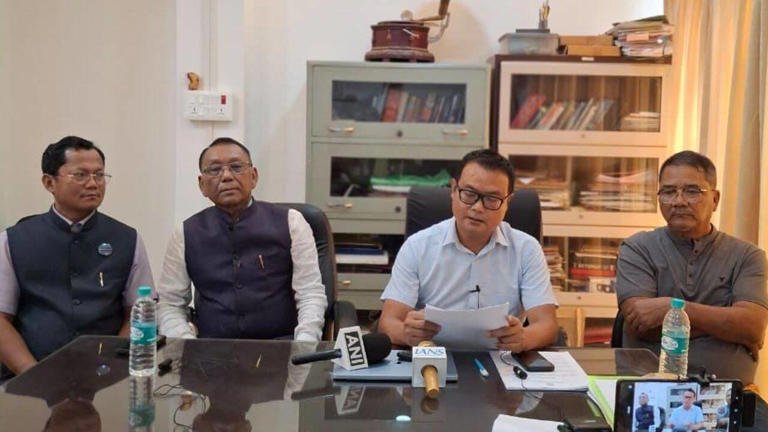
The Kuki-Zo Council (KZC), the apex body representing the Kuki-Zo community, has publicly apologised for the killing of six abducted Naga civilians, describing the incident as a “grave mistake.” The apology marks the first known public expression of remorse by a major community organisation linked to the violence that has affected several parts of the state in recent months.
Addressing a press conference, Kuki-Zo Council leaders acknowledged the seriousness of the incident and expressed deep regret over the loss of innocent lives. Along with the apology, the council called for a fair and impartial investigation into all incidents of violence involving different communities in Manipur, stressing that justice should be delivered without bias. The statement has drawn attention across the state as many observers view it as a potentially important step toward reducing tensions and encouraging dialogue.
Public Acknowledgement of a Tragic Incident
During the press conference, the Kuki-Zo Council leadership admitted that the killing of the six abducted Naga civilians was a serious error committed in an emotionally charged environment. The council stated that the incident should never have occurred and extended an apology to the families of the victims and the wider Naga community.
The leadership emphasised that no grievance or conflict can justify the loss of innocent civilian lives. By publicly acknowledging responsibility and expressing regret, the council sought to convey its commitment to accountability and peaceful coexistence among Manipur’s diverse communities.
The statement was widely regarded as an uncommon public admission during a period marked by deep mistrust and prolonged ethnic divisions.
Background of the Incident
The six Naga civilians were abducted from Leilon Vaiphei village in Kangpokpi district on May 13. After weeks of uncertainty regarding their whereabouts, security forces recovered their bodies near a Kuki-Zo village in June, triggering widespread grief and renewed concerns over the deteriorating security situation.
The killings intensified tensions between the Naga and Kuki-Zo communities, which had already been strained following a series of violent incidents earlier this year. The tragedy underscored the humanitarian cost of ethnic violence and highlighted the urgent need for lasting peace in the region.
Call for an Impartial Investigation
Alongside its apology, the Kuki-Zo Council urged authorities to conduct an impartial and transparent investigation into all incidents of violence involving different communities.
Council leaders argued that justice must be administered fairly regardless of ethnicity, adding that accountability for every act of violence is essential to rebuilding public confidence. They also called for investigations into reported killings, destruction of villages, and attacks affecting members of all communities.
According to the council, an independent and credible investigation would help establish the facts, identify those responsible, and contribute to long-term reconciliation by ensuring that justice is not perceived as selective.
A Potential Step Towards Reconciliation
Political observers and civil society groups believe the public apology could serve as an important confidence-building measure between communities that have experienced prolonged mistrust.
Expressions of remorse are relatively rare in situations involving ethnic conflict, where competing narratives often dominate public discourse. The council’s acknowledgement of wrongdoing may encourage broader conversations on accountability, reconciliation, and restorative justice.
Many peace advocates argue that acknowledging the suffering of affected families, irrespective of community identity, is an important prerequisite for rebuilding trust and reducing hostility.
While the apology alone cannot resolve longstanding disputes, it may provide an opening for constructive dialogue among community leaders, civil society organisations, and government institutions.
Continuing Security Challenges in Manipur
Manipur has experienced recurring episodes of ethnic violence involving different communities, leading to loss of lives, displacement of thousands of residents, and damage to public and private property.
Security forces continue to maintain a strong presence in sensitive areas while conducting search operations, intelligence-based surveillance, and confidence-building measures aimed at preventing further violence.
Authorities have repeatedly appealed to all communities to maintain peace, avoid provocative actions, and cooperate with law enforcement agencies in restoring normalcy.
The state administration has also focused on improving relief measures, ensuring public safety, and facilitating dialogue between community representatives.
Importance of Community Leadership
Community organisations play a crucial role in influencing public opinion and promoting peace during periods of social tension. Their statements often carry considerable weight among local populations and can significantly shape efforts toward reconciliation.
By publicly condemning the killings and apologising for the incident, the Kuki-Zo Council has highlighted the importance of responsible leadership during difficult times.
Experts note that community-led peace initiatives, combined with institutional support and legal accountability, can create conditions conducive to reducing mistrust and preventing further violence.
Constructive engagement by influential social and tribal organisations is widely regarded as essential for sustaining long-term peace in conflict-affected regions.
Justice and Healing for Victims
Families affected by violence continue to seek justice, truth, and closure following the deaths of their loved ones. Human rights advocates stress that transparent investigations and timely legal proceedings remain critical to ensuring accountability.
Beyond criminal investigations, many experts believe that rehabilitation, psychological support, and community reconciliation initiatives are necessary to address the long-term impact of violence on survivors and affected families.
Healing from prolonged conflict requires both institutional action and community participation. Recognition of victims’ suffering, sincere dialogue, and fair justice processes can contribute significantly to rebuilding confidence between communities.
Looking Towards Lasting Peace
The Kuki-Zo Council’s apology has renewed discussions on the importance of dialogue, reconciliation, and peaceful conflict resolution in Manipur. While challenges remain, many observers hope that such gestures can encourage broader participation in peace-building efforts.
Governments, community organisations, religious institutions, and civil society groups all have important roles to play in fostering mutual understanding and preventing future violence.
Continued communication, impartial law enforcement, and development initiatives that benefit all communities are considered essential components of a sustainable peace process.
Conclusion
The Kuki-Zo Council’s public apology for the killing of six abducted Naga civilians represents a notable moment in Manipur’s ongoing efforts to address the consequences of ethnic violence. By acknowledging the incident as a “grave mistake” and calling for an impartial investigation into all acts of violence, the council has underscored the importance of accountability and justice.
Although significant challenges remain before lasting peace can be achieved, such acknowledgements may help create space for dialogue and reconciliation. Combined with fair legal processes, community engagement, and sustained peace-building initiatives, the gesture has the potential to contribute to rebuilding trust among Manipur’s diverse communities and advancing the broader goal of harmony and stability in the state.