

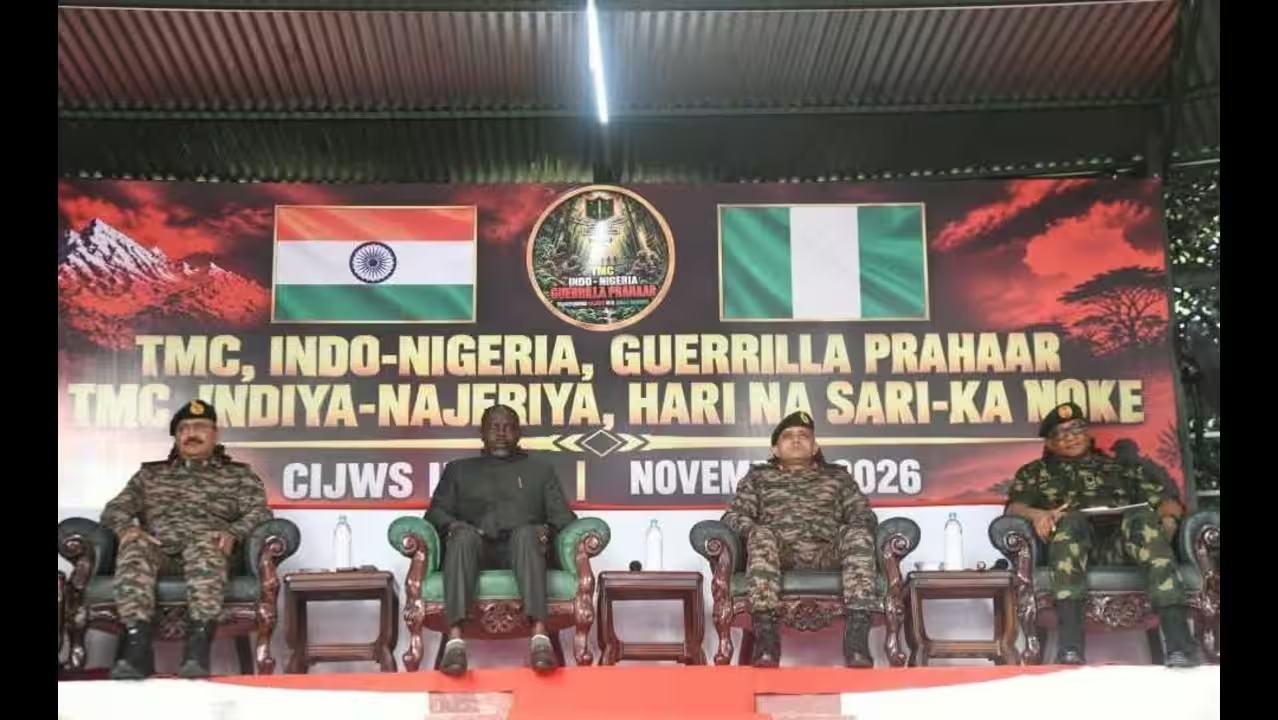
Around 600 Nigerian Army personnel have completed an intensive counter-insurgency, counter-terrorism and jungle warfare training programme at the Counter-Insurgency and Jungle Warfare School (CIJWS) in Vairengte, Mizoram. The programme marks a historic milestone in military cooperation between India and Nigeria, representing the first training engagement of its kind involving such a large Nigerian contingent at the Indian military institution in 80 years.
Meghalaya Directs SBI to Refund ₹342 Crore PF Deposits to Teachers
Nigerian Army Personnel Complete Training at Mizoram’s CIJWS
The 600 Nigerian soldiers completed their specialised training at the Counter-Insurgency and Jungle Warfare School in Vairengte, Mizoram.
The programme focused on counter-insurgency operations, counter-terrorism techniques and jungle warfare skills. These areas form an important part of military preparedness, particularly for personnel operating in difficult terrain and environments where conventional combat tactics may not always prove effective.
The training provided the Nigerian personnel with exposure to India’s experience in counter-insurgency operations and jungle warfare.
Moreover, the large-scale participation highlights the growing defence engagement between India and Nigeria.
The completion of the programme also brings international attention to Mizoram’s role in specialised military training.
Historic First in 80 Years of India-Nigeria Military Cooperation
The training programme marks a significant milestone in the defence relationship between India and Nigeria.
The participation of around 600 Nigerian Army personnel represents an unprecedented engagement at the Vairengte-based institution in its 80-year history, according to the announcement.
The programme reflects the importance both countries place on professional military training and cooperation.
Furthermore, the participation of a large foreign contingent demonstrates the international relevance of India’s specialised training institutions.
Such programmes allow military personnel from partner countries to exchange operational knowledge, understand different approaches to security challenges and develop professional relationships.
However, the training does not simply benefit the visiting contingent. It also provides opportunities for Indian instructors and military institutions to strengthen international engagement.
What Is the Counter-Insurgency and Jungle Warfare School?
The Counter-Insurgency and Jungle Warfare School, commonly known as CIJWS, is a specialised Indian Army training institution located at Vairengte in Mizoram.
The school focuses on preparing military personnel for operations in jungle terrain and counter-insurgency environments.
Its training covers several aspects of field operations, including movement through difficult terrain, surveillance, tactical planning and counter-terrorism techniques.
The institution draws on India’s experience in operating in challenging environments, particularly in the Northeast.
The region’s hills, dense forests and difficult weather conditions provide a demanding setting for specialised military exercises.
Consequently, CIJWS has developed an important role in preparing personnel to operate in complex terrain.
Its international training programmes also contribute to India’s military outreach and professional defence cooperation with friendly countries.
Focus on Counter-Insurgency, Counter-Terrorism and Jungle Warfare
The Nigerian contingent underwent training in three major areas.
Counter-Insurgency Operations
Counter-insurgency training prepares soldiers to operate in areas affected by armed insurgent activity.
It focuses on understanding the operating environment, gathering information, planning operations and coordinating with other security elements.
Moreover, personnel learn how to respond to complex security situations while considering civilian safety and the legal framework governing military operations.
Counter-Terrorism Training
Counter-terrorism training focuses on preparing personnel to respond to threats posed by terrorist groups.
It develops operational awareness, coordination and the ability to respond to security emergencies.
Such training also helps soldiers understand the importance of intelligence, communication and planning during counter-terrorism operations.
Jungle Warfare Skills
Jungle warfare training prepares soldiers to operate in dense forests and difficult terrain.
These environments can restrict visibility, complicate communication and make movement challenging.
Therefore, soldiers need specialised skills to navigate forests, maintain coordination and carry out field operations effectively.
The training at CIJWS gave the Nigerian personnel an opportunity to develop skills relevant to demanding operational environments.
Mizoram Strengthens Its Position in International Military Training
The completion of the programme also highlights Mizoram’s growing visibility in India’s defence training landscape.
Vairengte, located in Kolasib district, hosts one of India’s recognised institutions for specialised counter-insurgency and jungle warfare training.
Its location in the northeastern hills provides a suitable environment for exercises involving forests and challenging terrain.
Furthermore, the arrival of a large Nigerian contingent places the state on the international military training map.
The programme also demonstrates how institutions in Northeast India can contribute to India’s wider defence diplomacy.
International military training creates opportunities for cooperation beyond formal defence agreements. It also encourages professional exchanges and a better understanding of the security challenges faced by different countries.
India and Nigeria Expand Defence Training Engagement
India and Nigeria maintain defence and diplomatic relations that include cooperation in military training and capacity building.
Training programmes such as the one at CIJWS allow partner countries to benefit from India’s experience and specialised military institutions.
For Nigeria, the programme offers exposure to counter-insurgency and jungle warfare techniques. These skills can support military preparedness in challenging operational environments.
For India, hosting foreign military personnel strengthens defence engagement and builds professional links with partner armed forces.
Additionally, such cooperation supports India’s broader efforts to expand military training partnerships with friendly countries.
The completion of the programme in Mizoram therefore represents more than a training milestone. It also reflects the growing importance of international cooperation in military education and operational preparedness.
Conclusion
The completion of specialised training by around 600 Nigerian Army personnel at Mizoram’s CIJWS marks an important milestone in India-Nigeria military cooperation.
The programme covered counter-insurgency, counter-terrorism and jungle warfare, drawing on the expertise of the Vairengte-based institution.
Its scale also highlights the international role of India’s specialised military training facilities and brings greater recognition to Mizoram.
As defence cooperation between India and Nigeria continues, training exchanges of this kind can strengthen professional military relationships and improve operational preparedness.
Frequently Asked Questions (FAQs)
1. How many Nigerian soldiers completed jungle warfare training in Mizoram?
Around 600 Nigerian Army personnel completed the specialised training programme at the Counter-Insurgency and Jungle Warfare School in Vairengte.
2. Where is the Counter-Insurgency and Jungle Warfare School located?
The CIJWS is located in Vairengte, Kolasib district, Mizoram.
3. What subjects did the Nigerian soldiers study during the programme?
The programme covered counter-insurgency operations, counter-terrorism techniques and jungle warfare skills.
4. Why is the training programme considered historic?
The participation of around 600 Nigerian Army personnel marks an unprecedented training engagement of this scale at the institution in its 80-year history.
5. What is the main role of the CIJWS?
The CIJWS trains military personnel to operate in jungle terrain and respond to counter-insurgency and counter-terrorism challenges.
6. What does the programme mean for India-Nigeria relations?
The programme strengthens military training cooperation, encourages professional exchanges and supports defence engagement between the two countries.