

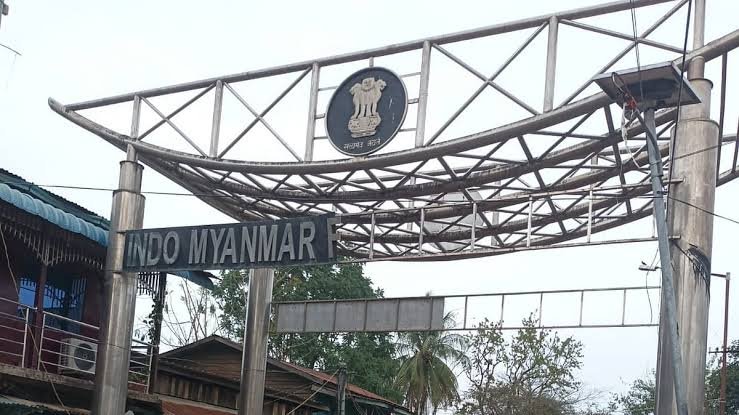
The Act East Infrastructure Evaluation remains central to India’s effort to strengthen the Northeast as a gateway to Southeast Asia. The Union government has continued reviewing road, rail, waterway and border infrastructure linked with the Act East Policy, particularly corridors connecting the region with Myanmar, Bangladesh and Thailand.
However, current official records do not confirm a single newly announced deployment of “central observers” specifically to audit all international border connectivity routes. Instead, government agencies continue to conduct project reviews, field inspections and institutional assessments across individual corridors and border infrastructure projects.
Mungiakami Block Nomination Surge as Candidates File Papers Across Village Committees
Act East Infrastructure Evaluation Focuses on Cross-Border Connectivity
The Act East Infrastructure Evaluation is taking place against a broader policy framework that places the Northeast at the centre of India’s engagement with Southeast Asia. The Union government describes connectivity as a key component of the Act East Policy, covering physical, digital, economic and people-to-people links.
The India-Myanmar-Thailand Trilateral Highway remains one of the most important projects under this framework. The proposed corridor is intended to connect Moreh in Manipur with Mae Sot in Thailand through Myanmar, creating a land-based route between India and mainland Southeast Asia.
Meanwhile, the Kaladan Multi-Modal Transit Transport Project provides another strategic connectivity route. Its waterway component connects Sittwe with Paletwa in Myanmar, while the road component envisages a 109-km two-lane highway between Paletwa and Zorinpui on the Mizoram-Myanmar border. The waterway component was completed and inaugurated in May 2023.
Therefore, government assessments of these corridors have significance beyond ordinary road construction. Their performance can influence trade, logistics, border mobility and India’s ability to use the Northeast as a bridge toward Southeast Asian markets.
Border Roads Face Difficult Terrain and Strategic Challenges
The Northeast presents distinctive challenges for infrastructure development. Mountainous terrain, heavy rainfall, landslides, dense forests and remote settlements can complicate the construction and maintenance of roads and bridges.
Consequently, project evaluation needs to consider more than physical construction progress. Officials also need to assess road quality, bridge capacity, drainage, slope stability, access to border points and the reliability of transport links during difficult weather.
The strategic importance of these corridors adds another dimension. Many roads approaching international borders serve both civilian and security requirements. Better connectivity can support local economic activity while also improving access for agencies operating in frontier areas.
A May 2026 visit by Union Minister of State for Road Transport and Highways Harsh Malhotra to Arunachal Pradesh illustrates this broader approach. During the visit, he reviewed key projects and assured residents of action on infrastructure and border-connectivity concerns. Local representatives highlighted the importance of strengthening the Akajan-Bame road and upgrading the Dipa-Likabali-Nilok route, along with bridges and culverts needed for reliable access.
Similarly, Sikkim began a survey in June 2026 for a proposed double-lane road linking Sashastra Seema Bal outposts in the western part of the state. Senior Roads and Bridges Department officials conducted a field inspection at Upper Ribdi Bhareng as part of the process.
These examples demonstrate that infrastructure evaluation increasingly involves direct field assessment rather than relying only on administrative reports.
Northeast Highways Connect Border Trade Corridors
Road connectivity remains one of the largest components of the region’s infrastructure expansion.
According to the Ministry of Development of North Eastern Region, the length of National Highways in the Northeast increased from 10,905 km in 2014 to 16,207 km by March 31, 2025. The government has also expanded rail, airport and inland-waterway connectivity across the region.
Moreover, the government’s broader infrastructure strategy seeks to connect the Northeast with neighbouring countries through multiple transport modes.
Assam’s Act East Policy Affairs Department identifies seamless road, rail, air, waterway and information connectivity with ASEAN and BBIN countries as an important objective. It also highlights the role of corridors linking Assam with Bangladesh and Myanmar.
This multimodal approach matters because international trade rarely depends on one road alone. Goods may move from a production centre by road, transfer to rail or waterways, cross an international border through an integrated check post and then continue toward a foreign market.
Therefore, an evaluation of border connectivity must consider how different transport systems work together.
Integrated Check Posts Strengthen International Routes
Border infrastructure is another important component of the Act East strategy.
The Union government has expanded Integrated Check Posts and Border Haats as part of efforts to strengthen formal trade and movement across the Northeast’s international boundaries.
Integrated Check Posts can combine customs, immigration, security and other border-related functions within coordinated facilities. Consequently, their effectiveness depends not only on the quality of the terminal itself but also on the roads and transport networks connecting it to domestic markets.
The condition of approach roads can directly affect freight movement. If highways remain narrow, vulnerable to landslides or congested, improved border facilities may not deliver their full potential.
Furthermore, digital systems and coordinated government agencies increasingly form part of border infrastructure. Efficient customs procedures, cargo handling and information systems can reduce delays and improve the predictability of cross-border trade.
An independent infrastructure assessment by ICRIER examined Land Customs Stations and Integrated Check Posts across the Northeast and North Bengal. The study assessed 43 infrastructure elements across areas including basic utilities, cargo handling, digitisation, public facilities, design and safety. It found that none of the surveyed facilities possessed all 43 elements and that several available facilities were of poor quality.
The findings underline why physical construction alone does not guarantee efficient border connectivity.
Myanmar Stability Affects Act East Connectivity
The effectiveness of India’s eastern connectivity strategy also depends on developments beyond India’s borders.
Myanmar serves as the land bridge between India and much of mainland Southeast Asia. Therefore, political and security conditions there directly influence the functioning and future prospects of the India-Myanmar-Thailand Trilateral Highway and the Kaladan project.
The Union government’s August 2026 review described both projects as flagship initiatives under the Act East Policy. The government continues to position them as important links between the Northeast and Southeast Asia.
At the same time, continuing instability in Myanmar has complicated infrastructure implementation and cross-border movement. Consequently, project evaluation cannot focus exclusively on construction within Indian territory.
Security conditions, border management, bilateral coordination and operational arrangements also influence whether international corridors can function as intended.
Therefore, the Centre’s broader infrastructure approach combines construction with diplomatic, security and administrative coordination.
Bangladesh Connectivity Expands the Northeast’s Options
Connectivity through Bangladesh also plays an important role in reducing the Northeast’s geographical isolation.
The Act East framework includes transport links with Bangladesh alongside routes toward Myanmar and Southeast Asia. Assam’s official Act East policy documents identify the development of road and multimodal links with Bangladesh and access to ports such as Chattogram as potential components of regional connectivity.
Meanwhile, the India-Bhutan connectivity framework is also expanding. An inter-governmental memorandum signed in September 2025 envisages railway links between Kokrajhar and Gelephu, and Banarhat and Samtse, with a combined length of about 88 km. The first bilateral Project Steering Committee meeting took place in November 2025.
These developments illustrate the increasingly interconnected nature of Northeast infrastructure planning.
Instead of relying on a single international route, India is developing multiple corridors toward Bangladesh, Bhutan and Myanmar. Consequently, infrastructure evaluation can help identify bottlenecks and determine where additional investment can deliver the greatest connectivity benefits.
Strategic Corridors Require Continuous Monitoring
The Act East Infrastructure Evaluation is ultimately linked to the long-term objective of making the Northeast a regional logistics and economic gateway.
The government’s April 2026 review noted that cumulative expenditure of ₹6.11 lakh crore had been made against cumulative allocation of ₹6.02 lakh crore for Northeast development under the 10% Gross Budgetary Support mechanism between 2014–15 and 2024–25.
However, investment alone cannot determine whether a connectivity corridor succeeds.
Roads must remain usable. Bridges must handle expected traffic. Border facilities must process cargo efficiently. Railways and waterways must connect with highway networks. Additionally, international routes must remain operational despite security and geopolitical challenges.
Therefore, field inspections, project monitoring and inter-agency coordination remain important throughout the infrastructure lifecycle.
The evaluation process can also help governments identify gaps before they become major bottlenecks. For example, a road may technically reach a border point but still fail to support commercial traffic if it lacks adequate bridges, drainage, parking, customs facilities or last-mile connections.
Consequently, the next phase of Act East infrastructure development will likely require greater emphasis on integrated corridor performance rather than isolated project completion.
Conclusion
The Act East Infrastructure Evaluation reflects India’s continuing effort to strengthen the Northeast’s role as a gateway to Southeast Asia. Although current official evidence does not confirm a single new deployment of central observers to audit every international border route, multiple government agencies continue to review and inspect strategic connectivity projects across the region.
The India-Myanmar-Thailand Trilateral Highway and Kaladan Multi-Modal Transit Transport Project remain flagship components of the strategy, while road, rail, waterway and border infrastructure continue to expand.
Moreover, field inspections in Arunachal Pradesh and Sikkim show how individual border-connectivity projects are being assessed at the ground level.
Ultimately, the success of the Act East Policy will depend on whether these separate infrastructure projects operate as an integrated network capable of supporting trade, mobility, border management and long-term regional economic development.
FAQs
What is the Act East Infrastructure Evaluation?
The Act East Infrastructure Evaluation refers broadly to the continuing assessment and monitoring of infrastructure supporting India’s Act East Policy, particularly roads, railways, waterways and border facilities connecting the Northeast with neighbouring countries.
Which major projects support India’s Act East connectivity strategy?
The India-Myanmar-Thailand Trilateral Highway and Kaladan Multi-Modal Transit Transport Project are two flagship projects under the Act East framework.
Has the Centre deployed a single team of observers to audit all border routes?
Current official records do not confirm one single central observer team conducting a region-wide audit of all international border connectivity routes. Instead, different ministries, agencies and state authorities undertake project reviews and field inspections.
Why are border roads important for the Northeast?
Border roads improve access to international trade points, support movement between remote communities and strengthen connections between domestic markets and neighbouring countries.
How does Myanmar affect India’s Act East connectivity?
Myanmar is the principal land bridge between India’s Northeast and mainland Southeast Asia. Therefore, security and political developments in Myanmar can directly influence the operation and implementation of major cross-border connectivity projects.