


Seven high-risk glacial lakes have been identified in the Mago area of Arunachal Pradesh’s Tawang district. Authorities have raised concerns about possible Glacial Lake Outburst Floods, or GLOFs.
Six of the seven lakes share a common downstream drainage system. The route passes through several inhabited areas, including Duri village.
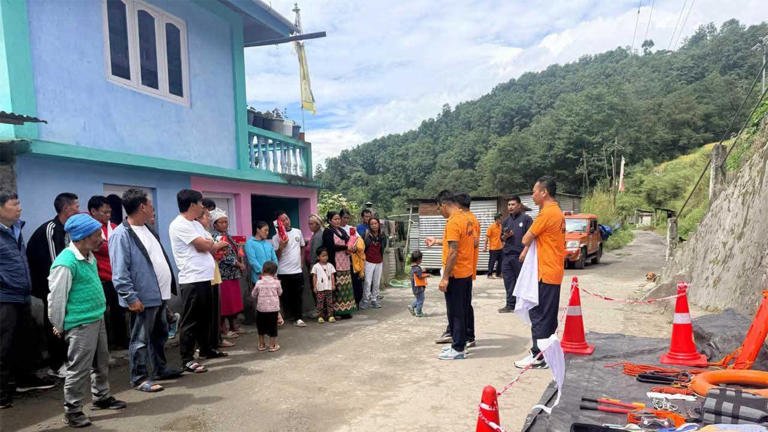
The Arunachal Pradesh State Disaster Management Authority has now launched an awareness and preparedness programme. The initiative aims to help communities respond quickly if a GLOF occurs.
Seven High-Risk Lakes Identified
The seven lakes lie in the Mago area under Thingbu Circle. APSDMA Deputy Director Dorjee Khandu shared the information during the launch of the awareness campaign.
Six lakes have a common drainage route. This increases concern for settlements located along the downstream path.
Duri village remains a key vulnerable location. Authorities have also included an Indian Army camp in the preparedness programme.
Officials are informing residents about the location, altitude and distance of the lakes. They are also explaining the possible effects of a sudden lake outburst.
What Is a GLOF?
A Glacial Lake Outburst Flood occurs when water suddenly escapes from a glacial lake. Such lakes often form near retreating glaciers.
A sudden outburst can release a large volume of water downstream. The resulting flood can carry rocks, sediment and debris.
Mountain communities face particular risks because rivers and drainage channels can quickly carry floodwater towards settlements.
Scientists have linked changing glacial lake conditions to glacier retreat and climate change. A 2026 study of Arunachal Pradesh found significant changes in high-altitude lakes across the state.
Duri Among the Vulnerable Settlements
Duri village sits along the downstream drainage route of the identified lakes. Officials have therefore placed the village among the key areas requiring preparedness.
Authorities have explained how quickly floodwaters could potentially reach vulnerable locations. They have also stressed the importance of early warnings.
Residents are being encouraged to identify safe routes before an emergency occurs. They are also learning about designated safer locations.
The programme aims to reduce confusion during a sudden disaster. Officials say timely evacuation can reduce risks to people and property.
Authorities Launch Awareness Programme
APSDMA has joined hands with the Tawang District Disaster Management Authority and the State Disaster Response Force for the campaign.
The programme began at Mago village. It focuses on residents living downstream from the high-risk lakes.
The Indian Army and Indo-Tibetan Border Police personnel in the area have also joined the preparedness effort.
Officials are conducting awareness sessions and practical training. The programme includes information about GLOF risks, evacuation routes and emergency response.
SDRF Conducts Rescue Training
The State Disaster Response Force has provided hands-on training during the programme. The training includes basic first aid and search-and-rescue techniques.
Participants have also learned how to use rescue equipment. Mock drills have helped residents understand how to respond during emergencies.
The training aims to build local response capacity. Community members can play an important role during the first few minutes of a disaster.
Officials want residents to share the lessons with their families and neighbours. This approach can improve preparedness across vulnerable settlements.
More Villages to Join the Programme
The preparedness campaign will expand beyond Mago and Duri. Authorities plan to cover several other downstream settlements.
These include Phonda, Chaksam, Grenkhar and Dungshengmang villages.
The programme has already covered Mago village, the Thingbu Hydel area, New Maling and Tongsheng. Security personnel in the region have also participated.
Authorities want the training to reach as many vulnerable households as possible. They also plan to strengthen community-level evacuation systems.
Tawang Already Under GLOF Watch
Tawang authorities have monitored GLOF risks throughout 2026. The district administration issued a public advisory in May over potential GLOF risks.
Officials have also taken steps after scientific assessments flagged risks around the Khangri Glacier and the Mago Chu basin.
A June alert urged stakeholders to remain prepared for possible hazards linked to glacier retreat and unstable terrain. The advisory reached the Army, ITBP and Border Roads Organisation.
Scientific Studies Highlight Growing Risk
Recent scientific research has also highlighted changing glacial lake conditions in Arunachal Pradesh.
A study published in Discover Hazards assessed 127 lakes across the state. It classified two lakes as high risk, 36 as medium risk and 89 as low risk.
The study found that many high-altitude lakes lie between 4,000 and 5,000 metres above sea level. It also identified Tawang among the districts containing medium- and high-risk lakes.
Researchers stressed the need for continuous monitoring and early-warning systems. They also noted that regional assessments have limitations because detailed field and bathymetric data remain limited.
Government Strengthens Himalayan Preparedness
The Centre has also reviewed GLOF preparedness across Himalayan states. In September, the Union Home Secretary held a meeting with officials from several Himalayan states, including Arunachal Pradesh.
The meeting focused on early warning systems, monitoring of vulnerable lakes and identifying flood flow paths. Officials also discussed evacuation planning and faster dissemination of alerts.
The focus reflects growing attention to GLOF risks across the Himalayan region.
Focus on Early Warning and Evacuation
The situation in Tawang highlights the importance of preparedness in high-altitude areas. Authorities cannot always prevent natural disasters.
However, early warnings can provide valuable time for evacuation. Clear routes and safe locations can also reduce confusion.
Officials are now focusing on these measures in the Mago area. The training programme aims to build a stronger local response system.
For residents living downstream of the seven identified lakes, awareness remains an important part of disaster preparedness.
Conclusion
Seven high-risk glacial lakes in Tawang’s Mago area have raised concerns over potential GLOF events. Six of the lakes share a drainage route that passes through vulnerable areas.
Authorities have responded with awareness campaigns, rescue training and evacuation planning. They are also expanding the programme to more downstream villages.
The latest measures show the growing focus on disaster preparedness in Arunachal Pradesh’s high-altitude regions. Continuous monitoring, timely warnings and community participation will remain important in reducing GLOF-related risks.