


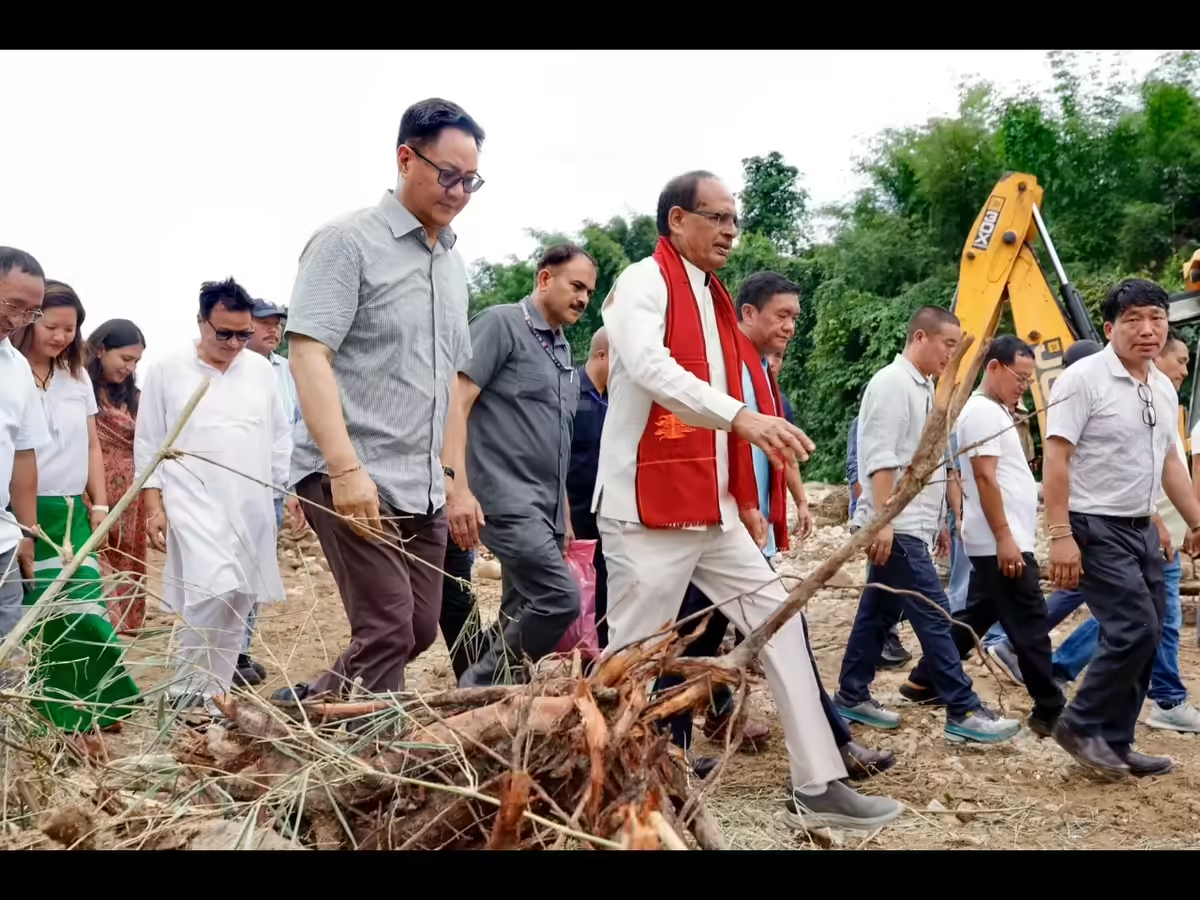
Union Minister Shivraj Singh Chouhan has scheduled direct on-the-ground inspection visits to Arunachal Pradesh as part of a coordinated damage assessment initiative in response to the ongoing monsoon disaster. The field inspection aims to evaluate flood and landslide impacts, review relief operations, and strengthen inter-agency coordination for rehabilitation efforts. Moreover, the move underscores the Centre’s focus on real-time monitoring and rapid response in severely affected northeastern regions.
Two Suspected Fake Currency Operators Detained at Guwahati’s Railway Station
On-Ground Damage Tracking to Strengthen Response Strategy
The planned field inspection is designed to provide a detailed assessment of infrastructure damage, displacement patterns, and critical service disruptions across Arunachal Pradesh. Consequently, the visit is expected to support more targeted relief allocation and improve the efficiency of ongoing rescue operations.
According to officials, the minister’s on-site review will include visits to flood-affected districts, damaged transport corridors, and vulnerable rural zones. Moreover, the assessment will help identify priority areas for immediate restoration, including roads, bridges, and communication networks. Therefore, the initiative has been positioned as a crucial step in refining disaster response strategies.
Authorities emphasized that direct field-level evaluations allow for more accurate understanding of ground realities. As a result, faster decision-making and improved coordination among agencies can be achieved.
Meanwhile, disaster response teams continue to operate in affected regions under challenging conditions.
Focus on Relief Coordination and Infrastructure Restoration
The inspection visit is also expected to focus on the effectiveness of ongoing relief and rehabilitation measures in Arunachal Pradesh. Moreover, officials are likely to review the distribution of essential supplies, shelter arrangements, and medical support in affected areas. Therefore, strengthening relief logistics remains a key priority.
Disaster management experts noted that field inspections by senior officials often help streamline coordination between central and state agencies. Consequently, such visits can accelerate infrastructure repair and improve the delivery of humanitarian assistance. Such measures are particularly important in regions with difficult terrain and limited connectivity.
Furthermore, restoration of roads, bridges, and communication systems is expected to be a major focus area. As a result, additional engineering and logistical support may be mobilized depending on field findings.
Meanwhile, local administrations continue to manage relief camps and emergency services.
Arunachal Pradesh Continues to Face Severe Monsoon Impact
Arunachal Pradesh has been among the most affected northeastern states during the ongoing monsoon season, with widespread flooding, landslides, and infrastructure disruptions reported across multiple districts. Moreover, heavy rainfall has complicated rescue operations and delayed restoration efforts. Therefore, sustained monitoring and intervention remain necessary.
Environmental and disaster experts observed that the state’s mountainous terrain makes it particularly vulnerable to landslides and flash floods. Consequently, disaster preparedness and early warning systems are critical for reducing risk and improving response time. Such challenges require continuous coordination between multiple agencies.
Furthermore, recurring damage to transport corridors highlights the need for resilient infrastructure development. As a result, long-term planning and investment in disaster-resistant infrastructure are increasingly being prioritized.
Strengthening Disaster Governance and Coordination
The planned inspection reflects broader efforts to strengthen disaster governance frameworks and improve coordination during large-scale emergencies. Moreover, real-time field assessments are seen as essential for effective policy implementation and resource allocation. Therefore, enhanced monitoring mechanisms remain a key focus area.
Experts emphasized that disaster management requires integrated approaches combining field intelligence, administrative coordination, and technical expertise. Consequently, governments continue to prioritize structured response systems and rapid decision-making frameworks. Such approaches contribute to improved efficiency during crisis situations.
Furthermore, strengthened collaboration between central ministries and state governments is expected to enhance disaster resilience. As a result, ongoing field inspections play an important role in improving governance outcomes.
Conclusion
The scheduled field inspection by Union Minister Shivraj Singh Chouhan in Arunachal Pradesh highlights the government’s focus on direct ground-level assessment and rapid disaster response. Moreover, the initiative underscores the importance of real-time monitoring, coordinated relief efforts, and infrastructure restoration in managing the ongoing monsoon crisis.
As Arunachal Pradesh continues to face severe flood and landslide impacts, such on-ground evaluations are expected to strengthen recovery planning and improve response efficiency. Therefore, the inspection is likely to contribute significantly to ongoing rehabilitation and disaster management efforts in the region.
The latest development reinforces the importance of proactive governance, field-based assessment, and coordinated action in addressing natural disasters in Northeast India.
FAQs
1. What is the purpose of the field inspection?
The inspection aims to assess flood and landslide damage in Arunachal Pradesh and review relief efforts.
2. Who is leading the inspection?
Union Minister Shivraj Singh Chouhan is leading the on-ground evaluation.
3. What areas will be reviewed?
Flood-affected districts, infrastructure damage sites, and relief operations will be assessed.
4. Why are field inspections important?
They help improve real-time decision-making and coordination during disasters.
5. What broader goal does this initiative support?
It supports disaster recovery, infrastructure restoration, and improved governance response.