

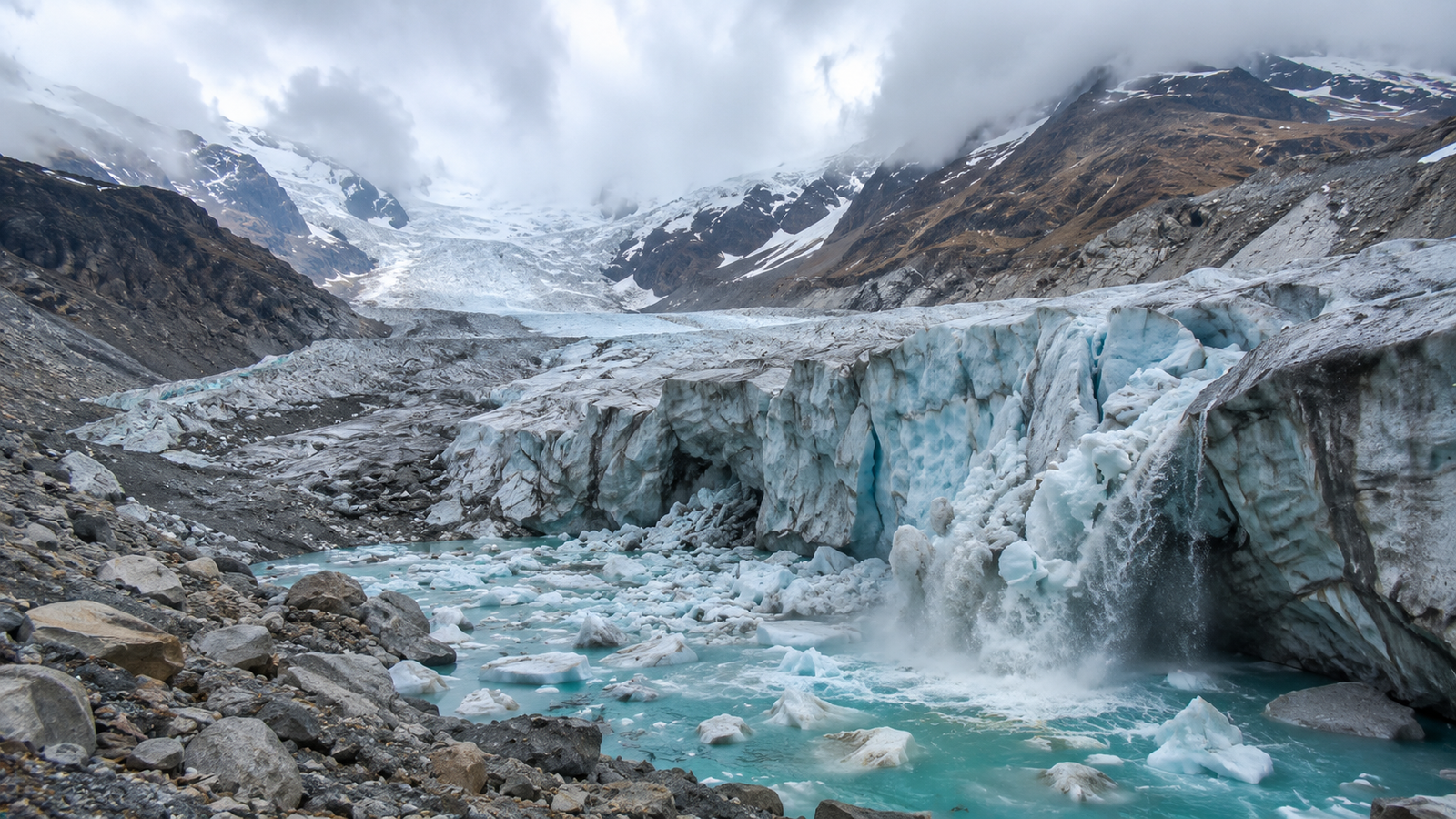
Arunachal Glacier Melt Floods concerns intensified after scientists warned about the rapid melting of the Khangri glacier in Tawang district. Researchers stated that the changing glacier conditions could increase the risk of Glacial Lake Outburst Floods, commonly known as GLOFs, posing a serious threat to downstream settlements and infrastructure.
Meghalaya Biochar Plant Supports Climate Goals
Mamata Banerjee Bio Update Sparks Discussion
Scientists Raise Concern Over Glacier Changes
According to researchers and environmental experts, accelerated glacier melting has been observed in the Khangri glacier region located in the high-altitude areas of Tawang district.
Scientists stated that rising temperatures and changing climatic conditions may be contributing to the instability of glacier systems and nearby glacial lakes.
Meanwhile, experts warned that excessive accumulation of meltwater in glacial lakes could eventually trigger sudden flood events capable of causing large-scale destruction in lower regions.
Risk Of Glacial Lake Outburst Floods Highlighted
The study gained major attention because Glacial Lake Outburst Floods are considered among the most dangerous climate-related disasters in mountainous regions.
Arunachal Glacier Melt Floods discussions increased after researchers explained that a sudden breach of glacial lakes can release massive volumes of water, debris, and sediment within a short period.
Environmental experts noted that such flood events can damage roads, bridges, villages, hydropower projects, and agricultural land located downstream.
At the same time, scientists emphasized the importance of early warning systems and continuous monitoring of vulnerable glacier zones.
Climate Change Linked To Glacier Instability
Researchers stated that climate change remains a major factor influencing glacier retreat across Himalayan regions, including Arunachal Pradesh.
Experts observed that rising temperatures can accelerate snow and ice melt, increasing pressure on fragile glacial lakes and mountain ecosystems.
Arunachal Glacier Melt Floods further highlighted growing environmental concerns regarding long-term climate impacts in northeastern and Himalayan states.
Meanwhile, climate analysts stressed the importance of scientific research, environmental planning, and disaster preparedness in vulnerable mountain areas.
Downstream Areas Face Potential Threat
Authorities and disaster management experts warned that downstream communities could face severe consequences if a Glacial Lake Outburst Flood occurs in the region.
Potential impacts may include flash flooding, landslides, infrastructure collapse, and disruption of transportation and communication networks.
Meanwhile, local administrations may review disaster response systems, evacuation planning, and risk assessment measures in light of the latest scientific findings.
Calls For Monitoring And Preparedness
Scientists urged authorities to strengthen glacier monitoring systems and conduct regular environmental assessments in high-risk zones.
Experts also recommended installation of advanced early warning systems and expansion of climate-related disaster preparedness programmes for local communities.
In addition, environmental groups highlighted the need for sustainable infrastructure planning in ecologically sensitive mountain regions.
Public Attention On Climate Risks Grows
The warning regarding the Khangri glacier generated widespread discussion across environmental forums, media platforms, and social networks.
Residents and observers expressed concern over the increasing frequency of climate-related warnings involving Himalayan glaciers and extreme weather events.
Meanwhile, policy experts noted that glacier monitoring and climate resilience strategies are becoming increasingly important for states located in mountainous terrains.
Conclusion
The scientific warning regarding rapid melting of the Khangri glacier in Tawang district has intensified concerns over the possibility of Glacial Lake Outburst Floods in downstream areas. As researchers continue monitoring glacier activity, authorities and environmental experts are emphasizing the need for disaster preparedness, climate resilience, and stronger environmental protection measures. The situation also reflects broader climate-related challenges affecting Himalayan regions across India.
FAQs
1. Which glacier is raising concern in Arunachal Pradesh?
Scientists warned about rapid melting of the Khangri glacier in Tawang district.
2. What disaster risk did researchers mention?
Experts warned about the possibility of Glacial Lake Outburst Floods, or GLOFs.
3. Why are GLOFs dangerous?
They can cause sudden floods, landslides, and major damage to downstream areas.
4. What is contributing to glacier melting?
Scientists linked the issue largely to climate change and rising temperatures.
5. Which areas could be affected by a flood event?
Downstream villages, roads, infrastructure, and agricultural regions may face risks.
6. What actions are experts recommending?
Researchers urged glacier monitoring, early warning systems, and disaster preparedness planning.