


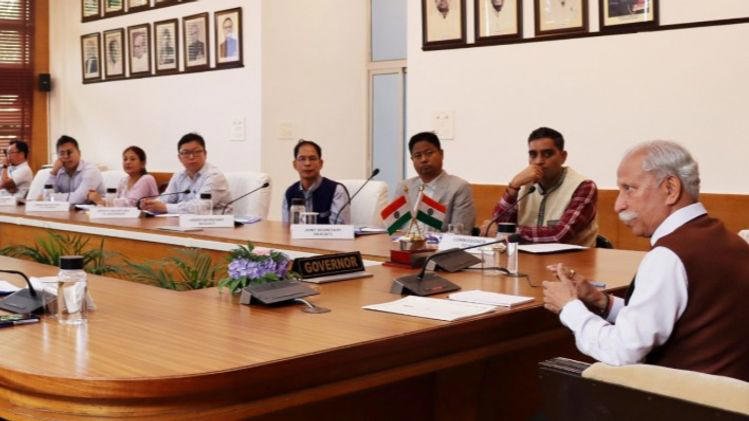
Arunachal Pradesh Governor Lt. Gen. (Retd.) K.T. Parnaik has expressed concern over delays in the execution of development projects and the recurring trend of a year-end rush in fund utilisation, stressing the need for improved planning, accountability, and efficient implementation across government departments. The Governor’s remarks come amid ongoing efforts by the state government to accelerate infrastructure development and ensure that public funds are utilized effectively for the benefit of citizens.
Addressing officials during a review of developmental activities, the Governor emphasized that timely project completion is essential for achieving intended outcomes and maximizing the impact of public investment. He observed that delays in execution often lead to cost escalations, inefficiencies, and missed opportunities for socio-economic progress.
Parnaik underscored the importance of adopting a proactive approach to project management, noting that development initiatives must be implemented according to planned timelines rather than being concentrated toward the end of the financial year. He called upon departments to strengthen monitoring mechanisms and ensure that funds are utilized in a systematic and transparent manner throughout the year.
Concerns Over Delayed Project Implementation
The Governor highlighted that delays in project execution remain a significant challenge in many parts of the state. Infrastructure projects, public service facilities, and development programmes often face setbacks due to administrative bottlenecks, logistical difficulties, procedural delays, and other implementation-related issues.
According to officials, Arunachal Pradesh’s geographical terrain presents unique challenges for project execution. Mountainous landscapes, remote locations, difficult weather conditions, and connectivity constraints can affect construction schedules and logistical operations. However, the Governor stressed that while such challenges are real, they should not become a reason for prolonged delays.
He emphasized that effective planning and timely decision-making can help mitigate many of these obstacles. Departments were encouraged to identify potential challenges at the project planning stage and develop strategies to address them before they impact implementation.
The Governor noted that delayed projects not only increase costs but also postpone the delivery of benefits to communities that rely on improved infrastructure and public services.
Year-End Rush in Fund Utilisation Raises Concerns
A major issue highlighted by the Governor was the tendency among some departments to utilize large portions of allocated funds during the final months of the financial year. Such practices often result in hurried spending, reduced efficiency, and challenges in maintaining quality standards.
Financial experts have long argued that balanced expenditure throughout the year leads to better planning, monitoring, and outcomes. Concentrating spending toward the end of the fiscal cycle can create administrative pressure and limit the ability of agencies to effectively supervise projects.
Parnaik observed that year-end expenditure surges may undermine the objective of prudent financial management. He stressed that government departments should focus on systematic implementation and regular fund utilization rather than waiting until the closing months of the financial year.
Officials were urged to adopt expenditure plans that align financial disbursement with actual project progress, thereby ensuring more effective use of public resources.
Importance of Efficient Financial Management
The Governor emphasized that responsible financial management is a critical component of good governance. Public funds are intended to support development initiatives that improve the lives of citizens, and therefore their utilization must be guided by principles of transparency, efficiency, and accountability.
Efficient financial planning allows departments to execute projects smoothly while maintaining high standards of quality. It also facilitates better monitoring and evaluation, enabling authorities to identify challenges early and implement corrective measures when necessary.
Parnaik noted that financial discipline is particularly important at a time when development requirements are growing and public expectations are increasing. Every rupee allocated for development should translate into measurable outcomes that benefit communities across the state.
He called upon departments to strengthen internal financial controls and adopt best practices in project management to ensure optimal utilization of available resources.
Strengthening Monitoring and Review Mechanisms
To address implementation challenges, the Governor stressed the need for robust monitoring and review systems. Regular assessments can help track project progress, identify delays, and ensure accountability at various levels of administration.
Officials were encouraged to conduct periodic reviews of ongoing projects and maintain close coordination among departments involved in implementation. Effective monitoring not only helps prevent delays but also improves the quality of project outcomes.
The Governor highlighted the importance of data-driven decision-making and timely reporting. Accurate information regarding project status, expenditure patterns, and implementation challenges can support better planning and resource allocation.
Strengthened monitoring mechanisms are expected to help ensure that projects remain on schedule and that development objectives are achieved within stipulated timelines.
Infrastructure Development Remains a Key Priority
Arunachal Pradesh has witnessed significant investments in infrastructure over recent years, including projects related to roads, bridges, healthcare, education, rural development, and connectivity. These initiatives are essential for improving living standards and supporting economic growth in the state.
The Governor acknowledged the progress made in various sectors but emphasized that successful development depends not only on funding but also on efficient implementation. Infrastructure projects must be completed on time to deliver intended benefits and support broader development goals.
Improved roads and connectivity, for instance, can enhance access to markets, healthcare facilities, and educational institutions. Delays in such projects can slow economic activity and affect the quality of life for local communities.
Parnaik urged departments to maintain focus on execution efficiency and ensure that infrastructure investments generate maximum value for citizens.
Promoting a Culture of Accountability
The Governor also highlighted the importance of fostering accountability within government institutions. Clear responsibilities, transparent processes, and regular performance evaluations can contribute to more effective project implementation.
Officials were encouraged to take ownership of assigned projects and ensure that targets are achieved within specified timelines. Accountability mechanisms can help improve performance while reducing instances of unnecessary delays and inefficiencies.
Parnaik emphasized that good governance requires a results-oriented approach in which departments focus on achieving measurable outcomes rather than merely completing administrative procedures. Citizens expect timely delivery of services and infrastructure, making accountability an essential element of public administration.
The Governor noted that stronger accountability can also enhance public trust in government institutions and development programmes.
Leveraging Technology for Better Project Management
Modern technology offers valuable tools for improving project planning, monitoring, and financial management. The Governor encouraged departments to explore digital solutions that can enhance transparency and efficiency in implementation processes.
Technology-enabled monitoring systems can provide real-time updates on project progress, expenditure levels, and performance indicators. Such systems help authorities identify delays early and take corrective action before problems escalate.
Digital platforms can also improve coordination among departments and facilitate better communication between implementing agencies and decision-makers. Officials believe that technology can play an increasingly important role in strengthening governance and project management.
The adoption of innovative approaches is expected to support the state’s efforts to improve development outcomes and optimize resource utilization.
Ensuring Sustainable and Inclusive Development
The Governor’s remarks reflect a broader commitment to ensuring that development initiatives are implemented effectively and deliver meaningful benefits to communities. Timely project execution and prudent fund utilization are essential for achieving sustainable and inclusive growth.
As Arunachal Pradesh continues to pursue ambitious development goals, efficient governance and strong implementation mechanisms will remain critical. Investments in infrastructure, public services, and social welfare programmes can only achieve their intended impact when projects are completed on schedule and resources are utilized responsibly.
By highlighting concerns related to project delays and year-end spending patterns, Parnaik has drawn attention to areas that require continued improvement. His call for greater accountability, financial discipline, and proactive planning underscores the importance of strengthening governance systems to support long-term development.
With enhanced monitoring, improved coordination, and a focus on timely implementation, Arunachal Pradesh can further accelerate its development journey and ensure that public investments translate into tangible improvements in the lives of its people.