


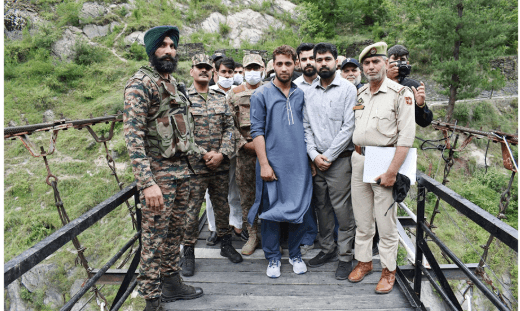
The Indian Army has repatriated a Pakistani youth who inadvertently crossed the Line of Control (LoC) in Jammu and Kashmir’s Kupwara district, bringing a peaceful conclusion to an incident that highlighted the challenges faced by civilians living near one of the world’s most heavily guarded borders. The youth was handed back to Pakistani authorities after necessary verification procedures and coordination between the relevant agencies on both sides.
Officials stated that the individual had reportedly crossed into Indian territory unintentionally and was subsequently detained by security personnel. Following standard procedures, authorities conducted inquiries to establish his identity and ascertain the circumstances under which he entered Indian territory. After confirming that the crossing appeared to be inadvertent, the Indian Army facilitated his safe return through established mechanisms.
The repatriation has been viewed as an example of humanitarian considerations being applied in situations involving accidental border crossings, particularly in regions where geographical conditions and difficult terrain can sometimes lead civilians to unknowingly cross the LoC.
Incident Occurred in Kupwara Sector
The incident took place in the Kupwara district of north Kashmir, an area that shares a section of the Line of Control with Pakistan-administered territory. The region is characterized by rugged mountainous terrain, dense forests, and challenging weather conditions, making navigation difficult for local residents and visitors alike.
Security officials noted that civilians occasionally stray across the LoC due to poor visibility, unfamiliarity with specific boundary locations, or while tending livestock and carrying out routine activities. While such incidents are relatively uncommon, they are not unprecedented given the complex geography of the border region.
Upon detecting the youth’s presence, Indian security personnel followed established procedures and took him into custody. Authorities then initiated verification processes to determine his identity and assess the nature of the crossing.
Officials emphasized that standard operating procedures are designed to ensure security considerations are addressed while also taking into account humanitarian concerns in cases where there is no indication of malicious intent.
Verification and Security Procedures Followed
Following his detention, the Pakistani youth underwent routine verification and questioning procedures conducted by relevant authorities. Such processes are considered essential in border-related incidents to establish the identity of individuals and understand the circumstances leading to the crossing.
Security agencies are required to determine whether an individual crossed the border intentionally or accidentally and whether there are any security implications associated with the incident. Officials stated that in this case, available information indicated that the crossing was inadvertent.
The verification process involved coordination among various agencies responsible for border management and security. Once the necessary checks were completed and the individual’s identity was confirmed, arrangements were made for his repatriation.
Authorities highlighted that such measures help ensure that humanitarian actions are undertaken without compromising national security interests.
Repatriation Conducted Through Established Protocols
After the completion of all formalities, the Indian Army coordinated the repatriation of the youth through established channels. Border management mechanisms provide procedures for handling accidental crossings and facilitating the return of civilians once their identities and circumstances have been verified.
Officials noted that communication and coordination between the concerned authorities play an important role in ensuring smooth repatriation. Such processes help prevent misunderstandings and contribute to maintaining stability in border areas.
The youth was reportedly handed over to Pakistani authorities at a designated point along the Line of Control. The transfer was conducted in accordance with established protocols that govern such incidents.
The successful repatriation reflects the importance of maintaining mechanisms that allow humanitarian issues to be addressed even in sensitive border regions.
Humanitarian Considerations Remain Important
Incidents involving accidental border crossings often require a balanced approach that takes into account both security concerns and humanitarian considerations. Authorities on both sides of the border have, in various instances, facilitated the return of civilians who inadvertently crossed into neighboring territory.
Security experts note that while the Line of Control remains a sensitive and heavily monitored boundary, humanitarian gestures can play a positive role in addressing situations involving ordinary civilians. Such actions demonstrate the willingness of authorities to distinguish between genuine security threats and accidental crossings.
The Indian Army has on multiple occasions emphasized its commitment to handling such incidents in a professional and humane manner while adhering to established security procedures. Officials maintain that safeguarding human dignity remains an important consideration in dealing with civilians who find themselves in such circumstances.
The latest repatriation has been welcomed as a constructive resolution that prioritizes humanitarian values while respecting security requirements.
Challenges Faced by Border Communities
Communities living near the Line of Control often face unique challenges due to the geographical and security realities of the region. Difficult terrain, harsh weather conditions, and limited visibility can make navigation complicated, particularly in remote areas.
Many residents rely on agriculture, livestock rearing, and other livelihood activities that require movement across rugged landscapes. In certain situations, individuals may inadvertently cross into restricted areas without realizing they have approached or crossed the boundary.
Experts point out that awareness campaigns and local guidance play an important role in helping residents understand border regulations and avoid accidental crossings. At the same time, authorities remain vigilant in monitoring border areas to ensure security and prevent unauthorized movement.
The latest incident serves as a reminder of the complex realities faced by people living near the LoC and the importance of maintaining effective communication and response mechanisms.
Indian Army’s Role in Border Management
The Indian Army plays a crucial role in securing the Line of Control while also responding to humanitarian situations that arise in border areas. In addition to its primary responsibility of safeguarding national security, the Army often assists local communities and handles civilian-related incidents in accordance with established procedures.
Officials noted that the Army’s response in cases of inadvertent crossings is guided by a combination of security protocols and humanitarian principles. Thorough verification is conducted to ensure that there are no security concerns, after which appropriate action is taken.
The handling of such incidents requires professionalism, coordination, and adherence to legal and administrative frameworks. The successful repatriation of the youth reflects the Army’s ability to balance these responsibilities effectively.
Security agencies continue to maintain a high level of vigilance along the LoC while remaining prepared to address humanitarian situations as they arise.
Significance of Peaceful Resolutions
Although accidental border crossings may appear to be isolated incidents, their peaceful resolution can contribute positively to confidence-building efforts and humanitarian engagement. Handling such cases with sensitivity helps prevent unnecessary tensions and demonstrates a commitment to established norms and procedures.
Observers note that humanitarian actions involving civilians can serve as reminders of the shared challenges faced by communities living near borders. While political and security considerations remain important, ensuring the welfare of ordinary individuals is equally significant.
The successful repatriation of the Pakistani youth underscores the value of dialogue, coordination, and adherence to humanitarian principles in managing border-related incidents.
A Constructive Outcome Amid Sensitive Border Dynamics
The repatriation of the Pakistani youth who inadvertently crossed the Line of Control in Kupwara represents a constructive and humane outcome to a potentially sensitive situation. Through established verification procedures and coordinated efforts, authorities were able to ensure the individual’s safe return while addressing all necessary security considerations.
The incident highlights both the challenges associated with life near the LoC and the importance of mechanisms that allow accidental crossings to be resolved peacefully. It also reflects the Indian Army’s commitment to balancing security responsibilities with humanitarian concerns.
As border management agencies continue their efforts to maintain peace and stability in the region, the successful resolution of such incidents demonstrates the effectiveness of established protocols and the importance of a measured, humane approach to handling civilian-related cases along the Line of Control.