


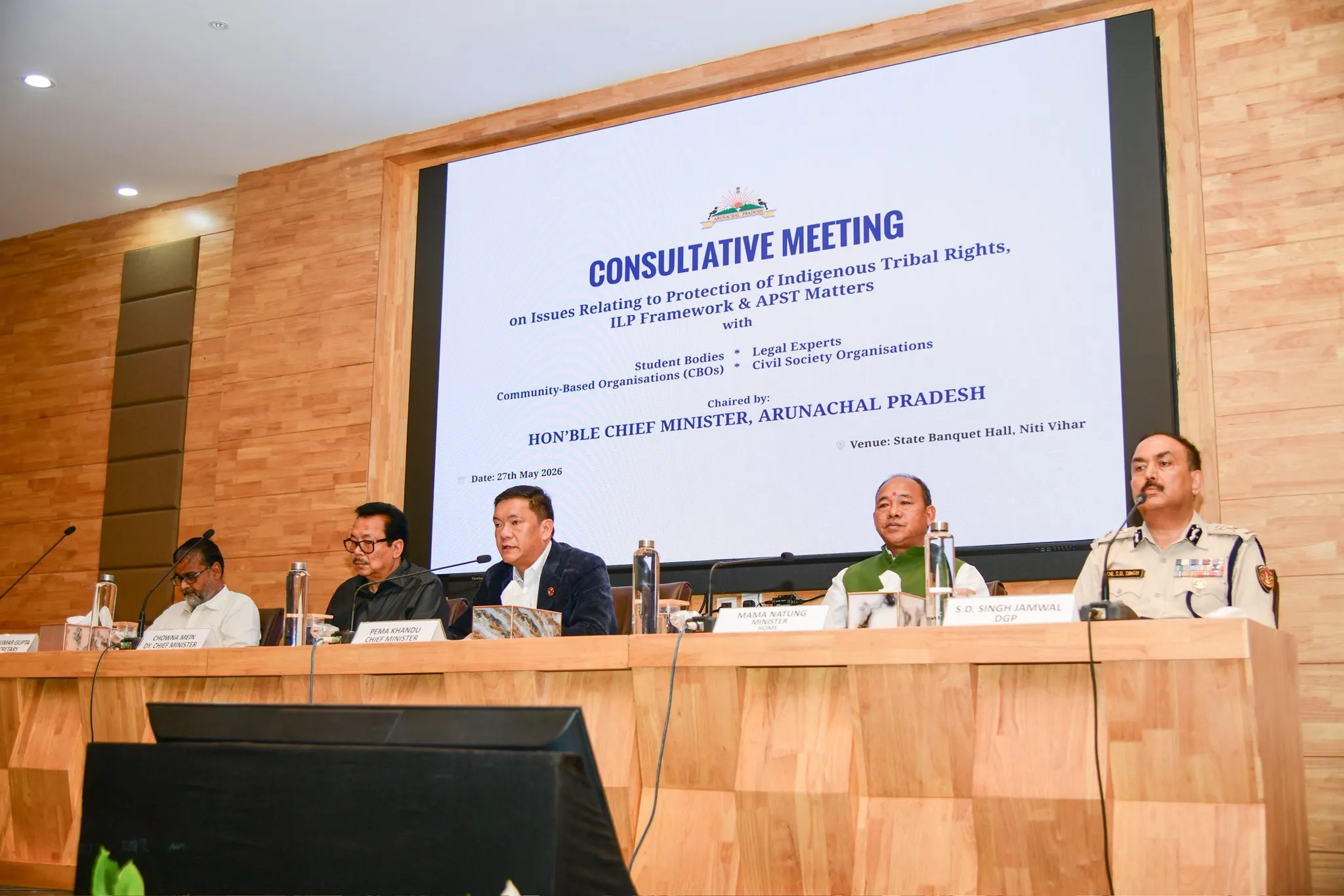
The Arunachal ILP tribal rights meeting gained attention after Chief Minister Pema Khandu held a detailed seven-hour consultative session focused on the Inner Line Permit (ILP) framework and its role in safeguarding indigenous communities. The discussion centred on strengthening protective mechanisms for tribal populations, improving administrative implementation, and ensuring regulated entry into protected areas of the state. Officials stated that the meeting brought together key stakeholders to review existing policies and explore ways to enhance enforcement of the ILP system in Arunachal Pradesh.
Assam Researchers Discover New Gecko Species
Assam UCC Bill Passed With Tribal Exemption
Chief Minister Leads Extended Consultative Session
Chief Minister Pema Khandu chaired a comprehensive seven-hour meeting to review the Inner Line Permit system in detail. The Arunachal ILP tribal rights meeting focused on evaluating current regulations and strengthening safeguards for indigenous communities across the state.
Senior officials, administrative representatives, and policy experts participated in the discussion. They examined how the ILP framework functions in regulating entry and protecting the cultural and demographic integrity of tribal regions.
Authorities stated that the meeting allowed detailed deliberation on administrative challenges and implementation gaps. Officials also highlighted the importance of maintaining strict enforcement to preserve indigenous identity and regional stability.
Strengthening Protection For Tribal Communities
The discussion placed strong emphasis on protecting tribal rights and cultural heritage under the ILP system. The Arunachal ILP tribal rights meeting reviewed measures designed to regulate movement into protected areas and safeguard indigenous populations.
Officials stated that the ILP framework plays a critical role in preserving traditional practices, land rights, and demographic balance in Arunachal Pradesh. They further noted that any policy refinement must ensure continued protection of tribal interests while supporting administrative efficiency.
Policy experts participating in the meeting highlighted the importance of balancing development needs with cultural preservation. They also discussed how improved monitoring systems could enhance enforcement of ILP regulations.
Focus On Administrative Efficiency And Enforcement
Authorities reviewed administrative procedures linked to ILP issuance and monitoring during the extended session. The Arunachal ILP tribal rights meeting addressed concerns related to enforcement consistency, documentation processes, and inter-departmental coordination.
Officials stated that strengthening digital systems and verification mechanisms could improve efficiency and reduce procedural delays. They also discussed the need for better coordination between district administrations and enforcement agencies.
Policy analysts noted that effective implementation of the ILP system depends on streamlined administrative processes and strong field-level monitoring. Therefore, the meeting emphasised capacity building and improved communication between departments.
Balancing Development And Indigenous Safeguards
The consultative session also examined how development initiatives align with indigenous protection frameworks. The Arunachal ILP tribal rights meeting highlighted the need to ensure that infrastructure growth does not compromise tribal rights or cultural identity.
Officials stated that Arunachal Pradesh continues to prioritise both development and cultural preservation in its governance approach. They also noted that regulatory systems like ILP remain essential for maintaining this balance.
Experts participating in the discussion emphasised that sustainable development must include community participation and respect for traditional governance systems. They further suggested that periodic policy reviews help adapt regulations to changing administrative needs.
Policy Review And Future Implementation Steps
The meeting concluded with discussions on future steps for improving ILP implementation across the state. The Arunachal ILP tribal rights meeting focused on strengthening monitoring systems and enhancing awareness among stakeholders.
Officials stated that further consultations may be conducted to refine operational guidelines and address implementation challenges. They also indicated that inter-departmental coordination will play a key role in improving enforcement outcomes.
Authorities emphasised that the ILP framework will continue to serve as a key protective mechanism for tribal communities in Arunachal Pradesh. They further reaffirmed the government’s commitment to preserving indigenous rights while ensuring orderly governance.
Conclusion
The extended consultative meeting led by Chief Minister Pema Khandu underscored the importance of the Inner Line Permit system in protecting tribal rights in Arunachal Pradesh. The Arunachal ILP tribal rights meeting highlighted efforts to strengthen enforcement, improve administrative efficiency, and balance development with cultural preservation. As discussions continue, the ILP framework remains central to safeguarding the identity and interests of indigenous communities in the state.
FAQs
What was the focus of the meeting led by Pema Khandu?
The meeting focused on reviewing and strengthening the Inner Line Permit (ILP) framework.
Why is the ILP system important in Arunachal Pradesh?
It helps protect tribal rights and regulates entry into indigenous areas.
How long did the meeting last?
The consultative meeting lasted approximately seven hours.
Who participated in the discussion?
Senior officials, administrators, and policy experts took part in the meeting.
What issues were discussed?
Implementation, enforcement, and administrative efficiency of the ILP system were discussed.
What is the goal of the ILP framework?
The goal is to safeguard indigenous communities and preserve cultural identity.