

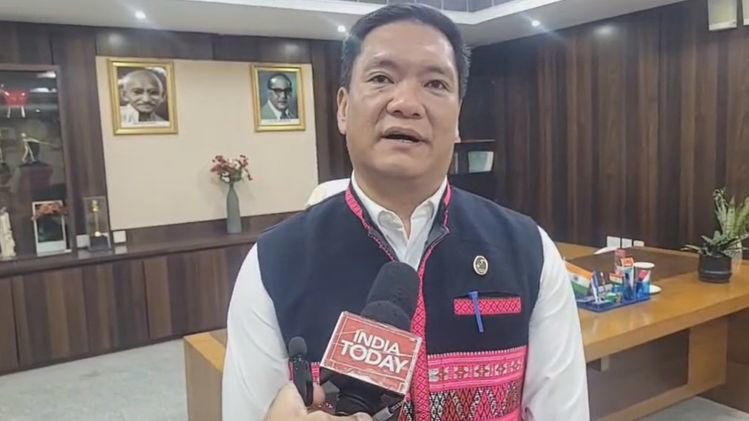
The government of Arunachal Pradesh has announced that it will raise the long-standing Changlang boundary issue with Assam after the ongoing electoral process concludes. Officials stated that discussions regarding the boundary dispute will resume once the political situation stabilizes following the elections.
The matter concerns certain areas in the border district of Changlang, where overlapping administrative claims have created tensions over the years. Leaders in Arunachal Pradesh believe that addressing the issue through dialogue with Assam is necessary to ensure stability and clarity along the inter-state boundary.
Read More: Mamata Banerjee lifts dharna against SIR after SC orders tribunals
Long-Standing Border Concerns
The boundary dispute between Arunachal Pradesh and Assam has persisted for decades. Several districts located along the inter-state border have experienced disagreements related to land jurisdiction and administrative control. Consequently, residents living in these areas often face uncertainty regarding governance and development activities.
Changlang district has been among the regions where such concerns periodically emerge. Local communities have occasionally raised questions about land ownership, access to resources, and administrative services. Therefore, resolving the boundary issue has become an important priority for the state government.
Officials in Arunachal Pradesh have stated that discussions with Assam will focus on ensuring peaceful coexistence and protecting the interests of people residing in border areas.
Government Plans to Resume Talks After Elections
Leaders in Arunachal Pradesh indicated that formal discussions with Assam will take place after the completion of the electoral process. During election periods, governments often limit major negotiations to avoid political complications.
Once the elections conclude, officials from both states are expected to hold meetings aimed at addressing the Changlang boundary issue. These discussions will likely involve administrative authorities, legal experts, and representatives from border districts.
Authorities believe that resuming talks at an appropriate time will allow both states to engage in constructive dialogue. As a result, the chances of reaching a practical and peaceful solution may increase.
Importance of Dialogue Between States
Inter-state boundary disputes in Northeast India require careful negotiation and cooperation between governments. The Arunachal–Assam boundary issue, like several others in the region, has historical roots linked to colonial administrative arrangements and later state reorganizations.
Over time, both states have attempted to address the issue through committees and joint discussions. Although progress has been made in certain areas, some regions continue to require further negotiation.
Therefore, political leaders emphasize the importance of sustained dialogue. By engaging in structured discussions, the two states can work toward mutually acceptable solutions while maintaining peaceful relations.
Impact on Border Communities
Residents living in border districts such as Changlang often experience the direct effects of unresolved boundary issues. Development projects, administrative services, and land management can become complicated when jurisdiction remains unclear.
Consequently, local communities frequently urge state governments to resolve disputes quickly. Clear administrative boundaries can help improve governance, facilitate infrastructure development, and ensure access to welfare programs.
Community leaders in Changlang have also emphasized the need for stability and cooperation between neighboring states. Peaceful relations along the border are essential for economic activities, transport connectivity, and social interaction between communities.
Previous Efforts to Resolve Boundary Disputes
Arunachal Pradesh and Assam have previously established mechanisms to address inter-state boundary disagreements. Joint committees and ministerial-level talks have been organized to examine contested areas and explore possible solutions.
These initiatives have sometimes resulted in agreements for maintaining peace and preventing escalation of disputes. However, certain areas continue to require further discussion and clarification.
Experts believe that gradual negotiations remain the most effective approach to resolving such issues. By carefully examining historical records, administrative documents, and ground realities, both states can identify practical solutions.
Regional Importance of Border Stability
Stable borders between Northeast Indian states are crucial for regional development. Infrastructure projects, trade routes, and social connections often depend on peaceful cooperation between neighboring states.
When disputes arise, they can slow down development activities and create uncertainty for residents. Therefore, maintaining stability along the Arunachal–Assam boundary remains an important priority for both governments.
Leaders in Arunachal Pradesh have reiterated that their objective is not confrontation but constructive dialogue. By raising the Changlang boundary issue through official discussions, they hope to move toward a lasting solution.
Looking Ahead
As elections conclude, both Arunachal Pradesh and Assam are expected to resume talks on several pending inter-state matters, including the Changlang boundary issue. Officials remain optimistic that continued dialogue will help resolve misunderstandings and strengthen cooperation between the two states.
Observers note that such discussions require patience and careful negotiation. However, progress in resolving border concerns can significantly benefit local communities and improve administrative efficiency.
Ultimately, addressing the Changlang boundary issue through peaceful dialogue may contribute to stronger relations between Arunachal Pradesh and Assam while ensuring stability for residents living along the border.
Read More: Tripura Transport Minister Reviews Key Infrastructure Projects