

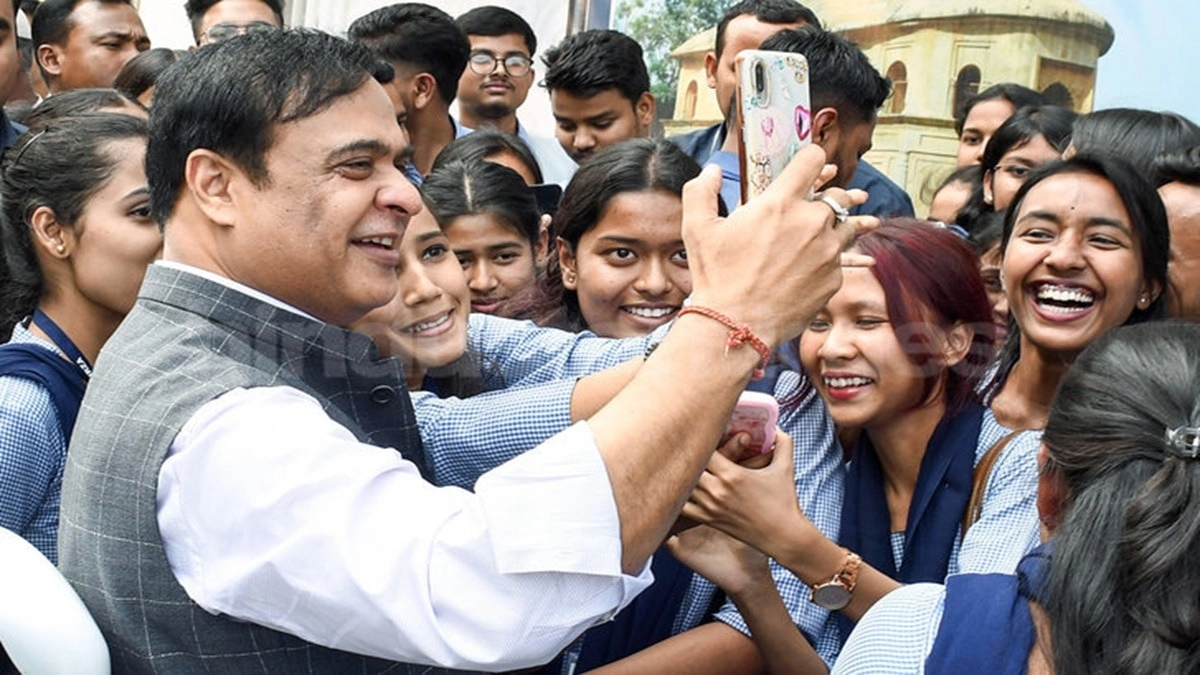
Assam Chief Minister Himanta Biswa Sarma announced that the state has achieved a zero dropout rate among school-going girls, thanks to the implementation of the Nijut Moina scheme. The initiative, launched to empower girls through education, has become a major success story in the state’s pursuit of gender equality and educational reform.
Speaking at a public event in Guwahati, CM Sarma said the scheme has helped eliminate one of the most persistent challenges in rural education—girl child dropouts. He noted that every enrolled girl is now continuing her education without interruption. The Chief Minister credited the state’s sustained efforts, community participation, and the financial aid provided under Nijut Moina for achieving this milestone.
Read More: Tripura Launches Samriddhi Abhiyan to Uplift 4.86 Lakh Rural Women
Financial aid drives school retention
The Nijut Moina scheme, launched in 2023, was designed to provide financial assistance to school-going girls from economically weaker backgrounds. Under the program, girls receive direct monetary support for educational expenses, including books, uniforms, and transportation. The scheme also provides incentives for families to keep their daughters in school instead of withdrawing them due to economic pressure.
According to education officials, over 10 lakh girls have benefited from the scheme so far. The government’s data shows a sharp decline in dropout numbers in just one academic year, transforming the educational landscape of Assam’s rural areas. The state’s focus on early intervention, coupled with digital tracking of beneficiaries, has ensured accountability and transparency.
Chief Minister Sarma mentioned that education is a tool for empowerment, especially for young girls. “Through Nijut Moina, we are not just keeping girls in classrooms; we are shaping their futures,” he said. The program, he added, also aligns with the broader vision of building a New Assam where gender equality forms the foundation of social development.
Focus on rural and backward regions
The government has concentrated its efforts on remote and economically disadvantaged districts, where dropout rates were historically high. Areas such as Karimganj, Hailakandi, and Goalpara have witnessed remarkable improvement, with school attendance among girls reaching nearly 100%.
Teachers and local administrators have played a crucial role in spreading awareness about the scheme. Many educators have reported that the initiative has not only reduced dropouts but also increased classroom participation. Parents, especially from low-income families, now feel more motivated to send their daughters to school regularly.
The education department has also worked on infrastructure improvement by building more classrooms, providing sanitary facilities for girls, and ensuring safety during school hours. These measures have collectively created a supportive environment for female education.
Empowering girls beyond education
Beyond providing financial help, the Nijut Moina scheme aims to inspire long-term social change. It encourages families to view education as an investment rather than a burden. The initiative also links with skill development programs, ensuring that girls have access to career training after completing school.
The government plans to expand the scheme’s benefits to higher secondary levels and eventually to vocational institutions. Officials have hinted at introducing new scholarships for outstanding students under the same banner. CM Sarma emphasized that keeping girls in school not only improves literacy rates but also reduces child marriage and early dropout-related issues.
Education Minister Ranoj Pegu also commended the initiative, calling it one of the most impactful education reforms in the state’s history. He mentioned that the zero dropout achievement will serve as a model for other states. “Assam’s commitment to education and women’s empowerment has yielded tangible results,” Pegu said during his address.
Aligning with national goals
The Nijut Moina scheme complements the central government’s Beti Bachao, Beti Padhao mission, which focuses on ensuring survival, protection, and education of the girl child. Assam’s success underlines the importance of local implementation and continuous monitoring.
Experts believe that the scheme’s model—based on direct cash transfer, community involvement, and infrastructure development—can be replicated in other parts of India. Education activists have praised the initiative, stating that it bridges the gap between policy design and real-world execution.
Moreover, the Assam government’s use of technology to monitor attendance and performance has been crucial. The state’s education department has developed a digital platform to track the academic progress of each girl enrolled under the program, ensuring funds reach the right beneficiaries.
A model for inclusive growth
The achievement of a zero dropout rate marks a turning point in Assam’s education sector. The Chief Minister reaffirmed that his government would continue investing in youth education, with a special focus on girl empowerment. He said the success of Nijut Moina represents a promise fulfilled to the people of Assam—one where equality, opportunity, and progress walk hand in hand.
With initiatives like Nijut Moina, Assam is emerging as a role model for inclusive development and educational advancement in India. The program’s success is not only a victory for education but also a step forward in the larger mission of empowering women and creating a self-reliant society.
Read More: Northeast India under Bangladesh? Yunus’ map gift stirs row