


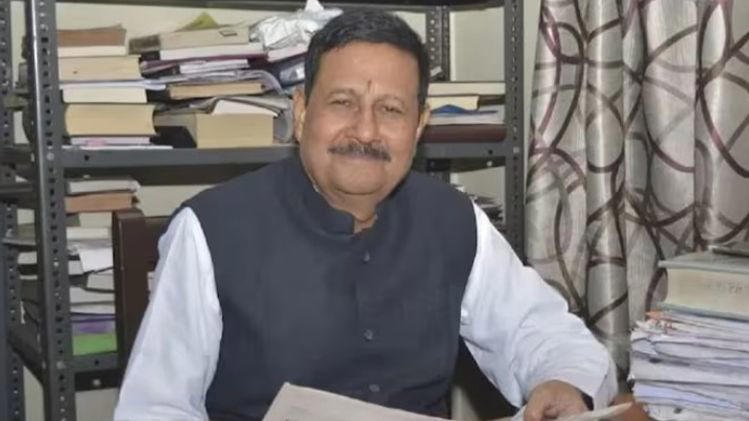
The Assam Pradesh Congress Committee (APCC) has revoked the expulsion order issued against senior party leader Nilamani Sen Deka, marking a significant development within the state unit of the Congress. The decision comes amid ongoing efforts by the party to strengthen organizational unity and prepare for future political challenges in Assam.
Party leaders stated that the revocation reflects the Congress leadership’s commitment to maintaining cohesion within the organization and ensuring that experienced leaders continue contributing to the party’s activities. The move has generated considerable attention in Assam’s political circles, with observers viewing it as an attempt to consolidate support and strengthen the party’s position ahead of upcoming political engagements.
Nilamani Sen Deka, a veteran Congress leader with a long association with the party, is expected to resume his role in organizational and political activities following the withdrawal of the disciplinary action.
Congress Reverses Earlier Decision
The revocation of the expulsion order effectively restores Nilamani Sen Deka’s position within the Congress organization in Assam.
Party officials indicated that the decision was taken after reviewing the circumstances surrounding the disciplinary action and considering the broader interests of the party.
The development underscores the Congress leadership’s willingness to resolve internal differences through dialogue and organizational mechanisms.
Political observers note that leadership decisions involving senior members often carry significance beyond individual cases, as they can influence party morale and unity.
By withdrawing the expulsion order, the party appears to be signaling a preference for reconciliation and collective functioning.
The decision is expected to be welcomed by supporters of the veteran leader within the organization.
Nilamani Sen Deka’s Political Background
Nilamani Sen Deka has been associated with the Congress for several decades and is regarded as one of the party’s experienced leaders in Assam.
Over the years, he has been involved in various organizational and political responsibilities and has contributed to the party’s activities across different regions of the state.
His experience and familiarity with Assam’s political landscape have made him a recognizable figure within the Congress organization.
Political analysts note that veteran leaders often play an important role in maintaining grassroots connections and guiding younger party workers.
The revocation of the expulsion order therefore restores a leader whose experience may continue to be valuable for the party’s future strategies.
Focus on Organizational Unity
The decision comes at a time when political parties across the country are placing increasing emphasis on organizational strength and internal cohesion.
For the Congress in Assam, maintaining unity remains an important objective as the party seeks to strengthen its presence and expand its support base.
Officials believe that resolving internal disputes can help create a more stable and effective organizational structure.
Political observers frequently point out that strong internal coordination is essential for any party seeking to compete effectively in a dynamic political environment.
The restoration of Nilamani Sen Deka’s membership is therefore being viewed as part of broader efforts to reinforce unity within the state unit.
Importance of Senior Leaders
Veteran leaders often play a critical role in political organizations by providing guidance, institutional memory, and strategic insight.
Their experience can help parties navigate complex political situations and strengthen engagement with grassroots workers.
Congress leaders have repeatedly emphasized the importance of drawing upon the knowledge and expertise of senior members while simultaneously encouraging new leadership.
The return of Nilamani Sen Deka is expected to contribute to these efforts by bringing additional experience into the organizational framework.
Political analysts note that balancing continuity and renewal remains a key challenge for many political parties.
The latest development reflects an attempt to maintain that balance within the Congress organization in Assam.
Assam Congress Preparing for Future Challenges
The revocation of the expulsion order comes as the Assam Congress continues efforts to reorganize and strengthen its structure ahead of future political contests.
Party leaders have been focusing on expanding outreach, improving coordination among local units, and increasing engagement with voters across the state.
Officials believe that a united organization is better positioned to address political challenges and communicate its message effectively.
The inclusion of experienced leaders is viewed as an important component of this strategy.
Political observers suggest that organizational decisions such as this often reflect broader preparations for upcoming electoral and political campaigns.
The Congress leadership appears keen to present a united front as it works to strengthen its position in Assam.
Reactions Within Political Circles
The decision has attracted attention from political leaders, party workers, and observers across Assam.
Supporters of Nilamani Sen Deka have reportedly welcomed the move, describing it as a positive step toward strengthening the party.
Political analysts believe the development may help reduce internal tensions and encourage greater cooperation among different sections of the organization.
At the same time, rival parties are likely to closely monitor the impact of the decision on Congress’s internal dynamics.
Such developments often influence perceptions regarding party stability and leadership effectiveness.
Observers note that the long-term significance of the move will depend on how it contributes to organizational functioning in the months ahead.
Internal Reconciliation in Political Parties
The revocation also highlights the role of reconciliation in political organizations. Differences of opinion and internal disagreements are common within large parties that include leaders from diverse backgrounds and regions.
Many political parties periodically review disciplinary actions and seek solutions that preserve unity while maintaining organizational discipline.
The Congress leadership’s decision indicates a willingness to prioritize dialogue and consensus-building when addressing internal matters.
Experts believe such approaches can help strengthen party structures and improve long-term stability.
The restoration of senior leaders often contributes to creating a more inclusive organizational environment.
Strengthening Grassroots Engagement
Political leaders with extensive experience often maintain strong connections with grassroots workers and local communities.
Nilamani Sen Deka’s return may help strengthen outreach efforts in areas where he enjoys influence and support.
Congress leaders have emphasized the importance of grassroots engagement as a key component of the party’s strategy in Assam.
Officials believe that experienced leaders can help mobilize workers, strengthen local units, and improve communication with voters.
The decision may therefore have implications not only for internal organization but also for future political activities at the grassroots level.
Looking Ahead
The Assam Congress’s decision to revoke the expulsion order against Nilamani Sen Deka marks an important step in the party’s efforts to strengthen organizational unity and reconciliation. By restoring the veteran leader’s position within the party, the Congress has signaled its intention to draw upon experienced leadership while preparing for future political challenges.
The move reflects broader efforts to consolidate the organization, enhance internal coordination, and maintain a united front in Assam’s evolving political landscape. As the party continues its outreach and restructuring initiatives, the contribution of senior leaders is likely to remain significant.
Political observers will be closely watching how the decision influences party dynamics and organizational effectiveness in the coming months. For now, the revocation represents a notable development in Assam politics and a reaffirmation of the Congress leadership’s emphasis on unity and collective engagement.