


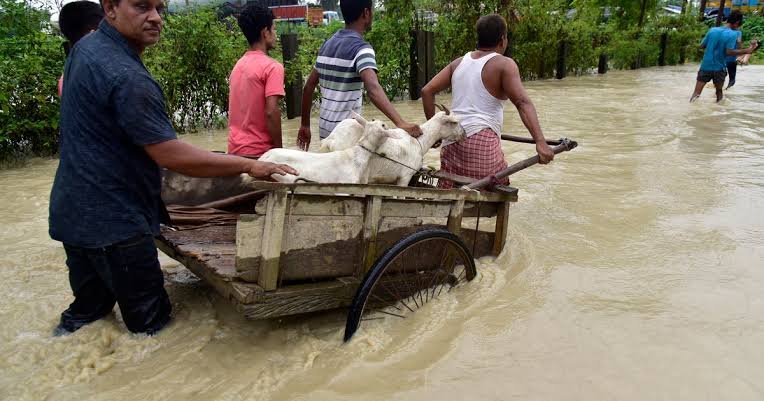
The Displacement Crisis in Assam has intensified as more than 1.6 lakh residents remain displaced and continue to take shelter in temporary relief camps across 14 severely affected districts. The situation highlights the scale of the ongoing monsoon emergency and the pressure it has placed on affected communities.
The Displacement Crisis has forced thousands of families to leave their homes as flooding and related disruptions affect residential areas. Meanwhile, district administrations and relief teams continue supporting people staying in temporary shelters.
The large number of displaced residents also reflects the wider impact of the monsoon on housing, transportation, agriculture, and essential services. Moreover, maintaining adequate shelter, drinking water, food, sanitation, and healthcare remains important while communities remain away from their homes.
Authorities continue assessing conditions in affected districts and coordinating relief operations. Therefore, sustained assistance will remain essential until residents can safely return and begin recovery.
Tea Estate Strikes: Cachar Workers Stage Sit-In Over Delayed Monsoon Allowances
Displacement Crisis Spreads Across 14 Severely Hit Districts
The Displacement Crisis currently affects more than 1.6 lakh residents across 14 severely impacted districts. According to the available information, these residents have taken shelter in temporary relief camps established to support people affected by the monsoon situation.
Moreover, relief camps provide an important safety network for families who cannot remain in their homes. Consequently, district authorities must maintain essential supplies and basic services at shelter locations.
The scale of displacement also creates logistical challenges for local administrations. Furthermore, authorities need to monitor shelter capacity and ensure that vulnerable residents receive appropriate assistance.
The available information confirms the number of displaced residents and affected districts. However, it does not provide a district-wise breakdown, the exact number of relief camps, or details about the number of people housed at each location.
Relief Camps Provide Essential Support to Displaced Residents
The Displacement Crisis has increased the demand for temporary shelter and humanitarian assistance across affected parts of Assam. District teams continue coordinating relief measures for residents who have left their homes.
Additionally, clean drinking water, food supplies, sanitation facilities, and healthcare services remain important priorities in temporary camps. This support helps communities manage difficult conditions while authorities assess the situation.
Relief operations also require regular monitoring because the number of displaced residents can change as floodwaters rise or recede. Meanwhile, officials must assess whether existing shelters can accommodate additional families if conditions deteriorate.
The available information does not specify the duration of displacement or when authorities expect residents to return home. Therefore, the immediate focus remains on providing safe temporary accommodation and essential assistance.
Displacement Crisis Highlights Long-Term Flood Recovery Challenges
The Displacement Crisis demonstrates how severe monsoon conditions can create challenges that continue beyond the initial flooding. Families may require additional assistance even after water levels decline and transportation routes reopen.
Moreover, damaged homes, agricultural fields, roads, and public facilities can slow the return to normal life. Consequently, authorities may need to combine immediate relief with longer-term rehabilitation and reconstruction efforts.
Returning residents also require safe access to drinking water, electricity, healthcare, education, and transportation. Furthermore, officials must assess damaged infrastructure before communities return to affected locations.
The current displacement figure highlights the importance of long-term disaster preparedness in Assam. Effective flood management, resilient infrastructure, early warnings, and community-level planning can help reduce the impact of future emergencies.
At the same time, accurate data remains essential for effective relief distribution. Regular updates on displaced populations can help authorities allocate resources according to changing needs.
Conclusion
The Displacement Crisis in Assam has left more than 1.6 lakh residents sheltering in temporary relief camps across 14 severely affected districts. The figure highlights the extensive impact of the ongoing monsoon emergency on communities across the state.
Furthermore, authorities and relief teams must continue providing essential services while monitoring changing conditions. Food, clean water, sanitation, healthcare, and safe shelter will remain critical priorities for displaced families.
The situation also underlines the importance of long-term recovery planning. Once conditions improve, authorities will need to assess damaged homes and infrastructure while supporting affected communities in their return and rehabilitation.
Overall, the Displacement Crisis demonstrates the human and administrative challenges created by severe monsoon conditions and reinforces the need for sustained relief, coordinated recovery, and stronger flood preparedness.
FAQs
1. How many people remain displaced in Assam?
More than 1.6 lakh residents remain displaced according to the available information.
2. How many districts face severe displacement?
Residents across 14 severely affected districts have taken shelter in temporary relief camps.
3. Why have residents moved to relief camps?
The displacement has resulted from the ongoing monsoon emergency, which has affected residential areas and made it difficult for many families to remain at home.
4. What services are important in relief camps?
Food, clean drinking water, sanitation, healthcare, and safe temporary accommodation remain essential for displaced residents.
5. When can displaced residents return home?
The available information does not provide a specific timeline. Authorities must first assess local conditions and ensure that affected areas are safe for return.