


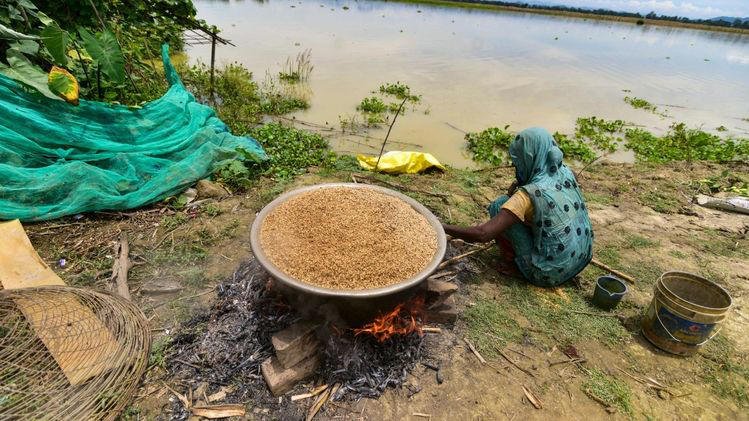
The flood situation in Assam has shown significant improvement, with the number of people affected declining to 6,678 as water levels continue to recede across the remaining flood-hit districts. According to the latest official assessment, the improvement comes after several weeks of intensive relief operations, favourable weather conditions, and a gradual fall in the water levels of major rivers flowing through the state.
While the situation has eased considerably compared to the peak of the floods, state authorities remain on alert as isolated areas continue to experience the impact of waterlogging and damaged infrastructure. Relief and rehabilitation efforts are ongoing to ensure that affected families receive essential assistance while damaged roads, embankments, and public utilities are restored at the earliest.
Officials have stated that the administration will continue monitoring river conditions and weather forecasts closely as the monsoon season remains active across Assam.
Affected Population Sees Sharp Decline
The latest flood bulletin indicates that only 6,678 people remain affected by floods, marking a substantial improvement from the previous weeks when several lakh residents across multiple districts were impacted by overflowing rivers and continuous rainfall.
Most of the major rivers have gradually receded below danger levels, allowing floodwaters to drain from villages, agricultural fields, and urban settlements. As a result, many families have begun returning to their homes after spending days or weeks in relief camps or temporary shelters.
District administrations continue to assess the remaining affected areas to identify households requiring additional support during the recovery phase.
Water Levels Continue to Recede
The overall improvement has largely been attributed to declining river levels following reduced rainfall across the state and upstream catchment areas. Rivers that had earlier overflowed their banks have gradually returned to safer levels, significantly reducing the risk of fresh inundation in many districts.
Authorities continue to monitor major rivers, including the Brahmaputra and its tributaries, through real-time flood forecasting systems. Continuous monitoring enables officials to respond quickly if water levels begin rising again due to fresh rainfall.
Hydrological experts have noted that although the immediate flood threat has reduced, the active monsoon season requires continued vigilance as weather conditions can change rapidly.
Relief Operations Continue in Remaining Affected Areas
Even as floodwaters recede, relief operations remain underway in areas where residents continue to face difficulties. District administrations, disaster management authorities, and local volunteers are supplying food, drinking water, medicines, and other essential commodities to affected families.
Medical teams continue visiting vulnerable locations to monitor public health conditions and prevent outbreaks of waterborne diseases that often emerge after floods. Veterinary teams have also been assisting livestock owners by providing treatment and vaccinations where necessary.
Officials have emphasised that relief assistance will continue until normal living conditions are fully restored in every affected village.
Rehabilitation Becomes the Next Priority
With the flood situation improving, the government’s focus is gradually shifting towards rehabilitation and restoration. Damage assessments are being carried out to evaluate the impact on houses, roads, bridges, schools, embankments, agricultural land, and other public infrastructure.
Departments responsible for public works, irrigation, agriculture, and rural development have begun planning restoration activities aimed at repairing damaged infrastructure and restoring essential services.
Financial assistance and rehabilitation measures are also being prepared for eligible families whose homes, crops, or livelihoods were affected during the floods. Officials stated that restoring normalcy remains the government’s immediate priority.
Agriculture Begins Recovery
The gradual withdrawal of floodwaters has provided relief to farmers who were among the worst affected during the monsoon. While extensive crop losses were reported in several districts during the peak of the floods, improving conditions are allowing farmers to assess damage and prepare for recovery.
Agricultural officials are conducting field inspections to determine the extent of crop losses and identify measures to support affected farmers. Assistance may include agricultural inputs, technical guidance, and support for replanting wherever feasible.
The government is also exploring measures to strengthen climate-resilient farming practices and improve flood preparedness within the agricultural sector.
Continuous Monitoring by Authorities
Although the overall flood situation has improved significantly, disaster management agencies remain on alert throughout the state. Continuous surveillance of river levels, embankments, rainfall patterns, and vulnerable locations continues to ensure timely response in the event of fresh flooding.
District administrations have been instructed to maintain emergency response teams and ensure that rescue equipment, relief materials, and communication systems remain operational during the remainder of the monsoon season.
Officials have appealed to residents living near rivers and low-lying areas to remain cautious and follow advisories issued by local authorities.
Lessons in Disaster Preparedness
Assam experiences seasonal flooding almost every year due to heavy monsoon rainfall and the overflowing Brahmaputra and its numerous tributaries. The recurring nature of floods has highlighted the importance of strengthening disaster preparedness and investing in resilient infrastructure.
Authorities continue to enhance flood forecasting systems, embankment protection, early warning mechanisms, and emergency response capabilities to reduce the impact of future floods. Greater coordination between government departments, local administrations, disaster response agencies, and community volunteers has also improved the effectiveness of rescue and relief operations.
Experts have stressed that long-term flood management will require a combination of scientific river management, improved drainage systems, watershed conservation, and climate adaptation strategies.
Communities Show Resilience During Recovery
The improving flood situation has highlighted the resilience of Assam’s communities, many of whom have worked together to support one another throughout the crisis. Local volunteers, community organisations, self-help groups, and civil society institutions played an important role in assisting rescue teams, distributing relief materials, and helping displaced families.
Residents have now begun cleaning homes, restoring damaged property, reopening shops, and resuming agricultural and commercial activities as conditions gradually return to normal. Educational institutions and public services are also expected to resume regular operations in areas where floodwaters have fully receded.
The collective efforts of government agencies and local communities have contributed significantly to the gradual recovery process.
Hope Returns as Recovery Gains Momentum
The reduction in the affected population to 6,678 marks an encouraging phase in Assam’s flood recovery journey. While rehabilitation work continues and some challenges remain in isolated pockets, the overall situation has improved considerably due to favourable weather, receding river levels, and sustained relief efforts.
The government has reiterated its commitment to providing all necessary assistance until every affected family has recovered from the impact of the floods. At the same time, authorities remain vigilant as the monsoon season is still underway, ensuring that preparedness measures remain in place for any future weather-related emergencies.
As Assam moves from relief to recovery, the focus will remain on rebuilding infrastructure, restoring livelihoods, strengthening disaster resilience, and supporting communities affected by one of the state’s recurring natural challenges. The improving flood situation offers renewed hope that normal life will soon return across the remaining affected areas.