

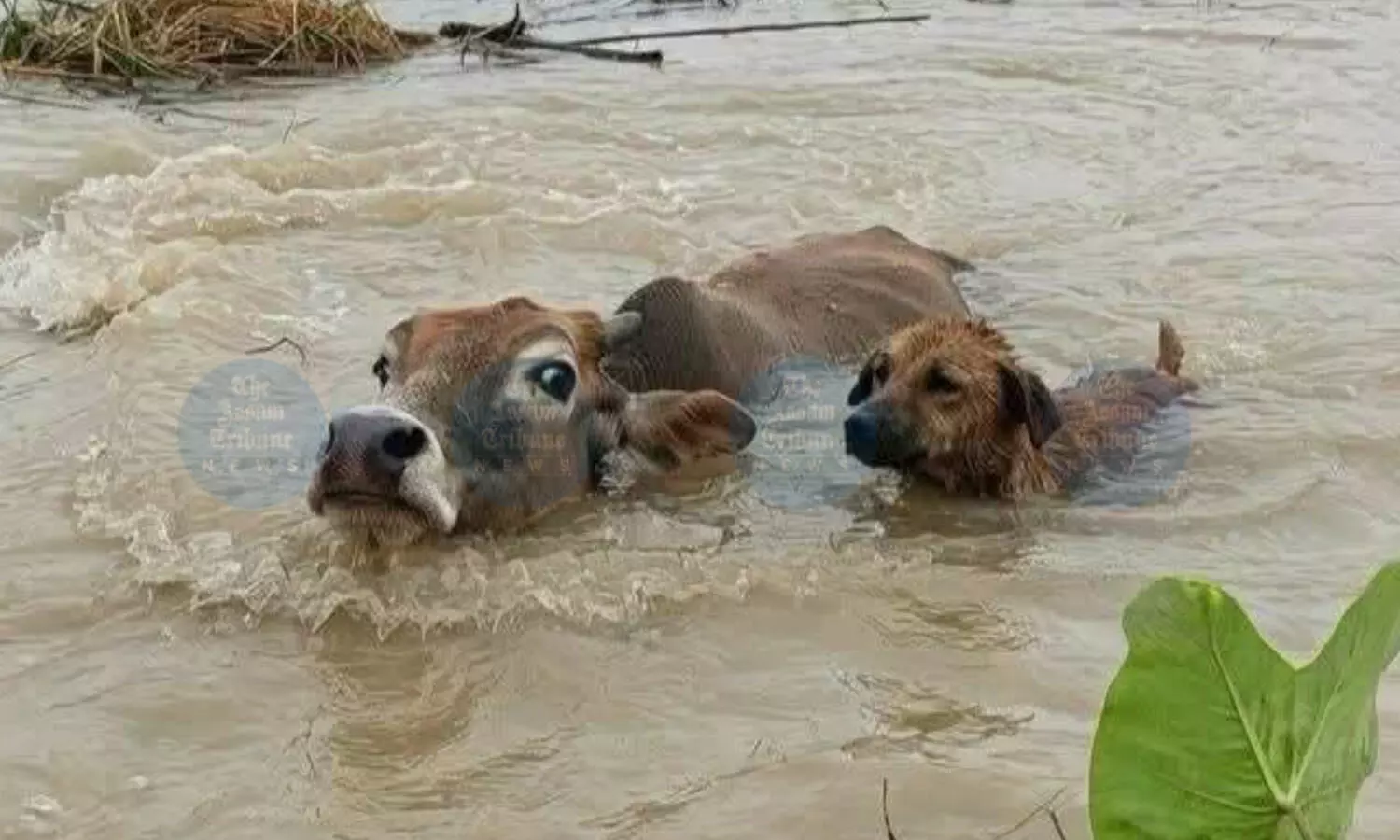
The Livestock Losses in Assam have reached a significant level after Chief Minister Himanta Biswa Sarma confirmed that more than 10 lakh livestock have been swept away or affected by rising waters. The figure highlights the severe impact of the ongoing monsoon conditions on livestock-dependent communities across the state.
The Livestock Losses add another major dimension to Assam’s flood crisis. While flooding threatens homes, roads, and agricultural fields, rising water also puts cattle and other animals at serious risk, creating additional economic pressure for rural families.
Livestock provides an important source of income and food security for many households. Moreover, the loss or displacement of animals can affect dairy production, farming activities, household earnings, and the ability of families to recover after floods.
The latest figure underscores the scale of the disaster’s impact on rural livelihoods. Therefore, livestock rescue, veterinary support, and post-flood assistance remain important components of the broader relief response.
Assam Displacement Crisis: Over 1.6 Lakh Residents Remain in Relief Camps Across 14 Districts
Livestock Losses Increase Pressure on Flood-Affected Communities
The reported Livestock Losses exceed 10 lakh animals, according to the statement attributed to Chief Minister Himanta Biswa Sarma. The figure includes livestock that rising waters have either swept away or affected.
Moreover, the impact extends beyond the immediate loss of animals. Families that depend on livestock may face reduced income and increased costs when they lose productive animals or need to relocate them to safer areas.
Flooding can also disrupt access to animal feed, clean water, veterinary care, and shelter. Consequently, even animals that survive the initial flooding may require additional support during and after the emergency.
The available information confirms the overall figure but does not provide a detailed breakdown by animal type, district, or number of animals confirmed dead.
Livestock Losses Highlight Need for Animal Relief Measures
The scale of Livestock Losses highlights the importance of including animals in disaster-response planning. Rural communities often depend heavily on livestock, making animal protection an important part of household recovery.
Additionally, veterinary teams can help affected communities by providing medical assistance, vaccinations, and guidance on animal care after flood exposure. This support can reduce further losses and help families protect surviving livestock.
Authorities and relief organizations may also need to consider fodder and clean-water supplies for animals in affected areas. Meanwhile, temporary livestock shelters can help families keep surviving animals away from flooded locations.
The available information does not specify the number of veterinary camps, livestock shelters, or compensation measures currently available. Therefore, the immediate update focuses on the scale of animals affected by rising waters.
Further assessments may provide clearer information about the extent of livestock losses across individual districts.
Livestock Losses Create Long-Term Rural Economic Challenges
The reported Livestock Losses could have lasting consequences for families whose livelihoods depend on cattle, goats, poultry, and other animals. Losing livestock can reduce household income and make post-flood recovery more difficult.
Moreover, livestock often represents an important household asset in rural communities. Consequently, replacing lost animals can require significant financial resources and time.
The flood impact also creates challenges for agricultural recovery. Farmers may need support to rebuild animal shelters, restore fodder supplies, and restart livestock-related activities once water levels decline.
At the same time, accurate assessments will remain important for designing effective compensation and rehabilitation programs. Detailed data can help authorities identify the communities facing the greatest economic losses.
The situation therefore highlights the need for disaster planning that protects both people and livelihoods. Furthermore, stronger flood-resilient livestock shelters and early evacuation systems could help reduce future losses.
Conclusion
The Livestock Losses reported in Assam have reached a serious level, with more than 10 lakh livestock swept away or affected by rising floodwaters, according to Chief Minister Himanta Biswa Sarma.
Furthermore, the impact extends beyond animal welfare because livestock supports the livelihoods and economic security of many rural families. Veterinary assistance, fodder supplies, safe shelters, and appropriate rehabilitation measures will remain important during the recovery period.
Overall, the Livestock Losses highlight the extensive economic and humanitarian consequences of Assam’s ongoing flood crisis and reinforce the need for comprehensive disaster-response planning.
FAQs
1. How many livestock have been affected in Assam?
Chief Minister Himanta Biswa Sarma confirmed that more than 10 lakh livestock have been swept away or affected by rising waters.
2. Why are livestock losses significant for Assam?
Livestock provides income, food, and economic security for many rural households. Their loss can therefore make flood recovery more difficult.
3. Does the figure include only animals that died?
No. The reported figure includes livestock that have been swept away or affected, so it does not represent confirmed animal deaths alone.
4. What support do affected livestock require?
Surviving animals may require safe shelter, clean water, fodder, veterinary care, and protection from disease.
5. Will affected families receive compensation?
The available information does not specify compensation arrangements for livestock affected by the current floods.