


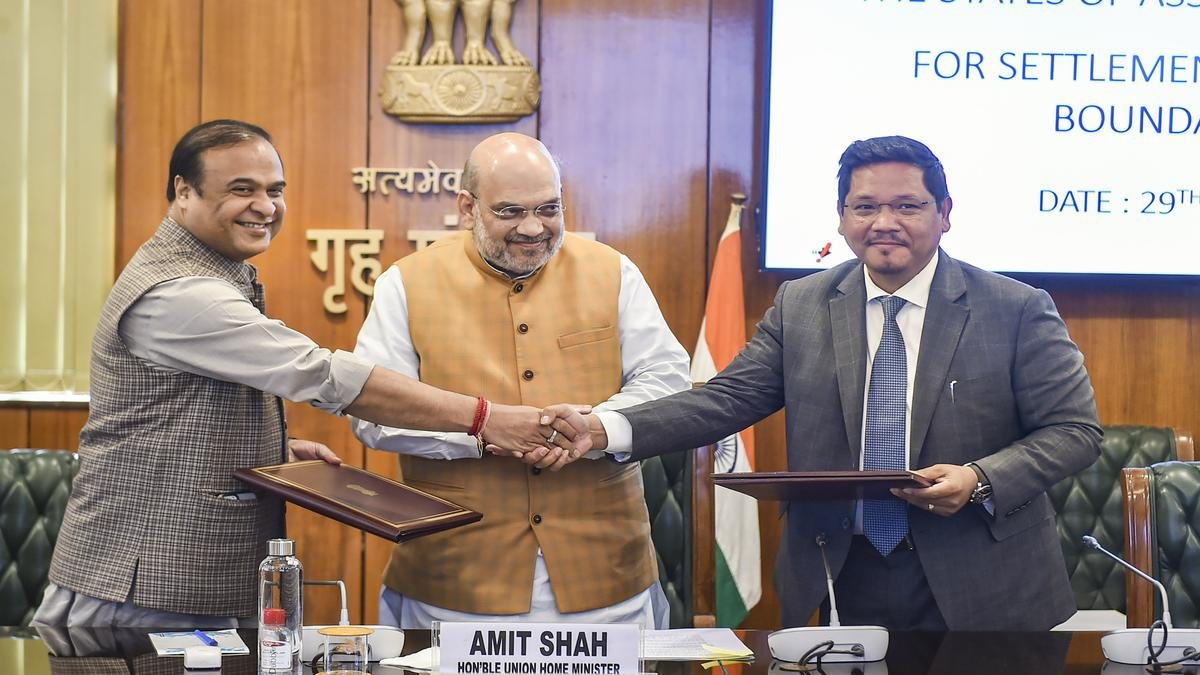
The Assam-Meghalaya Border Resumption process has gained fresh momentum as high-level ministerial reviews were initiated to advance the second phase of the interstate border dispute resolution. The discussions aim to build on earlier progress and move closer to a mutually agreed settlement on the remaining disputed areas.
The Assam-Meghalaya Border Resumption marks a renewed effort by the governments of Assam and Meghalaya to resolve their long-standing interstate boundary dispute. Moreover, high-level ministerial reviews have been launched to advance the second phase of negotiations. The initiative reflects both states’ commitment to continuing dialogue and seeking a peaceful, mutually acceptable solution.
India-Japan Summit Moved from Guwahati
Assam-Meghalaya Border Resumption Gains Fresh Momentum
The Assam-Meghalaya Border Resumption follows the decision of senior ministers from both states to resume discussions on the unresolved border issues. Furthermore, the ministerial reviews are intended to assess progress and prepare for the next stage of negotiations.
Both governments have consistently emphasized dialogue as the preferred approach to resolving the dispute. Consequently, the latest meetings reinforce the commitment to peaceful negotiations.
Moreover, regular consultations help both sides address pending issues in a structured manner. Therefore, the renewed engagement has attracted attention across the Northeast.
Second Phase of Border Resolution Under Review
The Assam-Meghalaya Border Resumption focuses on advancing the second phase of the border settlement process. Furthermore, ministerial teams are reviewing developments related to the remaining disputed areas.
The first phase of the border resolution process addressed several sectors through mutual discussions. Similarly, the second phase seeks progress on the remaining locations through continued negotiations.
Consequently, the review process is expected to facilitate informed discussions between the two state governments. Thus, both sides continue to prioritize dialogue.
High-Level Ministerial Reviews Strengthen Cooperation
A key feature of the Assam-Meghalaya Border Resumption is the involvement of senior ministers from both governments. Moreover, high-level participation demonstrates the importance attached to resolving the issue.
Ministerial reviews provide an opportunity to evaluate previous discussions and identify areas requiring further attention. Additionally, regular meetings help maintain coordination between both administrations.
Consequently, continued political engagement is expected to support the negotiation process. Therefore, cooperation remains central to achieving progress.
Peaceful Dialogue Remains the Preferred Approach
The Assam-Meghalaya Border Resumption reflects the shared commitment of both states to resolving differences through peaceful dialogue. Furthermore, negotiations continue to be viewed as the most effective path toward a lasting settlement.
Interstate cooperation plays an important role in addressing boundary-related issues. Similarly, sustained communication helps build trust between stakeholders.
Moreover, constructive discussions can contribute to long-term regional stability. Thus, dialogue remains a key element of the resolution process.
Border Resolution Holds Regional Significance
The Assam-Meghalaya Border Resumption carries significance beyond the two states, as stable interstate relations contribute to regional development. Furthermore, progress in resolving border issues can strengthen administrative coordination and improve governance.
Peaceful settlements often support economic activities and public confidence. Consequently, the ongoing discussions are closely watched by residents living in border areas.
Additionally, successful negotiations can serve as a model for resolving similar interstate issues through consensus. Therefore, the process remains important for the Northeast.
Continued Engagement Expected in Coming Months
The Assam-Meghalaya Border Resumption indicates that discussions between the two governments will continue as the second phase progresses. Moreover, ministerial reviews are expected to help guide future negotiations.
Both states have reiterated their commitment to maintaining dialogue. Similarly, regular consultations are likely to remain an important feature of the resolution process.
Consequently, further meetings may contribute to narrowing differences and achieving mutually acceptable outcomes. Thus, the process continues to move forward through sustained engagement.
Conclusion
The Assam-Meghalaya Border Resumption marks an important step in advancing the second phase of the long-standing interstate border dispute resolution. High-level ministerial reviews demonstrate the determination of both governments to continue negotiations through dialogue.
Moreover, the review process provides an opportunity to evaluate progress and address unresolved issues in a constructive manner. Consequently, continued cooperation remains essential for achieving meaningful outcomes.
Looking ahead, sustained political engagement and regular consultations are expected to play a crucial role in the negotiations. Therefore, the Assam-Meghalaya Border Resumption represents another significant milestone in the ongoing efforts to reach a mutually acceptable border settlement.
FAQs
1. What is the Assam-Meghalaya Border Resumption?
The Assam-Meghalaya Border Resumption refers to the renewed ministerial discussions aimed at advancing the second phase of the interstate border dispute resolution.
2. What is the purpose of the latest ministerial reviews?
The reviews are intended to assess progress and move forward with negotiations on the remaining disputed areas.
3. Why is the second phase important?
The second phase focuses on unresolved border sectors that were not covered during the initial stage of the settlement process.
4. Who is participating in the discussions?
Senior ministers and officials from the governments of Assam and Meghalaya are participating in the review process.
5. Why are these talks significant?
The discussions aim to achieve a peaceful and mutually acceptable resolution while strengthening interstate cooperation.