


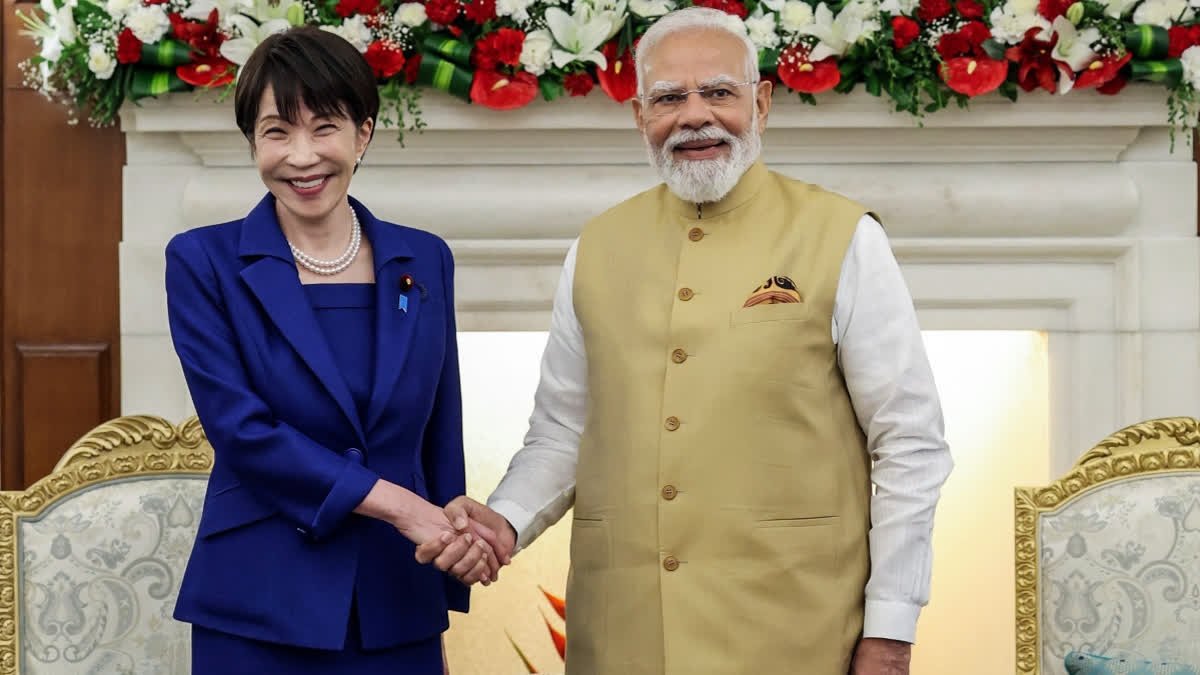
The India-Japan Summit Relocated development has shifted the venue of the 16th India-Japan Annual Summit from Guwahati, Assam, to New Delhi. The change was made due to Japanese Prime Minister Sanae Takaichi’s tight parliamentary schedule and logistical considerations, while both countries reaffirmed their commitment to strengthening bilateral cooperation.
The India-Japan Summit Relocated decision has altered plans for the 16th India-Japan Annual Summit, with the venue moving from Guwahati, Assam, to New Delhi. Moreover, the change followed Japanese Prime Minister Sanae Takaichi’s tight parliamentary schedule and logistical constraints surrounding her official visit to India. Despite the venue change, both nations proceeded with the summit and reaffirmed their commitment to deepening their Special Strategic and Global Partnership.
Tripura Government Announces Major Infrastructure Boost for Gomati District Hospital
India-Japan Summit Relocated Due to Scheduling Constraints
The India-Japan Summit Relocated announcement came ahead of Prime Minister Sanae Takaichi’s three-day official visit to India. Furthermore, officials indicated that the revised venue was influenced by her limited schedule because of parliamentary commitments in Japan, along with logistical considerations associated with travel outside the national capital.
Initially, Guwahati had been considered as the host city for the annual summit. Consequently, preparations had generated expectations that Assam would host a major international diplomatic event.
Moreover, the revised itinerary ensured that all official engagements would take place in New Delhi. Therefore, the summit schedule remained streamlined without affecting the bilateral agenda.
Guwahati Misses Opportunity to Host the Summit
The India-Japan Summit Relocated decision meant Guwahati did not host the annual meeting despite earlier expectations. Furthermore, hosting such a summit would have highlighted Assam’s growing role in India’s Act East policy and Northeast development initiatives.
The change disappointed many stakeholders who viewed the event as an opportunity to showcase the region’s investment potential. However, Japanese officials reiterated their interest in strengthening cooperation with Assam despite the venue change.
Additionally, diplomatic engagements between Japan and Assam continue across sectors including electronics, semiconductors, and entrepreneurship. Consequently, the relocation does not signal a reduction in bilateral engagement with the state.
Summit Agenda Remained Focused on Strategic Cooperation
Although the India-Japan Summit Relocated decision changed the venue, the summit agenda remained unchanged. Moreover, Prime Ministers Narendra Modi and Sanae Takaichi reviewed progress in bilateral cooperation across infrastructure, trade, defence, technology, economic security, artificial intelligence, and semiconductor collaboration.
The leaders also discussed regional and global issues affecting the Indo-Pacific. Similarly, both sides reaffirmed their commitment to strengthening their Special Strategic and Global Partnership.
Furthermore, several joint outcome documents were announced following the summit. Therefore, the diplomatic objectives of the annual meeting were successfully achieved.
Annual Summit Continues to Strengthen India-Japan Relations
The India-Japan Summit Relocated development did not alter the importance of the annual summit mechanism. Furthermore, the summit remains one of the highest-level platforms for reviewing bilateral cooperation between India and Japan.
The two countries continue expanding collaboration in infrastructure development, investment, defence cooperation, resilient supply chains, and emerging technologies. Consequently, the summit serves as an important forum for evaluating ongoing initiatives and identifying future priorities.
Moreover, business leaders from both countries also participated in engagements during the visit. Therefore, economic cooperation remained a central theme of the discussions.
Venue Change Reflects Diplomatic Flexibility
The India-Japan Summit Relocated decision illustrates how diplomatic schedules are often adjusted to accommodate official commitments while ensuring important bilateral engagements proceed as planned.
International summits frequently require coordination between governments and diplomatic agencies. Similarly, venue changes may occur because of scheduling, security, or logistical requirements.
Consequently, both India and Japan successfully maintained the summit schedule despite the revised location. Thus, the focus remained on strengthening bilateral relations rather than the venue itself.
Conclusion
The India-Japan Summit Relocated decision shifted the 16th India-Japan Annual Summit from Guwahati to New Delhi due to Japanese Prime Minister Sanae Takaichi’s parliamentary commitments and logistical considerations. Nevertheless, the summit proceeded successfully and preserved its strategic significance.
Moreover, both countries reaffirmed their commitment to expanding cooperation across infrastructure, technology, trade, defence, and economic security. Consequently, the venue change did not affect the broader objectives of the bilateral partnership.
Looking ahead, India and Japan are expected to continue strengthening their Special Strategic and Global Partnership through regular high-level dialogue and collaborative initiatives. Therefore, the India-Japan Summit Relocated development represents a logistical adjustment rather than a change in the trajectory of bilateral relations.
FAQs
1. Why was the India-Japan Summit Relocated?
The India-Japan Summit Relocated because of Japanese Prime Minister Sanae Takaichi’s tight parliamentary schedule and logistical considerations.
2. Where was the summit originally expected to be held?
It was initially planned for Guwahati, Assam, before being shifted to New Delhi.
3. Where was the summit ultimately held?
The 16th India-Japan Annual Summit took place in New Delhi.
4. Did the venue change affect the summit agenda?
No. The leaders continued discussions on trade, infrastructure, defence, technology, economic security, and strategic cooperation.
5. Why is the India-Japan Annual Summit important?
It serves as the highest-level platform for reviewing and expanding the India-Japan Special Strategic and Global Partnership across multiple sectors.