


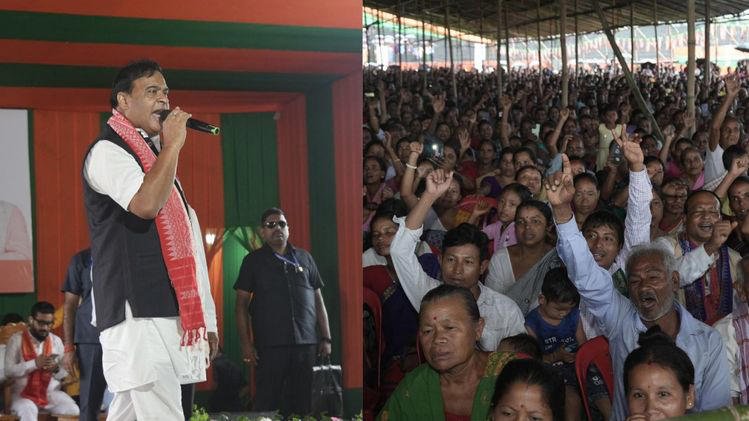
The Sixth Schedule areas of Assam have once again remained politically aligned with the power centre in Dispur during the latest electoral developments in the state. The voting pattern in several autonomous council regions reflected continued support for the ruling establishment, reinforcing the importance of regional alliances and political coordination in Assam’s evolving political landscape.
Political observers believe the outcome highlights the ruling alliance’s sustained influence in tribal and autonomous regions governed under the Sixth Schedule of the Constitution. These areas hold strategic political importance because they enjoy special administrative provisions and possess significant electoral influence in the state.
Read More: Arrest Those Indulging In Violence: CEC Gyanesh Kumar On Bengal Unrest
The latest poll results also demonstrated how regional leadership, development projects, and political stability continue shaping voter preferences across Assam’s autonomous districts.
Sixth Schedule Areas Hold Political Importance
The Sixth Schedule areas in Assam include autonomous council regions that enjoy constitutional safeguards for protecting local governance, cultural identity, and administrative autonomy. These regions play a major role in shaping political outcomes in the state.
The Bodoland Territorial Region (BTR), Karbi Anglong, and Dima Hasao remain among the most politically influential autonomous areas in Assam. Political parties often focus heavily on these regions during elections because local support can significantly affect broader state-level calculations.
Analysts believe voters in these areas often prioritise stability, development, and regional representation while making electoral decisions. Therefore, political alliances with the ruling establishment in Dispur frequently influence electoral outcomes.
The latest results suggest that the ruling alliance successfully maintained strong support networks in these strategically important regions.
BJP Alliance Retains Strong Influence
The ruling alliance led by Chief Minister Himanta Biswa Sarma managed to preserve its political influence across several Sixth Schedule areas during the elections.
Political observers pointed out that the BJP and its regional allies maintained strong organisational structures and local partnerships in autonomous council regions. These alliances reportedly helped the ruling camp retain voter confidence.
Development projects, road connectivity, welfare schemes, and administrative cooperation with autonomous councils featured prominently during the campaign period. Supporters of the ruling alliance argued that coordination with the Dispur government accelerated infrastructure and economic projects in tribal regions.
As a result, many voters continued supporting parties aligned with the state government.
Regional Alliances Shape Electoral Outcomes
Regional political alliances played a major role in influencing the electoral performance in Sixth Schedule areas. Local parties and autonomous council leaders often maintain strategic relationships with the ruling state government to ensure smoother administrative coordination and development funding.
Political analysts noted that many regional groups preferred maintaining alignment with the Dispur power centre to secure greater political and financial support for local projects.
The BJP’s alliance-building strategy in Assam has focused heavily on strengthening ties with influential regional organisations and autonomous council leaderships. This approach has helped the ruling alliance consolidate support across different ethnic and tribal communities.
Observers believe the continuation of these alliances contributed significantly to the latest electoral outcome.
Development Projects Influence Voter Sentiment
Infrastructure and development projects emerged as important factors influencing voter behaviour in autonomous regions. Residents in several Sixth Schedule areas reportedly supported parties that promised stronger road connectivity, healthcare services, educational institutions, and economic opportunities.
Government initiatives related to rural infrastructure, welfare schemes, and transportation improvements received significant attention during campaign discussions.
Political observers believe visible development projects helped reinforce the ruling alliance’s image in tribal regions. The administration frequently highlighted infrastructure expansion and peace agreements achieved in various autonomous areas.
Supporters of the ruling alliance argued that stable coordination between autonomous councils and the state government helped accelerate development work in remote districts.
Peace Agreements Strengthen Political Stability
Over recent years, Assam witnessed several peace agreements and political settlements involving regional and tribal groups. Political analysts believe these developments helped improve stability in many autonomous regions.
The government repeatedly highlighted peace initiatives during election campaigns and stressed the importance of maintaining harmony and development in tribal areas.
Observers noted that political stability often influences voter preferences in regions that previously experienced unrest or administrative uncertainty. Consequently, many voters appeared to support continuity in governance and regional coordination.
The ruling alliance also emphasised cooperation between autonomous councils and the state administration to strengthen governance and service delivery.
Opposition Faces Challenges In Autonomous Regions
Opposition parties struggled to make major breakthroughs in several Sixth Schedule areas despite active campaigning. Political observers believe the opposition faced organisational challenges and difficulties in countering the ruling alliance’s regional partnerships.
Several opposition leaders criticised the government’s policies regarding tribal rights and autonomy. However, analysts noted that the ruling alliance maintained stronger grassroots networks in many autonomous districts.
Regional political dynamics in Sixth Schedule areas often differ from mainstream electoral patterns in urban and plains regions. Therefore, local leadership and alliance structures play a more decisive role in influencing outcomes.
The opposition may now attempt to rebuild support networks in autonomous areas ahead of future elections.
Autonomous Councils Remain Key Political Players
Autonomous councils continue playing a central role in Assam’s political structure. These councils possess administrative authority over local governance, culture, and development-related matters in Sixth Schedule regions.
Political parties regularly engage with council leaderships to strengthen regional influence and ensure administrative cooperation. Analysts believe strong relationships with autonomous councils remain crucial for any ruling government in Assam.
The latest poll outcome demonstrated how these councils continue shaping political alignments in the state. Their influence extends beyond local governance and often affects broader electoral calculations.
Observers also noted that council leaderships increasingly focus on balancing regional identity concerns with development priorities.
Assam’s Political Landscape Continues To Evolve
The latest electoral trends in Sixth Schedule areas reflect the changing political landscape of Assam. Development politics, regional alliances, and governance issues now play a larger role alongside traditional identity-based concerns.
Political analysts believe voters in autonomous regions increasingly evaluate governments based on infrastructure delivery, welfare implementation, and administrative coordination.
The ruling alliance’s success in maintaining support across these regions suggests that its development-oriented messaging continues resonating with significant sections of the electorate.
At the same time, political competition in autonomous areas remains dynamic because regional aspirations and local leadership changes can quickly reshape voter behaviour.
Sixth Schedule Regions Remain Central To Assam Politics
The latest poll outcome once again confirmed the importance of Sixth Schedule regions in Assam’s political framework. These autonomous areas continue influencing state politics through their electoral significance and strategic regional position.
The alignment of these regions with the Dispur power centre reflects both political calculation and governance expectations. Voters in many autonomous districts appear to prefer stable coordination with the ruling state administration to ensure continued development and administrative support.
As Assam moves toward future political contests, Sixth Schedule areas will likely remain crucial battlegrounds for both the ruling alliance and opposition parties.
Political observers believe the evolving relationship between autonomous councils and the Dispur government will continue shaping Assam’s political direction in the years ahead.
Read More: Assam Assembly Elections 2026: BPF Candidates Report Zero Criminal Cases