


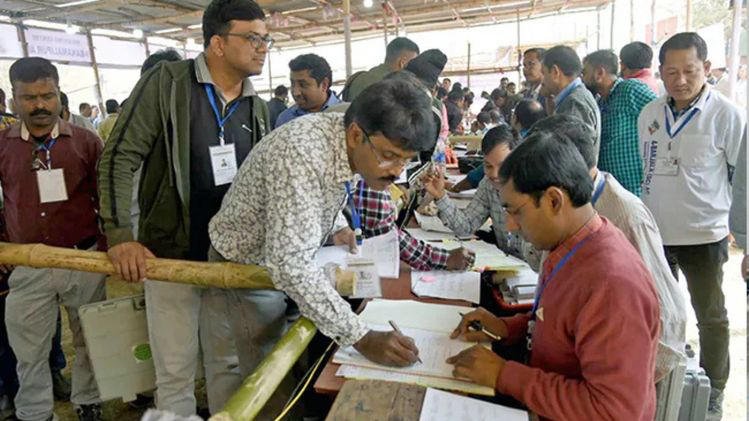
Recent assembly elections across several Indian states have recorded impressive voter participation. However, the benchmark set by Tripura in 2013 continues to stand out as unmatched. The Tripura 2013 voter turnout remains one of the highest ever recorded in Indian electoral history.
Election observers and analysts have noted that while turnout percentages have increased in many regions, none have surpassed the level achieved in Tripura during the 2013 assembly elections. Therefore, the state continues to hold a unique position in discussions on voter engagement.
Moreover, rising participation in recent elections reflects growing public awareness and interest in the democratic process. At the same time, the Tripura benchmark highlights the potential for even higher engagement.
Read More: Assam Exit Poll: Did Himanta’s Stand on Infiltration Help BJP?
Understanding the Tripura 2013 Benchmark
The 2013 assembly elections in Tripura witnessed an exceptionally high voter turnout. Citizens across urban and rural areas participated enthusiastically, resulting in a record-breaking figure.
Several factors contributed to this achievement. Strong political mobilization, effective voter awareness campaigns, and high levels of political interest played key roles. In addition, the peaceful conduct of elections encouraged more people to cast their votes.
The Tripura 2013 voter turnout has since become a reference point for election authorities. It demonstrates what can be achieved when administrative efficiency and public participation align.
Furthermore, the state’s performance highlights the importance of accessibility. Well-organized polling stations and efficient logistics ensured that voters could participate without difficulty.
Trends in Recent Assembly Elections
Recent assembly polls across India have shown encouraging trends in voter turnout. Many states have reported higher participation compared to previous elections.
This increase reflects greater awareness among citizens about the importance of voting. Campaigns by the Election Commission of India have played a significant role in promoting voter participation.
In addition, political parties have intensified their outreach efforts. They have engaged with voters through campaigns, rallies, and digital platforms. As a result, more people have shown interest in the electoral process.
However, despite these positive trends, the turnout figures still fall short of the Tripura 2013 benchmark. This indicates that there is room for further improvement.
Factors Driving Higher Participation
Several factors have contributed to the increase in voter turnout in recent elections. First, awareness campaigns have educated citizens about their rights and responsibilities.
Second, improved infrastructure has made voting more accessible. Authorities have set up additional polling stations and introduced better facilities for voters.
Third, technological advancements have streamlined the electoral process. For example, the use of Electronic Voting Machines (EVMs) has made voting faster and more efficient.
Moreover, social media has played a role in encouraging participation. Information about elections spreads quickly, motivating people to vote.
Nevertheless, achieving record-breaking turnout requires sustained efforts. The Tripura 2013 voter turnout shows that multiple factors must work together to produce exceptional results.
Challenges in Matching the Benchmark
Despite improvements, several challenges prevent states from matching the Tripura benchmark. One major issue is voter apathy in certain regions. Some citizens remain disengaged from the political process.
In addition, logistical challenges can affect turnout. Remote areas may face difficulties in accessing polling stations. Weather conditions and infrastructure limitations can also play a role.
Furthermore, urban areas often record lower participation compared to rural regions. Busy schedules and lack of interest contribute to this trend.
Another challenge is ensuring voter confidence. Transparent and fair elections are essential to encourage participation. Therefore, authorities must maintain high standards of integrity.
Role of Election Commission and Policies
The Election Commission of India continues to implement measures to increase voter turnout. These include awareness campaigns, improved facilities, and stricter monitoring of election processes.
Programs aimed at first-time voters have also shown positive results. By targeting young citizens, authorities aim to build long-term participation habits.
In addition, special provisions have been introduced for older people and differently-abled voters. These measures ensure inclusivity and equal access to the electoral process.
Moreover, the Commission collaborates with educational institutions and civil society organizations. Such partnerships help spread awareness and encourage participation.
However, replicating the success of Tripura 2013 requires consistent efforts across all regions.
Lessons From Tripura’s Success
The Tripura 2013 voter turnout offers valuable lessons for other states. First, effective voter education campaigns can significantly boost participation.
Second, efficient administration plays a crucial role. Well-organized polling stations and smooth logistics make voting easier for citizens.
Third, political engagement is essential. When voters feel that their participation matters, they are more likely to vote.
In addition, maintaining peace and security encourages higher turnout. Voters must feel safe when they go to polling stations.
These lessons can help other states improve their performance in future elections.
Broader Implications for Democracy
High voter turnout strengthens democracy. It ensures that elected representatives reflect the will of the people.
The record participation in Tripura and increasing turnout in other states highlight the importance of citizen engagement. They demonstrate that people are willing to participate when conditions are favorable.
At the same time, the gap between current figures and the Tripura benchmark shows that more work is needed. Authorities and political parties must continue to encourage participation.
Moreover, sustained efforts can lead to long-term improvements. As awareness grows, voter turnout may continue to rise.
Conclusion
Recent assembly elections have shown encouraging trends in voter participation across India. However, the Tripura 2013 voter turnout remains unmatched and continues to serve as a benchmark.
The comparison highlights both progress and challenges. While participation has increased, achieving record levels requires sustained efforts and effective strategies.
By learning from Tripura’s success and addressing existing challenges, states can work toward higher voter engagement. Ultimately, increased participation will strengthen the democratic process and ensure better representation for all citizens.
Read More: Assam Tightens Security Ahead of Vote Counting, CS Ravi Kota Warns of Zero Tolerance