

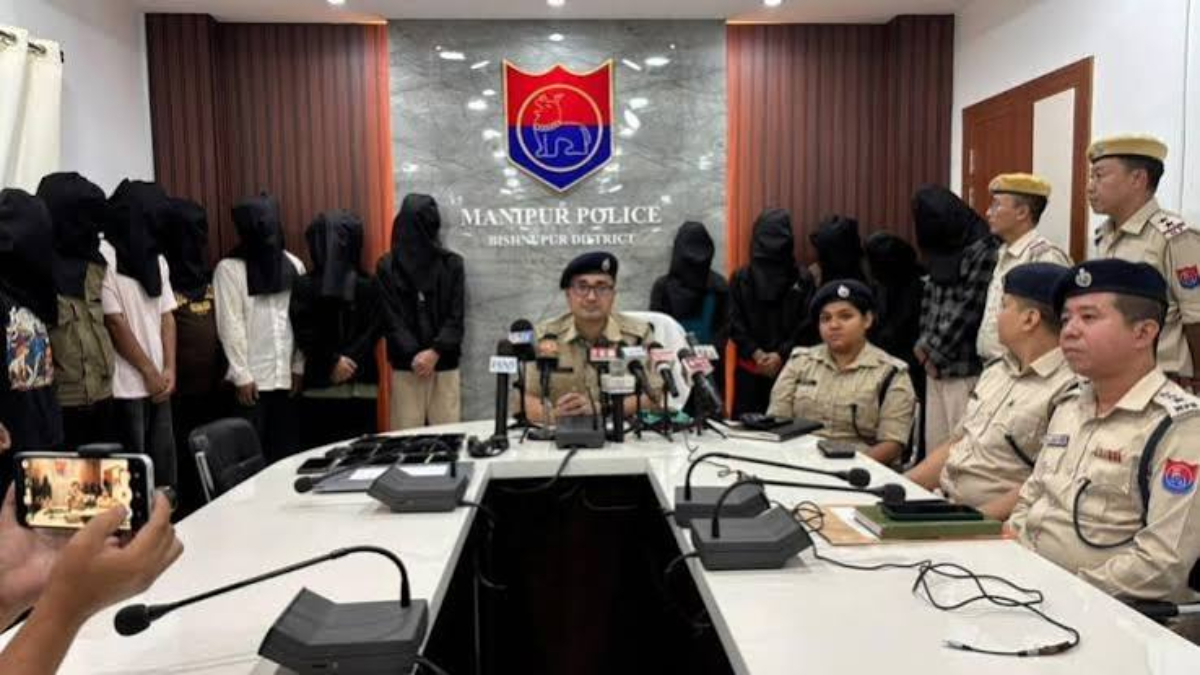
Bishnupur Police arrest 13 people in connection with an alleged racket involving the circulation of non-consensual explicit videos of Manipuri women, marking a significant development in a case involving privacy violations and the alleged misuse of digital platforms. The arrests have brought renewed attention to the risks of online exploitation, the protection of victims and the need for accountability when intimate content is shared without permission.
The case has also highlighted the serious harm caused when private videos are distributed without consent. Such incidents can expose victims to harassment, emotional distress and social stigma, making a sensitive and victim-centred investigation essential.
Operation Dignity targets online exploitation
The investigation, named Operation Dignity, was launched after police received information on October 3 about the alleged circulation, trading and monetisation of intimate videos and photographs of Manipuri women without their consent.
According to reports published on October 13, police registered a suo motu case at Moirang Police Station in Bishnupur district and began investigating the suspected network.
The probe covers content allegedly distributed through Telegram channels and WhatsApp groups. Police are examining the roles of channel administrators and users suspected of sharing the material and earning money from its circulation. The investigation also involves allegations concerning child sexual abuse material (CSAM).
India Today NE
+1
The inclusion of such material has made the investigation particularly serious, as it raises concerns about the exploitation of vulnerable individuals and the possible involvement of minors in the distribution network.
13 people arrested across Manipur
Police have arrested 13 individuals, including 12 adults and one child in conflict with the law, in connection with the case. The arrests were made as part of the operation targeting the alleged online distribution network.
The accused adults are aged between 18 and 34, according to reports. Those arrested reportedly come from different districts of Manipur, including Bishnupur, Imphal West, Kakching and Thoubal.
The identity of the child in conflict with the law has not been disclosed. Authorities have also not established publicly that every person arrested performed the same role in the alleged operation.
The arrests represent an important step in the investigation, but the allegations against the individuals must be examined through the legal process. Their arrest does not, by itself, establish guilt.
Northeast News
+2
Digital evidence seized during the investigation
As part of the operation, officers seized 14 mobile phones and one laptop for examination. These devices could help investigators establish how the material was obtained, stored, exchanged and distributed.
Police have also identified more than 150 Telegram channels and WhatsApp groups allegedly connected to the circulation of explicit material. Of these, 38 were reported to have been neutralised during the operation.
The scale of the suspected network has widened the scope of the investigation beyond the initial arrests. Investigators are examining digital links between the accounts and groups to determine whether additional people participated in the alleged activities.
The seizure of electronic devices may also assist in tracing communications, identifying account operators and establishing possible links between individuals involved in the distribution process.
India Today NE
+2
Legal provisions and investigation
The case was registered under relevant provisions of the Information Technology Act, the Protection of Children from Sexual Offences (POCSO) Act and the Bharatiya Nyaya Sanhita (BNS), according to reports on the police operation.
The applicable provisions will depend on the evidence collected and the specific offences investigators establish. The POCSO Act is particularly relevant to allegations involving sexual exploitation of children, while information technology laws address certain offences involving electronic material.
Police are continuing to investigate the wider network, examine financial transactions and identify additional victims. These steps are expected to help authorities determine whether the alleged circulation involved organised groups, paid subscriptions or other methods of monetisation.
Bishnupur Police arrest actions in this case have brought the suspected distribution network under scrutiny, but the investigation remains ongoing. The next stages will involve analysing seized devices, tracing financial trails and collecting evidence that can support further legal proceedings.
The Print
+1
Protecting victims’ privacy remains crucial
The case highlights the harm caused when intimate images or videos are shared without consent. Once such material circulates across multiple online groups, removing every copy can become difficult, while affected individuals may face harassment, distress and threats to their privacy.
People who encounter suspected non-consensual intimate content should avoid downloading, forwarding or reposting it. Sharing such material can extend the violation and expose victims to further harm. Reports should instead be made through appropriate law enforcement and platform channels.
Media organisations and social media users also have a responsibility to avoid revealing victims’ identities or publishing intimate material. Protecting privacy is especially important when a case involves possible child sexual abuse material.
The investigation launched by Bishnupur Police is continuing as authorities work to uncover the alleged network and establish the extent of the activity. The identification of further victims, examination of financial transactions and analysis of seized devices will be important to determining the full scope of the case and ensuring that any further action is supported by evidence.
Article 371F Gains Strong Backing as Sikkim Flags Darjeeling Option-4