


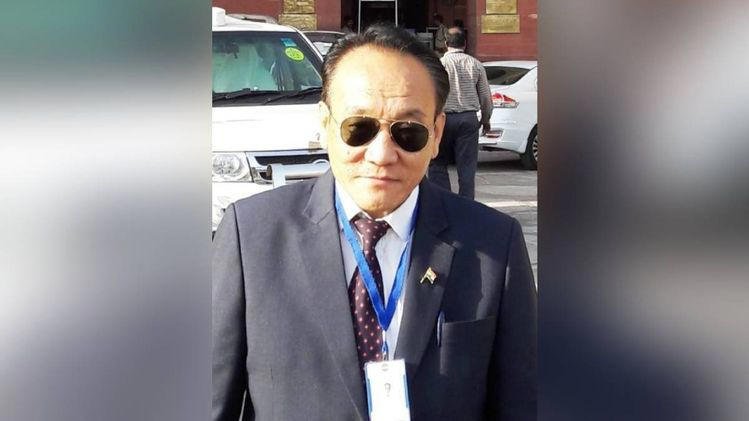
Senior BJP leader Tseten Tashi Bhutia on Friday raised concerns regarding the implementation and protection of Article 371F, the status of reserved seats in Sikkim, and the increasing debt burden of the state government.
Addressing a press conference in Gangtok, Bhutia called for greater accountability and transparency from the state administration on issues that he described as critical to Sikkim’s constitutional identity and long-term economic stability.
The BJP leader stated that the people of Sikkim deserve clear answers regarding the protection of special constitutional provisions granted to the state after its merger with India in 1975.
Read More: CM Suvendu To Hold First Development Review Meeting With 5 Western Districts
He also questioned the government’s financial management and expressed concern over the rising debt burden facing the Himalayan state.
BJP Leader Raises Concerns Over Article 371F
Bhutia highlighted the importance of Article 371F, which provides special constitutional safeguards for Sikkim.
He said the provision remains closely linked to the identity, rights, and administrative structure of the state. According to him, citizens expect the government to ensure complete protection of the constitutional safeguards granted under the Article.
The BJP leader urged the state administration to clarify its position on issues concerning the implementation and preservation of these protections.
Bhutia also stated that Article 371F carries historical significance because it formed an important part of Sikkim’s integration into the Indian Union.
According to him, any matter linked to constitutional safeguards requires transparency and public discussion.
Political observers noted that Article 371F often becomes a major political and public issue in Sikkim because of its importance to the state’s social and political framework.
Questions Raised On Reserved Seats
The BJP leader also spoke about concerns regarding reserved seats in Sikkim’s political structure.
Bhutia said the reservation arrangement forms an important part of the state’s democratic representation system and must remain protected.
He questioned whether adequate attention is being given to preserving the interests linked to reserved representation in the legislative structure.
According to him, the government should provide clarity and accountability on matters connected to political representation and constitutional arrangements.
Bhutia argued that discussions regarding reserved seats should involve public consultation and transparent communication.
Political analysts noted that representation issues remain highly sensitive in Sikkim because of the state’s unique demographic and historical background.
The BJP leader said citizens have the right to seek explanations regarding policies affecting constitutional safeguards and representation systems.
Concern Over Rising State Debt
Apart from constitutional and political concerns, Bhutia also raised questions regarding Sikkim’s financial condition and increasing debt burden.
He expressed concern over the level of state borrowing and urged the government to explain how it plans to manage long-term financial challenges.
According to Bhutia, fiscal discipline and responsible financial planning remain essential for sustainable development.
The BJP leader said the government must ensure that public debt does not create economic pressure on future generations.
He also sought greater transparency regarding expenditure patterns, development funding, and debt management policies.
Bhutia argued that the people of Sikkim deserve detailed information about the state’s financial position and economic planning strategies.
Officials from the ruling side have previously defended development expenditure and infrastructure investments as necessary for economic growth.
Political Debate Intensifies In Sikkim
The remarks by Bhutia have added to the ongoing political debate in Sikkim regarding governance, constitutional safeguards, and economic management.
Political observers said issues related to Article 371F and reserved seats often generate strong public interest because of their historical and constitutional importance.
The BJP leader’s statements also reflect growing political focus on financial transparency and administrative accountability in the state.
Opposition voices in Sikkim have increasingly demanded clearer explanations regarding government policies and long-term planning.
At the same time, supporters of the ruling administration argue that development initiatives and infrastructure investments require substantial financial resources.
The political discussion is expected to continue as different parties position themselves on governance and constitutional matters.
Article 371F Holds Special Significance
Article 371F remains one of the most significant constitutional provisions related to Sikkim.
The Article was introduced following Sikkim’s merger with India in 1975 and includes special provisions aimed at protecting the state’s social, cultural, and political structure.
Many residents consider the Article an essential safeguard for preserving Sikkim’s identity and rights.
Political parties and community organisations frequently discuss matters linked to Article 371F during major public and political debates.
Experts noted that constitutional protections often remain central to political discussions in states with special provisions.
Bhutia stressed that public confidence depends on the government’s commitment to protecting these constitutional arrangements.
State Debt And Development Debate
The issue of public debt has become an important topic in political discussions across several states, including Sikkim.
Bhutia argued that governments must balance development goals with fiscal responsibility and financial sustainability.
He said transparency regarding loans, expenditure, and economic planning remains important for maintaining public trust.
The BJP leader also called for regular public disclosure regarding the state’s financial condition and future debt management plans.
According to analysts, infrastructure development and welfare schemes often increase expenditure, leading to political debates about borrowing and economic priorities.
The ruling government has maintained that development projects and welfare initiatives remain necessary for improving public services and economic growth.
Calls For Transparency And Accountability
Bhutia repeatedly emphasised the need for transparency, accountability, and open discussion regarding constitutional and financial issues affecting Sikkim.
He said the public should remain informed about matters connected to governance, representation, and state finances.
The BJP leader also urged the government to engage with citizens and community organisations while addressing sensitive constitutional concerns.
Political observers believe the issues raised by Bhutia could remain part of wider political discussions in the coming months.
Community groups and political organisations are likely to continue debating matters linked to Article 371F, reserved seats, and economic management.
Political Attention Likely To Continue
The latest remarks by Tseten Tashi Bhutia have once again brought constitutional safeguards and financial accountability into political focus in Sikkim.
Observers believe these issues will continue shaping public and political discourse because of their long-term impact on governance and representation in the state.
As political discussions intensify, both ruling and opposition parties are expected to continue presenting their positions on constitutional protections, economic management, and development priorities.
For now, Bhutia’s statements have added momentum to ongoing debates regarding Sikkim’s political structure, financial future, and constitutional identity.
Read More: Sikkim Entering New Phase Of Development, Says CM On 51st Statehood Day