

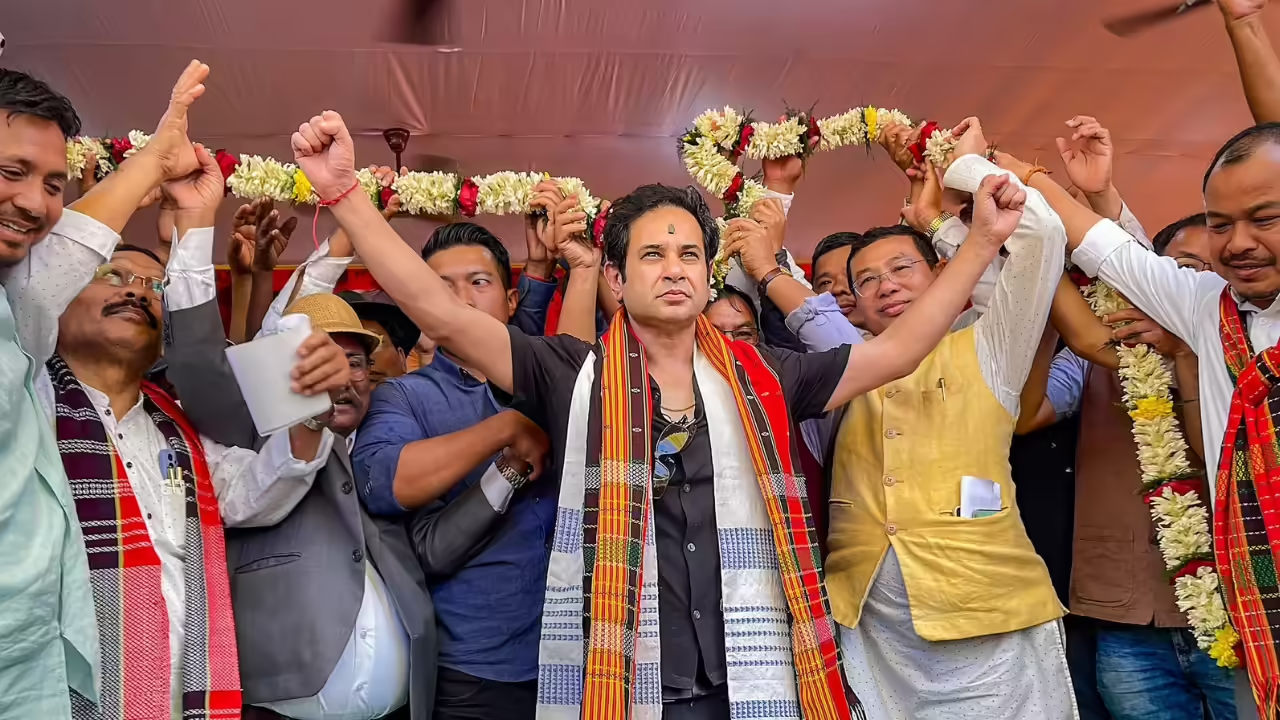
The BJP-Tipra Motha clash at Poangbari drew attention after high-intensity tensions reportedly erupted between workers of the alliance partners in South Tripura. Moreover, the confrontation occurred at the local panchayat office during a dispute related to the distribution of benefits under a public welfare scheme. Consequently, the incident highlighted growing friction at the grassroots level despite the political alliance between the two parties. Meanwhile, local authorities and party leaders have continued to monitor the situation closely.
Village Committee Elections Mandated as Left Front Welcomes Supreme Court Directions
CPI(M) Rejects TIPRA Motha Victory, Alleges Black Money
BJP-Tipra Motha Clash at Poangbari Erupts Over Welfare Scheme Distribution
The BJP-Tipra Motha clash at Poangbari reportedly took place at the panchayat office in South Tripura. Moreover, tensions arose over issues linked to the distribution and implementation of a public scheme.
Grassroots disputes often emerge when local political interests intersect with welfare-related activities. Furthermore, such disagreements can intensify due to competing claims and differences among party workers. As a result, the confrontation attracted considerable attention.
The incident underscored the challenges of maintaining coordination among alliance partners at the local level. Additionally, differing perceptions regarding administrative matters contributed to the tensions. Therefore, the episode has become a topic of political discussion in the district.
Meanwhile, local authorities remained engaged in maintaining peace and preventing further escalation. Similarly, political leaders are expected to assess the circumstances surrounding the incident. Hence, the matter continues to be closely watched.
Although political alliances provide common platforms, differences at the grassroots level occasionally surface. Nevertheless, dialogue remains essential for resolving disputes.
Alliance Partners Face Friction in South Tripura
The BJP-Tipra Motha clash at Poangbari has highlighted signs of friction between workers belonging to the alliance partners. Moreover, the confrontation raised questions about coordination among local units.
Political alliances often involve cooperation among parties with distinct support bases and priorities. Furthermore, differences at the organizational level can sometimes lead to tensions. Consequently, local disputes can attract wider political attention.
The reported confrontation reflects the complexity of managing alliance politics at the grassroots. Additionally, party workers often play a crucial role in maintaining harmony and coordination. Therefore, local incidents are viewed as significant by political observers.
Meanwhile, leaders from both parties are expected to focus on preventing misunderstandings from affecting broader cooperation. Similarly, maintaining organizational discipline remains important. Hence, the incident has implications beyond the immediate dispute.
Although disagreements are not uncommon in coalition politics, mechanisms for coordination remain important. Nevertheless, sustained communication continues to be necessary.
BJP-Tipra Motha Clash at Poangbari Highlights Grassroots Challenges
The BJP-Tipra Motha clash at Poangbari has once again drawn attention to the challenges associated with local governance and alliance management. Moreover, the dispute centered on issues linked to public welfare schemes and administrative procedures.
Public schemes often involve close interaction between elected representatives, party workers, and beneficiaries. Furthermore, competing expectations can occasionally lead to disagreements. As a result, effective coordination becomes crucial.
The latest incident illustrates how local-level issues can influence political dynamics. Additionally, maintaining smooth implementation of welfare initiatives requires cooperation among stakeholders. Therefore, dialogue and institutional mechanisms remain important.
Meanwhile, political observers continue to assess the impact of the incident on alliance relations. Similarly, party organizations are expected to prioritize stability and coordination. Hence, the episode has significance for local political developments.
Although tensions may arise from time to time, democratic processes provide avenues for addressing differences. Nevertheless, constructive engagement remains essential.
Authorities Focus on Maintaining Peace and Order
The BJP-Tipra Motha clash at Poangbari also highlighted the importance of maintaining public order and ensuring the uninterrupted delivery of welfare schemes. Moreover, authorities remained alert following the confrontation.
Law and order agencies play an important role in preventing disputes from escalating. Furthermore, peaceful resolution of conflicts helps maintain public confidence in institutions. Consequently, local authorities continue to monitor sensitive situations closely.
The incident has reinforced the need for coordination and communication among political stakeholders. Additionally, administrative mechanisms remain essential for ensuring smooth functioning at the grassroots level. Therefore, maintaining stability remains a priority.
Meanwhile, residents and local communities continue to expect uninterrupted access to public services. Similarly, political parties are expected to focus on preserving harmony. Hence, cooperation remains a key requirement.
Although political competition and differences are inevitable, peaceful engagement strengthens democratic institutions. Nevertheless, continued efforts to maintain order remain necessary.
Conclusion
The BJP-Tipra Motha clash at Poangbari has brought attention to emerging tensions between workers of the alliance partners in South Tripura. Moreover, the confrontation over a public welfare scheme at the local panchayat office highlighted the challenges of managing grassroots political dynamics. Consequently, the incident has sparked discussions regarding coordination and alliance management.
The episode also underscores the importance of maintaining peace and ensuring the effective implementation of welfare initiatives. Furthermore, dialogue and cooperation among stakeholders remain essential for preventing local disputes from affecting broader political relationships. As a result, the situation continues to be closely observed.
Looking ahead, the BJP-Tipra Motha clash at Poangbari is likely to prompt renewed efforts to strengthen communication and organizational discipline among alliance partners. Additionally, authorities and political leaders are expected to emphasize peaceful engagement and coordination. Therefore, maintaining stability and ensuring uninterrupted governance will remain key priorities.
FAQs
1. Where did the BJP-Tipra Motha clash take place?
The confrontation reportedly occurred at Poangbari in South Tripura, near a local panchayat office.
2. What triggered the dispute?
Moreover, tensions reportedly arose over issues related to the distribution of benefits under a public welfare scheme.
3. Which parties were involved in the clash?
Workers belonging to BJP and Tipra Motha, which are alliance partners, were involved in the confrontation.
4. Why is the incident politically significant?
The incident highlights the challenges of managing grassroots coordination among alliance partners. Furthermore, it has attracted attention within political circles.
5. Why is the BJP-Tipra Motha clash at Poangbari important?
The episode is significant because it underscores the importance of dialogue, organizational discipline, and effective coordination in coalition politics.