

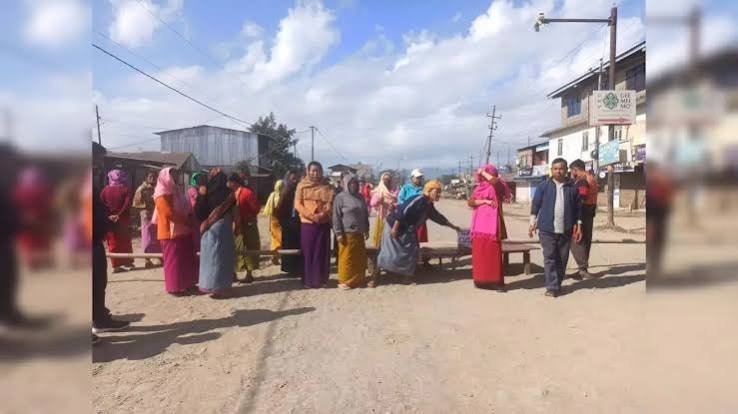
Community Unity in Manipur has come under renewed focus as political leaders and tribal organisations debate the use of blockades and other forms of protest amid continuing ethnic tensions. Chief Minister Yumnam Khemchand Singh has urged stakeholders to avoid bandhs and blockades and instead pursue democratic forms of agitation to raise grievances.
The appeal comes as competing tribal and civil-society groups continue to make demands linked to justice, security and community concerns. Moreover, recent developments show that different organisations have adopted sharply different positions on highway restrictions. Consequently, the movement of essential goods and the broader question of peaceful democratic engagement remain important issues for Manipur.
Abhijeet Dipke Urges Opposition to Stop Contesting Polls Amid ECI Row
Community Unity in Manipur Faces Pressure From Continuing Blockades
The Chief Minister’s appeal followed renewed tensions surrounding highway blockades in different parts of the state. Khemchand Singh said bandhs and blockades could create additional hardship for ordinary residents and potentially contribute to unwanted incidents of violence. Therefore, he called on stakeholders to use alternative democratic methods to communicate their demands.
The appeal carries particular significance because road blockades can affect communities far beyond the immediate area of a protest. Essential commodities, fuel, medicines and other supplies depend heavily on functioning road networks. Consequently, prolonged restrictions can create difficulties for residents who may have no direct connection with the dispute behind a blockade.
The state government has also formally addressed the issue. An August 28 Home Department order prohibited road blockades and other forms of highway obstruction and warned that violations could lead to legal action. The order directed district authorities and police officials to act against unlawful obstruction and protect the movement of essential services.
Furthermore, the government appealed to civil-society organisations, student groups and other stakeholders to maintain peace and avoid disruptive activities. This indicates that the administration is attempting to combine enforcement with an appeal for restraint.
However, the continuing statements from tribal organisations show that disagreements remain unresolved. Different groups continue to cite security concerns, alleged injustices and demands for accountability as reasons for their respective positions. Therefore, achieving community unity remains a difficult political and social task.
Tribal Councils Take Different Positions on Protest
The current situation involves several tribal organisations whose positions do not always align. The Joint Tribes Council Manipur, representing the Inpui, Liangmai, Rongmei and Zeme communities, recently endorsed the United Naga Council’s decision to intensify an economic blockade on four national highways. The council described the action as a response to the killing of six Naga persons and called for accountability.
At the same time, the Joint Tribes Council appealed for non-violence, restraint and discipline during the blockade. It also recognised exemptions for essential services, including medical supplies, power, telecommunications and water supply.
However, the situation has subsequently developed further. On September 11, the Joint Tribes Council-Manipur announced an indefinite shutdown affecting movement along NH-37 and central government-sponsored projects in areas under its jurisdiction. The council made the announcement after alleging that five Naga women had been arrested by a CRPF CoBRA team at Noney. The circumstances surrounding the arrests remained contested in available reports.
Meanwhile, the Committee on Tribal Unity, representing the Kuki-Zo community in Sadar Hills, has taken a different position. CoTU has alleged that sections of the Tangkhul and Liangmai communities were imposing a selective blockade against Kuki-Zo people. Those allegations have been disputed and could not independently establish every claim.
CoTU has urged the government to enforce its August 28 anti-blockade order without bias. It has also warned of possible retaliatory restrictions if the alleged blockade continues. Such warnings underline the risk that competing restrictions could deepen tensions rather than resolve the underlying disputes.
Democratic Alternatives Could Reduce Public Hardship
The Chief Minister’s call for democratic agitation offers one possible route away from repeated road disruptions. Peaceful rallies, memoranda, public consultations, legal proceedings and structured negotiations can allow organisations to communicate grievances without necessarily restricting essential transportation.
Moreover, democratic mechanisms provide authorities with clearer channels for responding to specific demands. A written representation, judicial petition or formal meeting can identify the issue, the responsible institution and the desired remedy. Consequently, such approaches may help transform broader grievances into specific policy or legal questions.
This does not mean that organisations must abandon their demands. Instead, the government’s appeal suggests that communities can continue political mobilisation while reducing the impact of protests on civilians. The distinction is particularly important in Manipur because many residents already face difficult conditions resulting from prolonged instability.
Human Rights Watch recently reported that highway blockades and counter-blockades had affected the movement of food, fuel and medical supplies in parts of Manipur. It also said the Supreme Court had directed Kuki and Naga groups on August 14 to plan for reopening highways.
Therefore, restoring reliable movement remains closely connected to humanitarian concerns. Hospitals, schools, markets and households all depend on transportation networks. Furthermore, restrictions can affect communities that may not share the political position of the organisation imposing them.
A democratic approach can also create space for competing communities to express different interpretations of the same event. This matters because many recent disputes involve allegations and counter-allegations that remain contested. Accordingly, independent investigations and due process can provide stronger foundations for accountability than collective restrictions.
Community Unity Requires Equal Application of Law
The debate over blockades has also raised questions about equal enforcement. CoTU has specifically demanded that the August 28 government order be implemented without bias.
The concern is significant because inconsistent enforcement could undermine public confidence in the administration. If authorities prohibit blockades but apply the rule differently depending on the community involved, affected groups may perceive the system as unfair. Consequently, consistent enforcement becomes an important component of restoring trust.
At the same time, enforcement needs to distinguish between peaceful democratic expression and unlawful obstruction. Citizens and organisations retain the ability to raise grievances, but the administration has a responsibility to protect public roads and essential services. Therefore, maintaining this balance requires both lawful protest and proportionate administrative action.
The recent escalation also demonstrates why community leaders have an important role in preventing retaliatory actions. A warning by one group can prompt a counter-warning from another, potentially creating a cycle of restrictions. The September 9 CoTU statement, for example, threatened reciprocal restrictions if the alleged selective blockade continued.
Breaking such a cycle requires communication between communities as well as engagement with the state government. Moreover, tribal councils, civil-society organisations and elected representatives can encourage supporters to avoid provocation and protect humanitarian movement.
Ultimately, Community Unity in Manipur will depend not on the absence of disagreement but on the ability of different communities to pursue their demands without collectively punishing civilians. Democratic institutions, legal mechanisms and structured dialogue can provide alternatives to prolonged road disruptions.
Conclusion
Community Unity in Manipur remains a major challenge as tribal organisations continue to pursue different demands amid prolonged tensions and highway restrictions. The Chief Minister has appealed against bandhs and blockades, urging stakeholders to use democratic forms of agitation instead.
At the same time, recent actions by the Joint Tribes Council-Manipur and statements by the Committee on Tribal Unity show that grievances remain serious and that different communities continue to view the situation differently.
Therefore, the immediate priority remains protecting essential movement while allowing legitimate grievances to be expressed through peaceful and lawful channels. Furthermore, consistent enforcement of anti-blockade measures, independent investigation of contested incidents and meaningful dialogue could help reduce the possibility of retaliatory restrictions.
A sustainable resolution will require more than temporary road openings. It will require confidence that grievances can reach the authorities, that investigations will follow due process and that communities can pursue their political demands without placing civilians at greater risk.
FAQs
What is the current concern over Community Unity in Manipur?
The concern centres on continuing ethnic tensions, competing tribal demands and blockades that can affect movement and essential supplies across the state.
What has the Manipur Chief Minister said about blockades?
Chief Minister Yumnam Khemchand Singh has urged stakeholders to avoid bandhs and blockades and use other democratic forms of agitation to raise their demands.
What action has the Manipur government taken against blockades?
The Home Department issued an August 28 order prohibiting road blockades and warning that violators could face legal action.
Why are tribal organisations continuing to protest?
Different organisations have cited concerns including alleged killings, demands for accountability, security issues and grievances over government action. These claims and interpretations differ between communities and organisations.
Can democratic protests continue without blockades?
Yes. Organisations can use peaceful rallies, memoranda, public consultations, legal proceedings and negotiations to present grievances while avoiding disruption to essential transportation and services.