

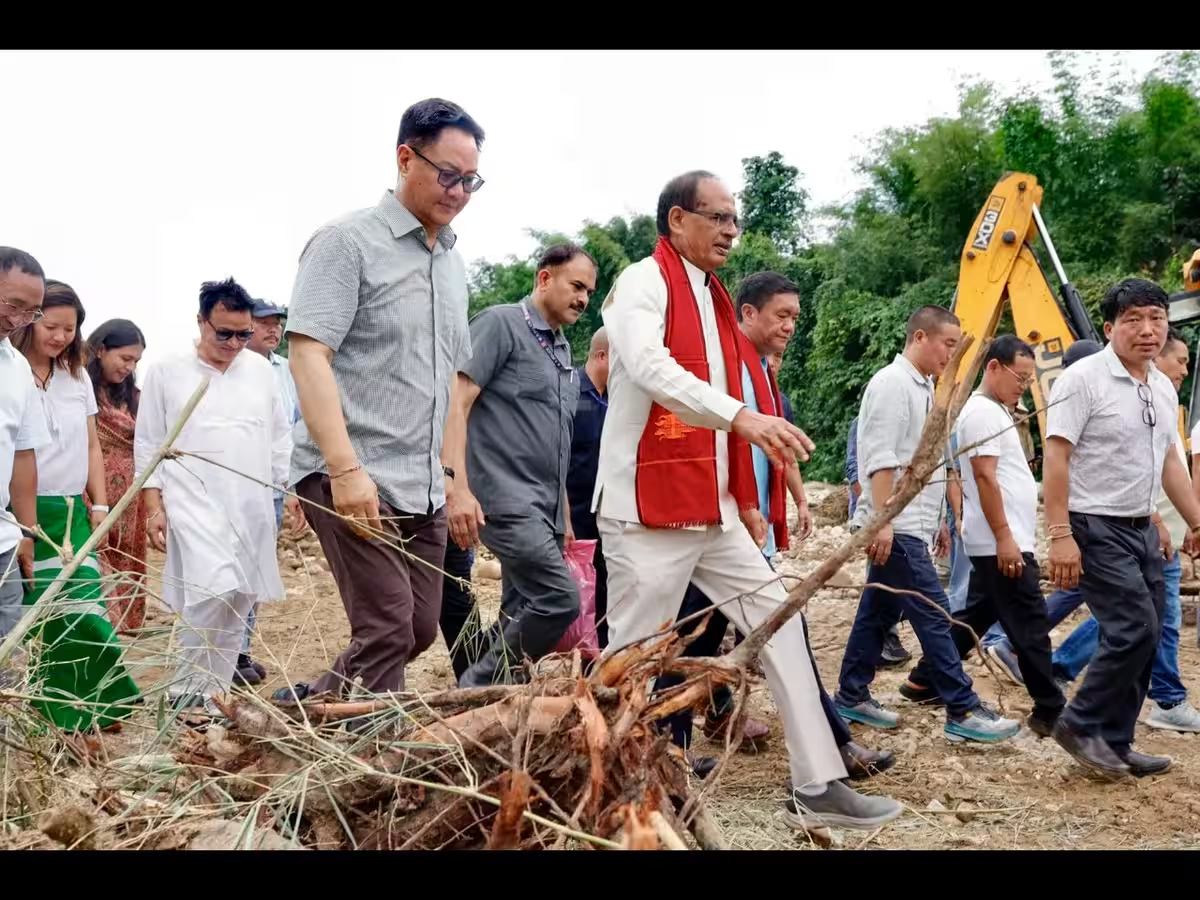
The Central Flood Inspection brought senior Union leaders to the Northeast as Union Ministers Shivraj Singh Chouhan and Kiren Rijiju conducted on-ground assessments in flood-affected areas of Assam and Arunachal Pradesh. The visit focused on evaluating the extent of damage and reviewing the ongoing relief and recovery efforts. The Central Flood Inspection marked a significant step in the Centre’s response to recent flooding in Northeast India. Union Ministers Shivraj Singh Chouhan and Kiren Rijiju visited flood-hit regions of Assam and Arunachal Pradesh to assess the damage firsthand. Moreover, the inspection aimed to review the situation on the ground and understand the impact of the floods on affected communities and infrastructure.
Maitri Setu Operationalization: India-Bangladesh Talks Clear Path for Commercial Operations
Central Flood Inspection Conducted in Flood-Hit Regions
The Central Flood Inspection included visits to flood-affected locations in Assam and Arunachal Pradesh. Furthermore, the Union Ministers reviewed the extent of damage caused by heavy rainfall and flooding.
On-ground inspections help authorities understand the challenges faced by affected communities. Consequently, such visits support informed decision-making regarding relief and recovery.
Moreover, direct assessments provide valuable insights into infrastructure damage. Therefore, field inspections remain an important part of disaster response.
Union Ministers Review Damage Assessment
As part of the Central Flood Inspection, Union Ministers Shivraj Singh Chouhan and Kiren Rijiju conducted physical inspections in affected areas. Furthermore, the leaders interacted with officials to review the overall situation.
Damage assessment is a key component of disaster management. Similarly, field visits help authorities evaluate immediate needs and ongoing response measures.
Consequently, the inspections contributed to a clearer understanding of the flood’s impact. Thus, coordination between the Centre and state administrations remains important.
Floods Impact Communities and Infrastructure
The Central Flood Inspection focused on assessing the effects of flooding on public infrastructure and local communities. Moreover, heavy rainfall affected several areas, requiring continuous monitoring by authorities.
Floods often disrupt transportation, agriculture, and essential public services. Additionally, damage assessments help identify priority areas for recovery efforts.
Consequently, government agencies continue to monitor conditions in affected districts. Therefore, coordinated action remains essential.
Centre and States Coordinate Relief Efforts
The Central Flood Inspection reflects the importance of cooperation between the Central Government and state administrations during natural disasters. Furthermore, effective coordination supports timely relief and rehabilitation measures.
Disaster management requires collaboration among multiple agencies. Similarly, regular communication helps improve the efficiency of response operations.
Moreover, joint efforts contribute to faster recovery in affected regions. Thus, intergovernmental coordination remains a key aspect of disaster response.
Northeast Continues to Face Monsoon Challenges
The Central Flood Inspection also highlights the recurring impact of monsoon-related flooding across Northeast India. Furthermore, seasonal rainfall often creates challenges for residents and infrastructure in vulnerable areas.
Authorities continue to monitor weather conditions and flood-affected regions. Consequently, preparedness and timely response remain essential components of disaster management.
Additionally, long-term mitigation measures can strengthen resilience against future floods. Therefore, continued planning remains important.
Looking Ahead
The Central Flood Inspection is expected to support ongoing relief, recovery, and rehabilitation efforts in Assam and Arunachal Pradesh. Moreover, the findings from the field visits may assist authorities in identifying areas requiring immediate attention.
As restoration work progresses, cooperation between central and state agencies is likely to remain a priority. Similarly, continued monitoring will help address evolving challenges.
Consequently, the inspections reinforce the importance of coordinated disaster management. Thus, the focus remains on supporting affected communities and restoring normalcy.
Conclusion
The Central Flood Inspection by Union Ministers Shivraj Singh Chouhan and Kiren Rijiju underscores the Centre’s focus on assessing flood damage in Assam and Arunachal Pradesh. Their on-ground visits provided an opportunity to review the impact on communities and infrastructure.
Moreover, the inspections highlight the importance of coordinated disaster response and continued relief efforts. Consequently, close cooperation between the Centre and state governments remains essential.
Looking ahead, recovery and rehabilitation efforts will continue to play a vital role in restoring normalcy. Therefore, the Central Flood Inspection represents an important step in evaluating and addressing the aftermath of the floods.
FAQs
1. What is the Central Flood Inspection?
The Central Flood Inspection refers to the on-ground flood damage assessment conducted by Union Ministers in Assam and Arunachal Pradesh.
2. Which Union Ministers visited the flood-affected areas?
Union Ministers Shivraj Singh Chouhan and Kiren Rijiju conducted the inspections.
3. Which states were covered during the visit?
The ministers visited flood-affected areas in Assam and Arunachal Pradesh.
4. What was the purpose of the inspection?
The visit aimed to assess flood damage and review the situation on the ground.
5. Why are such inspections important?
They help authorities evaluate the impact of disasters and support coordinated relief and recovery efforts.