

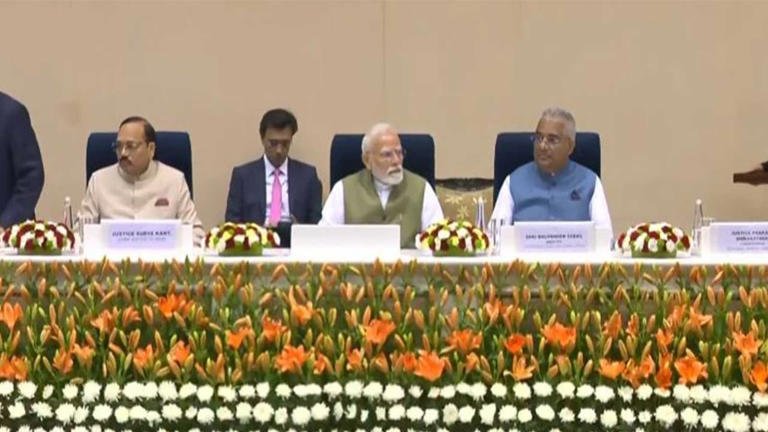
PM Modi held high-level briefings with Members of Parliament from Nagaland and Arunachal Pradesh on disaster management and relief efforts amid seasonal natural disasters affecting parts of the Northeast.
The discussions focused on coordination between the Centre, state governments, elected representatives, and local administrations. Moreover, stronger coordination can help authorities respond more efficiently to floods, landslides, and other weather-related emergencies.
The engagement also highlights the importance of ensuring that affected communities receive timely assistance during the monsoon season.
Khneng Embroidery Wins National Spotlight as Air India Express Showcases Meghalaya Craft
PM Modi Reviews Northeast Disaster Response
The PM Modi Northeast flood relief discussions brought the Prime Minister together with MPs representing Nagaland and Arunachal Pradesh.
Such briefings provide an opportunity to communicate ground-level concerns directly to the Centre. Furthermore, MPs can highlight challenges involving roads, relief supplies, communications, evacuation, and rehabilitation in their constituencies.
The discussions can therefore strengthen coordination between national and regional authorities.
Seasonal Disasters Challenge Northeast
The Northeast remains vulnerable to several forms of natural disasters during the monsoon.
Heavy rainfall can trigger floods, landslides, road blockages, and damage to public infrastructure. Additionally, difficult terrain can make it challenging for rescue teams and relief supplies to reach isolated communities.
Preparedness and rapid coordination therefore remain essential during periods of extreme weather.
Nagaland Faces Landslide Risks
Nagaland’s mountainous terrain makes several areas particularly vulnerable to landslides and road disruptions during periods of heavy rainfall.
Blocked highways can isolate communities and interrupt the movement of essential supplies. Moreover, damage to roads and bridges can slow rescue and relief operations.
Coordination between state authorities and central agencies can help restore connectivity more quickly.
Arunachal Pradesh Requires Special Preparedness
Arunachal Pradesh also faces significant challenges because of its mountainous geography and extensive network of remote settlements.
Heavy rainfall can cause landslides, flash floods, and damage to roads connecting border and interior areas. Furthermore, disruptions in remote districts can complicate access to healthcare, food, and other essential services.
Disaster planning therefore requires both local preparedness and central support.
MPs Provide Ground-Level Feedback
Elected representatives can serve as an important communication channel between affected communities and government authorities.
MPs can report local infrastructure damage and identify areas requiring urgent assistance. Additionally, they can help communicate government relief measures to residents.
This feedback can support more targeted disaster-response planning.
Centre-State Coordination Remains Important
Effective disaster management requires cooperation across multiple levels of government.
Central agencies can provide technical assistance, financial support, rescue resources, and specialised personnel. Meanwhile, state administrations manage local response operations and coordinate with district authorities.
Better coordination can reduce duplication and improve the speed of relief operations.
Relief Efforts Need Timely Delivery
During natural disasters, timing can determine the effectiveness of relief measures.
Food, drinking water, medicines, temporary shelter, and emergency equipment must reach affected communities quickly. Moreover, damaged roads and communication networks can make distribution difficult.
Authorities therefore need contingency plans for areas that become temporarily inaccessible.
Infrastructure Restoration Is Crucial
Restoring damaged infrastructure remains a major part of post-disaster recovery.
Roads and bridges provide essential connections for rescue teams and relief supplies. Furthermore, repairing electricity, telecommunications, water systems, and public buildings can help communities return to normal life.
Long-term infrastructure planning can also improve resilience against future disasters.
Disaster Preparedness Goes Beyond Relief
Emergency assistance represents only one part of disaster management.
Authorities also need early-warning systems, evacuation plans, emergency shelters, trained personnel, and public-awareness programmes. Additionally, regular preparedness exercises can help communities understand what to do during emergencies.
Investing in resilience can reduce the impact of future disasters.
Northeast States Need Continued Support
The discussions involving Nagaland and Arunachal Pradesh highlight the wider importance of disaster preparedness across the Northeast.
The region’s geography, rainfall patterns, and infrastructure challenges require sustained attention. Moreover, coordination among neighbouring states can help share resources and improve responses when disasters affect multiple areas.
Regional cooperation can strengthen overall resilience.
What Happens Next?
The Centre and state governments can continue monitoring weather conditions and disaster risks throughout the season.
Authorities may coordinate relief resources, infrastructure restoration, and emergency preparedness based on developments on the ground. Furthermore, elected representatives can continue communicating constituency-level requirements to central and state agencies.
The objective remains a coordinated and timely response.
Conclusion
The PM Modi Northeast flood relief engagement with MPs from Nagaland and Arunachal Pradesh underscores the importance of coordinated disaster management during the seasonal monsoon period.
Moreover, direct communication between the Prime Minister, MPs, state governments, and administrative agencies can help identify urgent requirements and improve relief planning. At the same time, long-term investment in resilient infrastructure and early-warning systems remains essential.
Overall, strong Centre-state coordination, rapid relief delivery, and disaster preparedness can help protect vulnerable communities across Nagaland and Arunachal Pradesh.
FAQs
1. Why did PM Modi brief MPs from Nagaland and Arunachal Pradesh?
The discussions focused on disaster management and relief coordination amid seasonal natural disasters in the Northeast.
2. What natural disasters affect these states?
Heavy monsoon rainfall can contribute to floods, landslides, flash floods, and infrastructure damage.
3. How can MPs help during disasters?
MPs can communicate ground-level concerns to the Centre and state governments and help identify urgent needs within their constituencies.
4. Why is Centre-state coordination important?
It helps combine central resources with local administrative capabilities, improving the delivery of rescue and relief assistance.
5. What can reduce future disaster risks?
Early-warning systems, resilient infrastructure, evacuation planning, emergency preparedness, and community awareness can strengthen disaster resilience.