

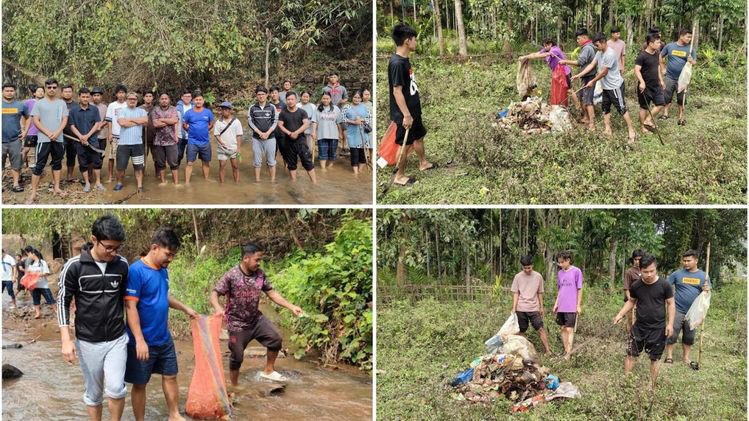
A remarkable community-driven initiative has successfully restored the Umshait riverbank in Patharkhmah, Meghalaya, highlighting the power of collective action in environmental conservation. Residents, local organisations, and volunteers came together to rejuvenate the riverbank, which had faced degradation due to pollution and neglect.
The Umshait riverbank restoration Patharkhmah effort has now become a model for grassroots environmental action. Moreover, it reflects growing awareness among communities about the importance of preserving natural resources.
Read More: Assam facing crisis, Gaurav Gogoi flags migrant worker deaths
Residents unite for environmental protection
The restoration drive witnessed active participation from people across different age groups. Local residents, youth groups, and community leaders joined hands to clean and revive the riverbank.
They removed waste, cleared debris, and worked to restore the natural flow of the river. In addition, volunteers planted trees and vegetation along the banks to prevent erosion.
Furthermore, the initiative encouraged a sense of ownership among participants. As a result, people felt more responsible for maintaining the river’s health.
Addressing pollution and degradation
The Umshait river had been facing increasing pollution over the years. Improper waste disposal and lack of awareness contributed to the deterioration of the riverbank.
Therefore, the community decided to take action. They organised clean-up drives and raised awareness about responsible waste management.
Moreover, they implemented measures to prevent future pollution. For instance, they created designated waste disposal areas and promoted eco-friendly practices.
As a result, the riverbank has seen significant improvement in cleanliness and environmental quality.
Role of local organisations and leaders
Local organisations played a crucial role in coordinating the restoration efforts. They mobilised volunteers, arranged resources, and ensured effective implementation of activities.
Community leaders also contributed by guiding the initiative and encouraging participation. Their involvement helped build trust and unity among residents.
In addition, they worked to spread awareness about environmental conservation. Therefore, the initiative gained widespread support across Patharkhmah.
Promoting sustainable practices
The restoration drive did not focus only on immediate clean-up efforts. Instead, it aimed to promote long-term sustainability.
Volunteers educated residents about reducing plastic use and adopting eco-friendly habits. They also encouraged proper waste segregation and disposal.
Moreover, awareness campaigns highlighted the importance of protecting water bodies. As a result, people began to adopt more responsible practices in their daily lives.
This shift towards sustainability remains one of the key achievements of the initiative.
Positive impact on local ecosystem
The restoration of the Umshait riverbank has had a positive impact on the local ecosystem. Improved water quality and cleaner surroundings have benefited both wildlife and residents.
Vegetation along the riverbank has helped stabilise the soil and reduce erosion. In addition, it has enhanced the natural beauty of the area.
Moreover, the initiative has created a healthier environment for the community. Residents now enjoy cleaner water and improved living conditions.
Therefore, the project demonstrates the ecological benefits of community action.
Inspiring similar initiatives
The success of the Umshait riverbank restoration Patharkhmah initiative has inspired other communities in Meghalaya. People are now exploring similar projects to address environmental challenges in their areas.
Local authorities have also taken note of the effort. They are considering ways to support and replicate such initiatives on a larger scale.
Furthermore, the project highlights the importance of community involvement in conservation. It shows that collective action can achieve meaningful results.
Challenges faced during the drive
Despite its success, the initiative faced several challenges. Coordinating large groups of volunteers required careful planning and organisation.
In addition, ensuring consistent participation over time proved difficult. However, strong leadership and community support helped overcome these challenges.
Limited resources also posed constraints. Nevertheless, volunteers managed to maximise available resources through teamwork and innovation.
Therefore, the success of the project reflects resilience and determination.
Way forward for sustained conservation
The community plans to continue its efforts to maintain the restored riverbank. Regular monitoring and clean-up activities will ensure that the river remains in good condition.
In addition, residents aim to strengthen awareness programmes. They want to educate future generations about the importance of environmental protection.
Collaboration with local authorities and organisations will also play a key role. Therefore, the initiative is expected to evolve into a long-term conservation effort.
Conclusion
The restoration of the Umshait riverbank in Patharkhmah stands as a powerful example of community-driven environmental action. Through collective effort, residents have transformed a degraded riverbank into a cleaner and healthier ecosystem.
The Umshait riverbank restoration Patharkhmah initiative not only improved environmental conditions but also strengthened community bonds. Moreover, it has inspired others to take similar steps toward conservation.
As communities continue to face environmental challenges, such initiatives highlight the importance of unity, awareness, and sustainable practices.
Read More: Tripura CM vs royal scion: Fallout ahead of April polls intensifies