

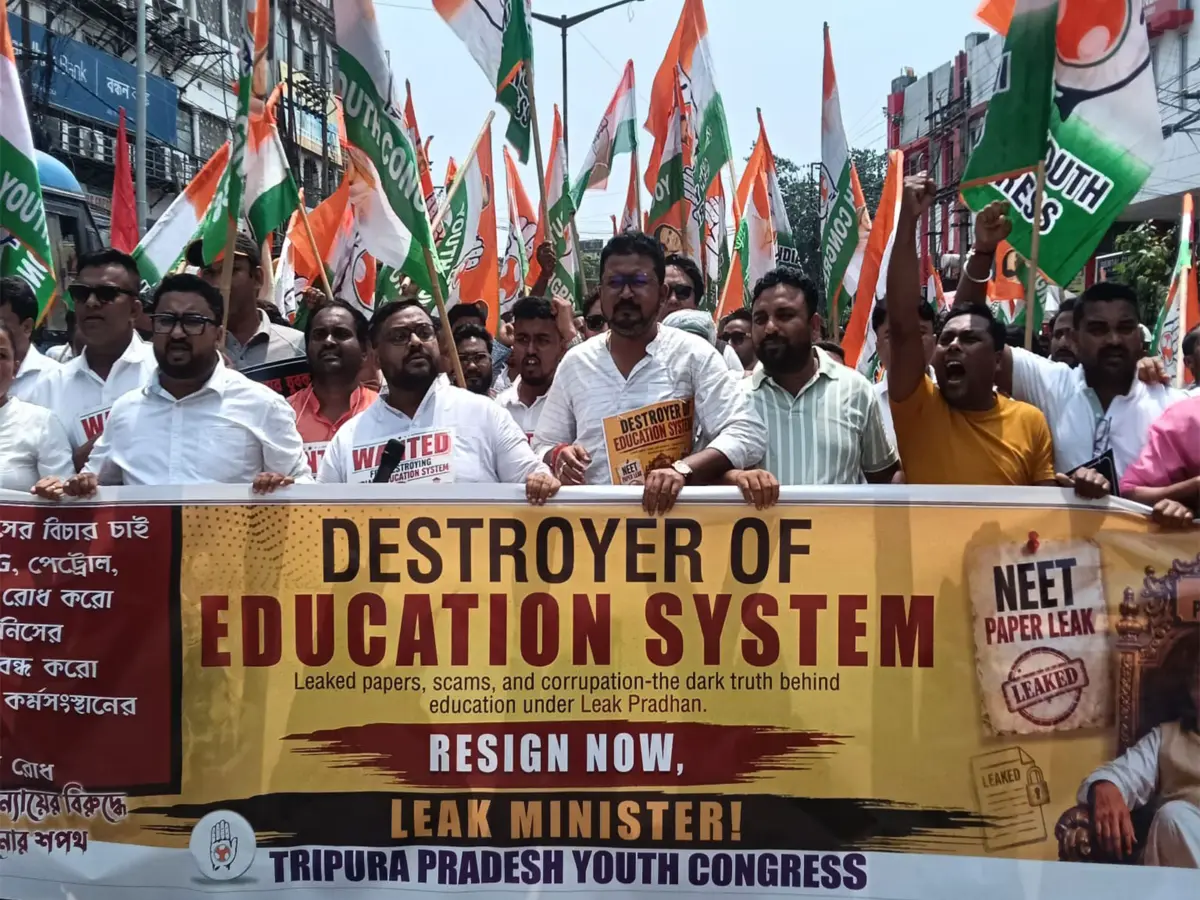
The Congress moves Human Rights Commission issue has gained attention after the Tripura Youth Congress approached the Tripura Human Rights Commission (THRC) seeking intervention over an alleged lathi-charge during a previous NEET paper leak protest in Agartala. Moreover, the organization demanded criminal action against Central Reserve Police Force (CRPF) commandants, alleging excessive use of force during the demonstration. Consequently, the matter has added a human rights dimension to the controversy surrounding the protest. Meanwhile, the case has drawn political and public interest across the state.
CPI(M) Rejects TIPRA Motha Victory, Alleges Black Money
Congress Moves Human Rights Commission Seeking Action
The Congress moves Human Rights Commission development emerged after the Tripura Youth Congress formally submitted its concerns before the THRC. Moreover, the organization sought legal and administrative action regarding the alleged use of force during the rally.
Public demonstrations and protests often involve sensitive law and order considerations. Furthermore, allegations relating to excessive force frequently become subjects of legal scrutiny and institutional review. As a result, the issue has attracted considerable attention.
According to the Youth Congress, criminal proceedings should be initiated against the concerned CRPF commandants. Additionally, the organization emphasized the importance of accountability and the protection of democratic rights. Therefore, the matter has become a significant issue in Tripura’s political discourse.
Meanwhile, stakeholders continue to monitor developments surrounding the complaint. Similarly, the role of statutory bodies in addressing grievances remains under focus. Hence, the case has generated broader discussions on rights and accountability.
Although competing narratives may emerge, institutional mechanisms provide avenues for examining such concerns. Nevertheless, due process remains essential.
Tripura Youth Congress Raises Allegations Over NEET Protest
The Congress moves Human Rights Commission controversy is linked to a previous rally held in Agartala over the NEET paper leak issue. Moreover, the Youth Congress alleged that participants were subjected to a lathi-charge during the protest.
Protests and demonstrations are an important part of democratic expression. Furthermore, maintaining a balance between public order and civil liberties remains a critical responsibility. Consequently, incidents involving allegations of force often attract legal and political scrutiny.
The complaint submitted to the THRC highlights concerns regarding the treatment of demonstrators. Additionally, the Youth Congress has called for accountability through appropriate legal channels. Therefore, the issue has assumed importance beyond immediate political considerations.
Meanwhile, public attention remains focused on how the matter will be addressed. Similarly, human rights institutions continue to play an important role in examining grievances. Hence, the developments are being closely watched.
Although differences over the interpretation of events may exist, institutional processes remain important. Nevertheless, constructive engagement and legal remedies continue to be vital.
Congress Moves Human Rights Commission Amid Calls for Accountability
The Congress moves Human Rights Commission matter has renewed discussions regarding accountability and the protection of civil rights. Moreover, the complaint reflects the opposition’s demand for a transparent examination of the incident.
Human rights institutions are designed to provide forums for addressing grievances and promoting accountability. Furthermore, independent mechanisms help strengthen confidence in democratic systems. As a result, the issue has attracted considerable political and public interest.
The Youth Congress has maintained that legal action is necessary in response to the alleged incident. Additionally, the complaint underscores the importance of safeguarding democratic freedoms. Therefore, the matter remains a subject of wider debate.
Meanwhile, observers continue to assess the implications of the case. Similarly, stakeholders have emphasized the importance of due process and impartial examination. Hence, accountability remains central to the discussion.
Although political disagreements are inevitable, institutional frameworks help address disputes peacefully. Nevertheless, transparency continues to be important.
Human Rights and Democratic Institutions Remain Key Themes
The Congress moves Human Rights Commission issue highlights the significance of institutions tasked with addressing complaints relating to rights and public accountability. Moreover, such mechanisms are viewed as important components of democratic governance.
Independent bodies play a crucial role in examining allegations and ensuring procedural fairness. Furthermore, access to legal remedies contributes to public confidence in institutions. Consequently, the case has brought renewed attention to the functioning of oversight mechanisms.
The latest complaint by the Tripura Youth Congress demonstrates the continued reliance on constitutional and statutory institutions. Additionally, the matter underscores the importance of lawful processes. Therefore, the issue remains politically and legally significant.
Meanwhile, discussions regarding civil liberties and accountability are expected to continue. Similarly, developments in the case are likely to remain under public scrutiny. Hence, institutional responses will be closely followed.
Although controversies may arise, democratic systems provide mechanisms for addressing concerns. Nevertheless, adherence to due process remains fundamental.
Conclusion
The Congress moves Human Rights Commission development has brought the alleged lathi-charge during the NEET paper leak protest in Agartala back into public focus. Moreover, the Tripura Youth Congress has demanded criminal action against CRPF commandants, emphasizing accountability and the protection of democratic rights. Consequently, the issue has evolved into a broader discussion involving human rights and institutional oversight.
The case also highlights the role of the Tripura Human Rights Commission in addressing grievances and ensuring procedural fairness. Furthermore, legal and constitutional mechanisms continue to serve as important avenues for resolving disputes. As a result, the matter is expected to remain under close public and political scrutiny.
Looking ahead, the Congress moves Human Rights Commission issue is likely to shape discussions surrounding accountability and civil liberties in Tripura. Additionally, stakeholders are expected to closely watch the response of the concerned institutions. Therefore, transparency and due process will remain central to the evolving developments.
FAQs
1. Why did the Tripura Youth Congress approach the THRC?
The organization sought intervention over an alleged lathi-charge during a previous NEET paper leak protest in Agartala.
2. What action has the Youth Congress demanded?
Moreover, it demanded criminal action against the concerned CRPF commandants.
3. Which institution received the complaint?
The complaint was submitted to the Tripura Human Rights Commission (THRC). Consequently, the matter has entered an institutional process.
4. Why is the issue significant?
The issue raises questions relating to accountability, civil liberties, and the role of human rights institutions. Furthermore, it has attracted political attention.
5. Why is the Congress moves Human Rights Commission issue important?
The issue is important because it highlights the role of democratic institutions in addressing allegations and ensuring due process.