

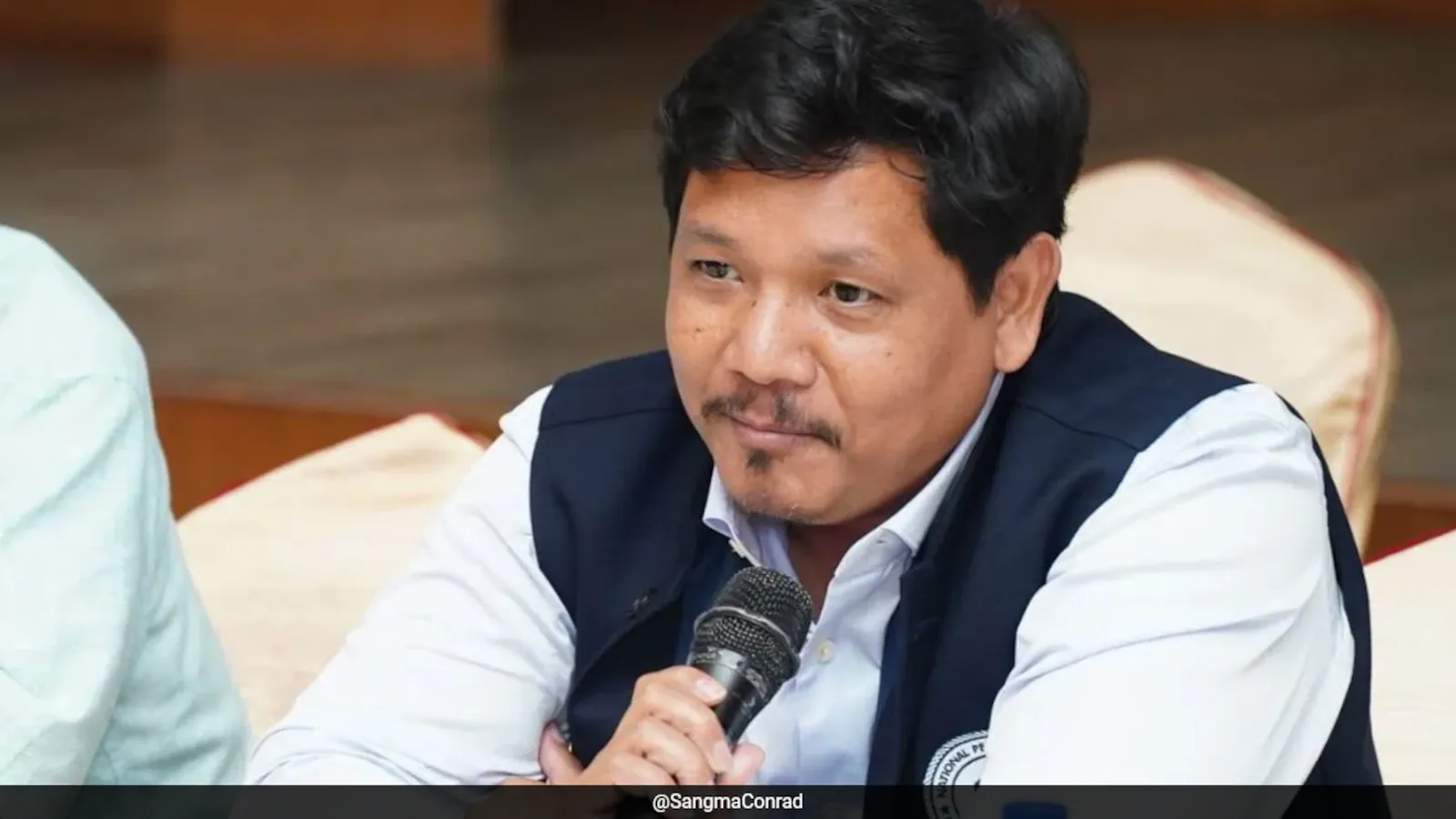
The Meghalaya NPP induction of former United Democratic Party (UDP) legislators Paul Lyngdoh and Renikton Lyngdoh Tongkhar marks a significant development in the state’s political landscape. Chief Minister and National People’s Party (NPP) national president Conrad K. Sangma formally welcomed the two legislators at the party headquarters in Shillong on October 28, 2026. The induction followed the Meghalaya Assembly Speaker’s recognition of the merger of three UDP legislators with the NPP. The third legislator, Nujorki Sungoh, could not attend because of illness. Following the merger, the NPP’s strength rose to 36 members in the 60-seat Assembly, while the UDP was left with one legislator.
Donyi Polo Airport Upgrades Strengthen Night Operations in Arunachal Pradesh
Conrad Sangma Welcomes Former UDP Legislators into the NPP
Meghalaya Chief Minister Conrad K. Sangma welcomed Paul Lyngdoh and Renikton Lyngdoh Tongkhar into the ruling NPP during a formal induction ceremony in Shillong on October 28. The event brought together senior party leaders, elected representatives and supporters of the legislators.
Deputy Chief Minister and NPP state president Prestone Tynsong handed over party membership certificates to the two legislators. Deputy Chief Minister Sniawbhalang Dhar and other party representatives also attended the programme.
Sungoh, the legislator from Mookaiaw, could not participate because of health reasons. However, reports said that supporters associated with his constituency joined the NPP during the induction programme.
Sangma welcomed the legislators and their supporters, highlighting their longstanding relationships with the party leadership. He also referred to the importance of teamwork, humility and public service within the organisation.
The chief minister described the occasion as more than a numerical increase in the party’s legislative strength. He referred to his earlier associations with the legislators and expressed his intention to work with them within the NPP.
Sangma also spoke about the importance of managing disagreements internally. He said that members of an organisation may hold different views, but discussions should focus on whether decisions serve the public interest.
The induction ceremony followed the formal recognition of the merger by Meghalaya Assembly Speaker Thomas A. Sangma. The Speaker’s order established the legislators’ status as NPP members in the Assembly under the applicable provisions of the Constitution’s Tenth Schedule. <Cite refs={[“turn757731search2″,”turn757731search7”]}/>
NPP Strength Rises to 36 in Meghalaya Assembly
The merger increased the NPP’s representation in the Meghalaya Legislative Assembly from 33 to 36 members. The Assembly has 60 elected seats, making the development significant for the distribution of party representation in the House.
Before the latest merger, the NPP already led the state government. The addition of three legislators increased its individual strength, while the Bharatiya Janata Party (BJP), another member of the ruling coalition, also gained legislators through a separate merger involving former UDP members.
The BJP’s strength rose from two to 10 after the Assembly Speaker recognised the merger of eight UDP legislators with the party on October 16, 2026. Subsequently, the Speaker recognised the merger of three other UDP legislators with the NPP. <Cite refs={[“turn757731search6″,”turn757731search8”]}/>
These developments substantially changed the representation of the UDP, which had previously held 12 seats in the Assembly. After eight legislators joined the BJP and three merged with the NPP, UDP president Metbah Lyngdoh remained the party’s sole legislator.
The sequence of mergers therefore altered the composition of Meghalaya’s 60-member House. The NPP increased its representation to 36, while the BJP became the second-largest party in the Assembly with 10 members.
However, the NPP and BJP remain separate political parties, even though both participate in the state’s ruling coalition. Their respective legislative numbers should not be confused with the overall strength of the government’s alliance.
The changes also highlight the importance of formal legislative procedures when elected representatives change party affiliation. The Assembly Speaker’s recognition of the mergers determined how the legislators would be recorded in the House.
Speaker Recognises Merger Under the Tenth Schedule
The formal recognition of the three legislators’ merger provided the legal and procedural basis for their induction into the NPP. According to the Assembly order dated October 23, the legislators communicated their decision to merge with the NPP and appeared before the Speaker to verify the contents of their submission.
The order identified Paul Lyngdoh, representing West Shillong; Renikton Lyngdoh Tongkhar, representing Mawkyrwat; and Nujorki Sungoh, representing Mookaiaw.
The Speaker recognised the merger under Paragraph 4 of the Tenth Schedule to the Constitution of India. The provision addresses mergers involving political parties and includes conditions relevant to legislators who change their party affiliation through a recognised merger.
The Speaker’s order stated that the three legislators constituted at least two-thirds of the UDP Legislature Party’s membership remaining at that stage. It also referred to the communication and resolution submitted in support of the merger. <Cite refs={[“turn757731search7″,”turn757731search6”]}/>
The procedural context matters because the three legislators’ transition to the NPP followed an earlier merger involving eight UDP members and the BJP. After the first merger, the UDP Legislature Party had four members. The subsequent decision by three of those four legislators to merge with the NPP left only one UDP legislator.
The Speaker’s recognition also enabled the Assembly to allocate seats to the three legislators as NPP members. Their formal induction at the party headquarters followed this legislative development.
These events illustrate the relationship between party membership and the rules governing representation in a legislative assembly. A party induction ceremony communicates the political transition publicly, while the relevant legislative procedure establishes how the change is recognised within the House.
Political Realignment Reshapes Meghalaya’s Party Representation
The movement of UDP legislators to the NPP and BJP has changed the distribution of seats among parties in Meghalaya. The UDP, which previously had 12 members, now has one legislator, while the NPP and BJP have expanded their respective Assembly numbers.
For the NPP, the merger increases its representation and brings three additional legislators into its parliamentary party structure at the state level. The BJP’s earlier merger similarly increased its numbers within the Assembly.
The development has also prompted public discussion among political leaders about the implications for the ruling coalition. NPP state president Prestone Tynsong said the new members would strengthen the party across Meghalaya. He also expressed confidence in the organisation’s ability to expand its role in state politics. <Cite refs={[“turn757731search11″,”turn757731search0”]}/>
Nevertheless, party strength in the Assembly is only one part of the political process. Legislators continue to perform their responsibilities through debates, committee work, constituency representation and participation in legislative business.
The latest changes also raise questions about the future organisation of the remaining UDP leadership and its role in the Assembly. Metbah Lyngdoh remains the party’s sole legislator following the mergers, according to published reports.
At the same time, the NPP and BJP continue to maintain distinct party identities despite their participation in the same ruling coalition. Their legislative representation and organisational decisions remain separate matters.
The induction of Paul Lyngdoh and Renikton Lyngdoh Tongkhar therefore represents both a change in party affiliation and part of a wider restructuring of Meghalaya’s political representation. The longer-term implications will depend on future legislative developments, party organisation and the decisions of elected representatives.
Conclusion
Meghalaya Chief Minister Conrad K. Sangma formally inducted former UDP legislators Paul Lyngdoh and Renikton Lyngdoh Tongkhar into the NPP on October 28, 2026. The event followed the Speaker’s recognition of the merger involving three UDP legislators, including Nujorki Sungoh, who could not attend the ceremony because of illness. Deputy Chief Ministers Prestone Tynsong and Sniawbhalang Dhar were among the senior leaders present.
The merger increased the NPP’s strength from 33 to 36 members in the 60-seat Meghalaya Assembly. Separately, eight former UDP legislators had joined the BJP following the Speaker’s recognition of their merger on October 16. Together, these changes reduced the UDP’s legislative representation from 12 members to one, leaving party president Metbah Lyngdoh as its sole MLA.
The development marks a major change in the distribution of party representation in Meghalaya. The NPP and BJP have gained legislators through separate mergers, while the UDP has experienced a substantial reduction in its Assembly presence. The political and legislative consequences will depend on how the parties organise their work and how elected representatives participate in the state’s continuing governance.
FAQs
1. Who joined the National People’s Party in Meghalaya?
Former UDP legislators Paul Lyngdoh, Renikton Lyngdoh Tongkhar and Nujorki Sungoh merged with the NPP. Paul Lyngdoh and Renikton Tongkhar attended the formal induction ceremony on October 28, 2026.
2. Who inducted the former UDP legislators into the NPP?
Meghalaya Chief Minister and NPP national president Conrad K. Sangma welcomed the legislators at the party headquarters in Shillong.
3. How many MLAs does the NPP have after the merger?
The NPP’s strength increased from 33 to 36 members in the 60-seat Meghalaya Legislative Assembly.
4. Why did Nujorki Sungoh miss the induction ceremony?
Sungoh could not attend the October 28 ceremony because of illness, according to published reports.
5. What happened to the UDP’s strength in the Assembly?
After eight UDP legislators merged with the BJP and three merged with the NPP, the UDP was left with one legislator, party president Metbah Lyngdoh.