

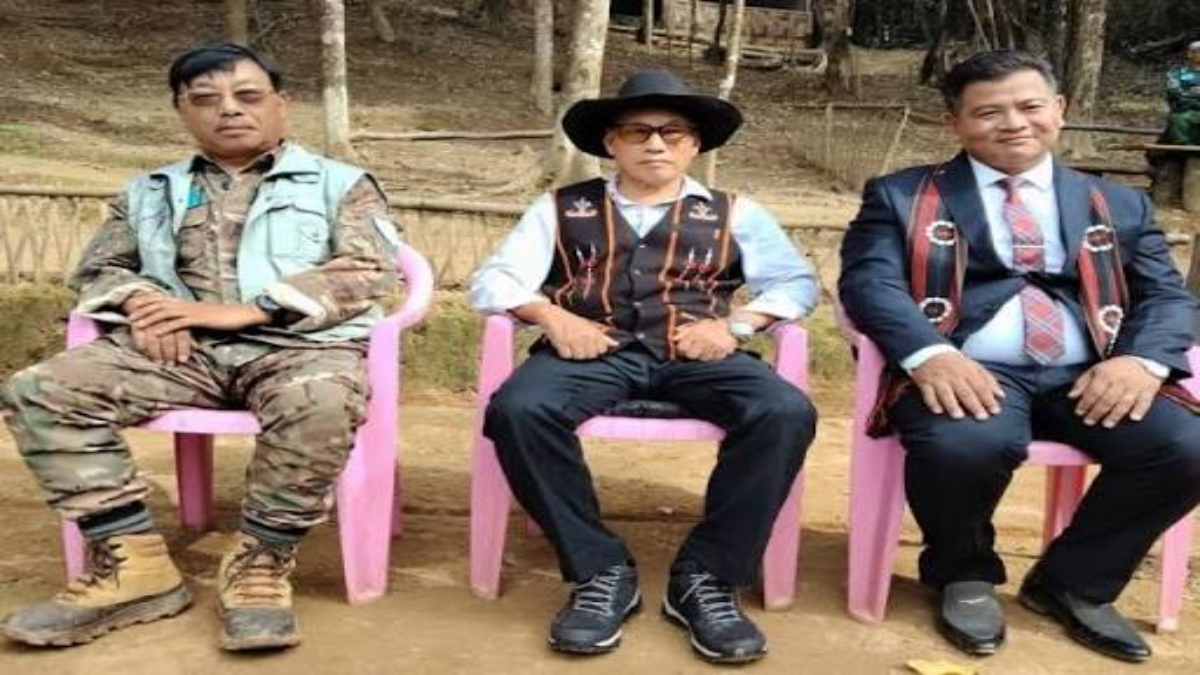
Nagaland NSCN(IM) provisional government has become the latest flashpoint in the decades-long Naga political issue after a breakaway faction of the National Socialist Council of Nagalim (Isak-Muivah), or NSCN(IM), announced the formation of what it called a “provisional government.” The faction also declared that the spirit of the ceasefire agreement with the Government of India had “ceased to exist,” raising fresh concerns over the future of the fragile peace process in Nagaland and the wider Northeast.
The announcement has triggered political and security discussions as the move comes at a time when negotiations between Naga groups and the Centre have remained stalled over key issues, including the demand for a separate flag and constitution. The latest development is being closely monitored by security agencies and political observers, who fear it could complicate efforts to reach a lasting settlement.
What Led to the Nagaland NSCN(IM) Provisional Government Announcement?
The breakaway faction claimed that the prolonged delay in resolving the Naga political issue and the alleged failure to honour the spirit of the Framework Agreement had forced it to establish a provisional government.
According to the faction, the ceasefire understanding that had guided relations between NSCN(IM) and the Centre for over two decades has effectively lost its relevance. It argued that the peace process had reached a standstill and that a new political structure was necessary to pursue what it described as the aspirations of the Naga people.
The declaration is significant because the original ceasefire agreement signed in 1997 laid the foundation for years of dialogue between the Government of India and NSCN(IM).
Background of the Peace Process
The Naga peace negotiations have been among the longest-running political dialogues in India. A major breakthrough came with the signing of the Framework Agreement in 2015 between the Centre and NSCN(IM), raising hopes of a comprehensive settlement.
However, negotiations have remained deadlocked over unresolved demands, particularly the recognition of a separate Naga flag and constitution. While the Government of India has maintained that any settlement must remain within the framework of the Indian Constitution, sections of NSCN(IM) have continued to insist on these demands.
The emergence of a breakaway faction now adds another layer of complexity to an already sensitive negotiation process.
Implications of the Nagaland NSCN(IM) Provisional Government
The formation of the Nagaland NSCN(IM) provisional government has raised several questions regarding security, governance, and the future of peace talks.
Experts believe the move may create confusion over representation within the Naga movement, particularly if different factions begin pursuing separate political strategies. It could also influence future negotiations by introducing additional stakeholders into an already complicated dialogue.
Security agencies are expected to closely monitor the situation to prevent any escalation on the ground. Although there has been no immediate indication of widespread violence following the announcement, officials remain cautious given the region’s history of insurgency.
Reaction From Stakeholders
As of now, there has been no formal indication that the Government of India recognises the declaration made by the breakaway faction. The Centre has consistently maintained its commitment to achieving a peaceful and inclusive solution through dialogue.
Political observers note that any significant shift in the ceasefire arrangement could affect confidence-building measures developed over the past two decades. Civil society organisations in Nagaland have also repeatedly appealed to all stakeholders to continue peaceful negotiations rather than allowing fresh divisions to derail the process.
Why the Ceasefire Statement Matters
The faction’s assertion that the “spirit” of the ceasefire no longer exists is politically significant because the ceasefire has been central to maintaining relative stability in Nagaland since 1997.
While the statement reflects the group’s dissatisfaction with the pace of negotiations, it does not automatically mean that the formal ceasefire agreement has been officially terminated. Analysts believe any official change in ceasefire status would require formal communication between the concerned parties.
Nevertheless, the rhetoric signals growing frustration within sections of the insurgent movement and highlights the challenges that continue to surround the Naga peace talks.
Major Boost: Mizoram First Rail Link Gets Final Safety Clearance
Challenges Ahead for the Peace Process
The latest development comes at a critical stage when expectations for a final political settlement have remained high despite repeated delays.
The Government of India has maintained that discussions with Naga groups continue, while various civil society organisations have urged all stakeholders to avoid actions that could undermine years of negotiations.
For Nagaland, preserving peace remains a priority as residents have experienced decades of insurgency followed by years of relative calm under the ceasefire arrangement. Any renewed uncertainty could have implications for development, investment, and public confidence.
The coming weeks will likely determine whether the announcement by the breakaway faction leads to renewed dialogue or creates additional obstacles in the search for a comprehensive and lasting political solution.