


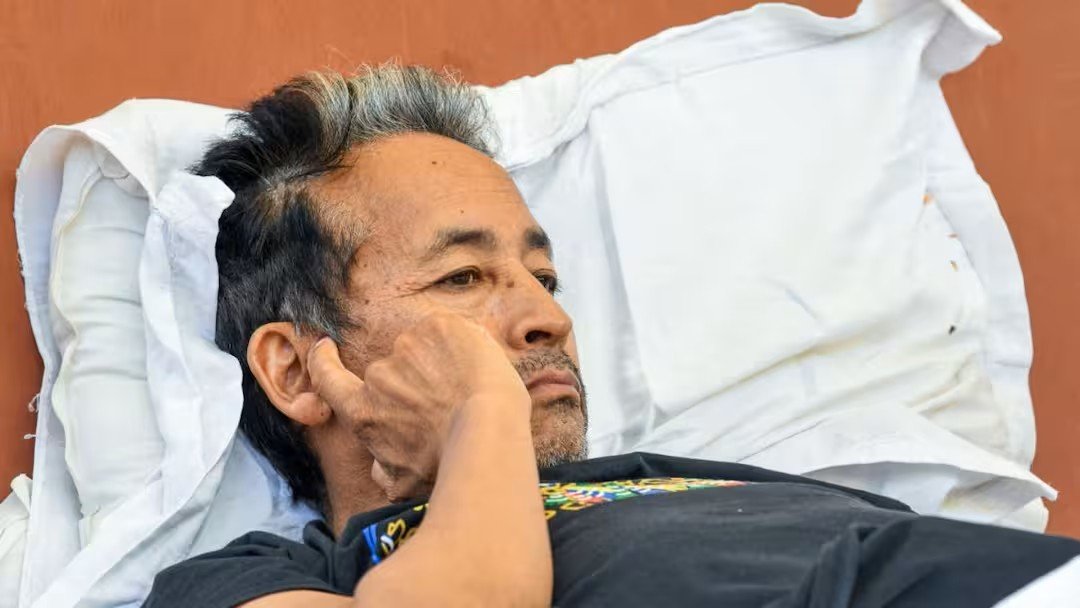
The Delhi High Court has directed that activist Sonam Wangchuk be shifted from Safdarjung Hospital to Medanta Hospital in Gurugram, allowing him to receive treatment at a medical facility chosen by his family. The order came after Wangchuk’s wife, Dr Gitanjali Angmo, challenged an earlier decision that had denied permission for his transfer to a private hospital.
The court observed that its foremost concern was to safeguard Wangchuk’s life and ensure that he received continuous medical care. The Centre informed the court that it had no objection to the transfer, paving the way for the activist’s immediate relocation to Medanta Hospital.
The development comes amid growing public attention surrounding Wangchuk’s health as he continues his indefinite hunger strike in support of the ongoing Cockroach Janta Party (CJP) movement.
Delhi High Court Allows Hospital Transfer
A Division Bench of the Delhi High Court ordered Wangchuk’s transfer after hearing an appeal filed by his wife against the earlier single-judge order.
During the hearing, the judges noted that the court could not ignore concerns regarding Wangchuk’s health and held that he should be allowed to receive treatment at the hospital of his choice. The Bench emphasised that ensuring proper medical supervision remained the highest priority.
The court’s order effectively overturned the previous refusal to permit his transfer to a private medical facility.
Wife’s Plea Leads to Relief
Dr Gitanjali Angmo had approached the High Court, arguing that her husband should be allowed to receive treatment at Medanta Hospital instead of remaining at Safdarjung Hospital.
She contended that the family had lost confidence in the existing medical arrangements and sought permission for treatment at a hospital of their choice. Following the court’s decision, she thanked the judiciary for granting the relief and welcomed the order permitting Wangchuk’s transfer.
Her petition became the basis for the Division Bench’s reconsideration of the earlier order.
Centre Raises No Objection
During the proceedings, the Central government informed the Delhi High Court that it had no objection to Wangchuk being shifted to Medanta Hospital.
The government’s position removed a major hurdle in implementing the transfer, allowing the court to issue directions for his immediate relocation while ensuring continuity of medical care.
The Centre’s stand was noted by the court while passing its final order.
Health Remains Under Close Monitoring
Sonam Wangchuk has been under medical observation after being admitted to Safdarjung Hospital during his prolonged hunger strike.
Medical reports presented before the High Court indicated that his condition required continuous monitoring, prompting the court to prioritise access to appropriate healthcare facilities. The transfer to Medanta Hospital is expected to ensure specialised medical supervision while he continues to receive treatment.
Doctors are expected to closely monitor his health following the transfer.
Background of the Case
Wangchuk was admitted to Safdarjung Hospital after his health reportedly deteriorated during his indefinite fast. His hospitalisation became the subject of legal proceedings after his wife challenged restrictions on transferring him to a private healthcare facility.
An earlier order of the Delhi High Court had declined the request, observing that his admission to Safdarjung Hospital was intended to protect his health. The family subsequently appealed the decision before a Division Bench, which has now granted permission for the transfer.
The case has attracted significant public and legal attention because of Wangchuk’s ongoing protest.
Hunger Strike Continues
Despite the transfer to Medanta Hospital, Wangchuk is expected to continue his hunger strike.
According to his wife, the activist intends to maintain his fast in solidarity with the broader movement and the demands raised during the ongoing protests. His supporters have continued demonstrations while expressing concern over his health.
His medical condition will continue to be assessed as he remains under professional supervision.
Wider Public and Legal Attention
The High Court’s order has become one of the latest developments in the series of legal proceedings surrounding Wangchuk’s protest and hospitalisation.
The case has also prompted discussions on patient autonomy, the right to choose medical treatment, and the responsibilities of public authorities in handling individuals undergoing prolonged hunger strikes. Medical professionals, legal experts, and civil society organisations continue to closely follow the matter.
The transfer order is expected to shape further legal and public discussions surrounding the ongoing protest.
A Significant Judicial Intervention
The Delhi High Court’s decision to permit Sonam Wangchuk’s transfer to Medanta Hospital marks a significant development in the ongoing legal proceedings related to his health and protest. By allowing treatment at a hospital chosen by his family, the court sought to balance the need for continuous medical care with the patient’s preferences and concerns.
With the Centre expressing no objection to the transfer and Medanta Hospital preparing to take over his treatment, attention now shifts to Wangchuk’s recovery and the continuing developments surrounding his hunger strike and the broader protest movement.