


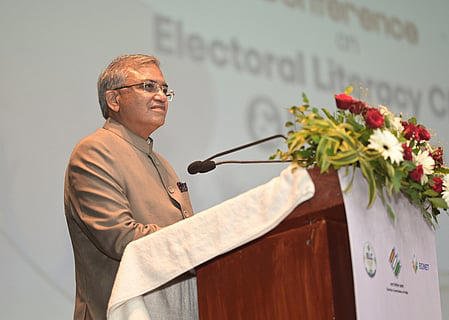
The Election Commission of India (ECI) is strengthening its voter-awareness programme across educational institutions to help young Indians understand the electoral process before they cast their first vote. Through Electoral Literacy Clubs (ELCs) in schools, colleges and universities, the Commission aims to familiarise students with voter registration, polling procedures, electronic voting machines and their rights as voters.
The initiative has gained fresh attention as the ECI expands voter-awareness activities in states going to the polls. The Commission has also been using digital platforms, social media campaigns and interactive programmes to reach young and first-time voters.
The objective is simple: make young citizens more confident about participating in elections and help them understand how the polling system works. The ECI’s wider Systematic Voters’ Education and Electoral Participation (SVEEP) programme focuses on voter education and informed participation.
Electoral Literacy Clubs Target Young Voters
Electoral Literacy Clubs form one of the ECI’s flagship voter-education initiatives. The Commission formally launched the programme on National Voters’ Day in 2018.
The clubs aim to make electoral education more engaging instead of relying only on traditional classroom lectures. Students can learn through activities, games, films, quizzes and hands-on exercises.
The programme targets students who will soon become voters as well as those who have recently received voting rights. College-level clubs focus particularly on young voters in the 18 to 25 age group.
This approach allows students to understand elections before they enter the polling booth.
Digital Outreach Adds a New Dimension
The ECI has increasingly incorporated digital tools into voter education.
Social media campaigns can reach young people through platforms they already use every day. Digital content can explain voter registration, polling-day procedures and other electoral information in a simple and accessible format.
The Commission has also introduced ECINET, a unified digital platform that brings together election-related information and services. The platform became operational in January 2026 and is available in 22 scheduled languages along with English.
These digital initiatives complement the work of Electoral Literacy Clubs on campuses.
Students Learn How Voting Works
One of the main purposes of the clubs is to help students understand the entire voting process.
This includes learning how to register as a voter, check electoral-roll details, identify a polling station and understand what happens on polling day.
Students can also learn about the documents and procedures required at polling stations.
Such knowledge can make first-time voters more comfortable with the process. A young voter who understands the procedure is less likely to feel confused or intimidated when entering a polling booth for the first time.
The ECI has designed ELC activities to encourage students to ask questions and gain practical understanding of electoral procedures.
EVM and VVPAT Awareness Included
The programme also focuses on familiarising voters with Electronic Voting Machines (EVMs) and Voter Verifiable Paper Audit Trail (VVPAT) systems.
The ECI’s Electoral Literacy Club framework specifically includes EVM and VVPAT familiarisation. The aim is to help voters understand how the machines work and build awareness about the voting process.
The Commission has separately organised EVM and VVPAT awareness campaigns in poll-bound states.
In February 2026, the ECI reported that more than 1.20 lakh electors had participated in EVM demonstration camps across Assam, Kerala, Puducherry, Tamil Nadu and West Bengal. More than 1.16 lakh people had also cast mock votes during these demonstrations.
These exercises allow voters to experience the process before election day.
Clubs Encourage Ethical Voting
The ECI wants electoral education to go beyond simply teaching people how to press a button.
The programme also aims to encourage ethical and informed voting. Students learn about the importance of their vote and the responsibility that comes with participating in a democracy.
The Commission’s guidelines state that ELCs should help young people understand the value of their vote and exercise their electoral rights confidently and responsibly.
This approach is particularly important for first-time voters. Young citizens may encounter political information from multiple sources, including social media. Electoral literacy can help them approach such information more critically.
Young Voters Are a Key Focus
Young voters form an important part of India’s electorate.
The ECI has been increasing its focus on first-time voters, particularly those between 18 and 19 years of age. Ahead of the 2026 Assembly elections, more than 27 lakh electors aged 18 to 19 were identified across the poll-bound states and Union Territory.
The Commission planned to revive around five lakh Electoral Literacy Clubs across schools and colleges during 2026. Around 5.80 lakh clubs had been established earlier, with roughly five lakh still functioning.
The scale of the programme shows how seriously the Commission views youth participation.
Colleges Become Voter Education Hubs
College campuses offer a natural environment for voter education.
Students regularly interact with their peers and can spread information beyond the classroom. ELC members can organise discussions, competitions, quizzes and awareness campaigns.
The ECI’s framework encourages students to participate actively rather than simply listen to lectures.
This peer-to-peer approach can make electoral information easier to understand. Students can also take the information back to their families and communities.
The Commission’s objective includes using ELC members to spread electoral literacy beyond educational institutions.
Social Media Campaigns To Engage Youth
The ECI has also turned to social media to make voter awareness more relatable.
During the 2026 Assembly election campaigns, the Commission used cultural programmes, public events and digital campaigns to reach first-time voters.
In West Bengal, for example, the ECI organised SVEEP activities involving school and college students, young voters and first-time electors. The campaign also used popular characters such as Chhota Bheem and Chutki to communicate voter-awareness messages.
The strategy reflects a broader shift towards communication formats that appeal to younger audiences.
ELCs Can Improve Voter Registration
Voter registration remains another important part of the programme.
The ECI wants students to understand when and how they can register to vote. ELCs can help eligible students navigate the registration process and encourage those approaching voting age to enrol.
The Commission’s voter services platform currently provides online facilities for new voter registration and other electoral services.
Helping students complete registration before an election can reduce the possibility of eligible young people missing their opportunity to vote.
Building Confidence Before Poll Day
For many young voters, the first election can seem complicated.
They may not know where to go, how to check their name on the electoral roll or what to expect inside the polling station.
Electoral Literacy Clubs can address these concerns before election day.
By combining classroom activities with practical demonstrations and digital information, the programme can give young voters a clearer picture of the entire process.
The result can be greater confidence and more informed participation.
ECI Seeks Greater Participation
The Electoral Literacy Club initiative forms part of the ECI’s larger goal of increasing voter participation.
The Commission’s SVEEP programme focuses on educating citizens and encouraging informed participation. Its initiatives specifically target groups that may face barriers to voting, including youth, women, persons with disabilities and urban voters.
The focus on young voters is particularly significant because voting habits can develop early. Introducing students to democratic participation can help create a stronger culture of electoral engagement over time.
A Digital Future for Voter Education
The Election Commission digital clubs 2026 initiative reflects the changing way young Indians receive information.
Traditional voter-awareness programmes remain important, but digital platforms can make information faster and more accessible. When combined with campus-based Electoral Literacy Clubs, they can create a more interactive system of electoral education.
Students can learn about registration, polling stations, EVMs, VVPAT and voting rights while also participating in discussions and practical activities.
The broader objective remains to create voters who are informed, confident and responsible.
As the Election Commission expands its outreach across educational institutions, these clubs could play an increasingly important role in preparing India’s next generation of voters. By bringing electoral education directly into campuses and combining it with digital engagement, the ECI hopes to make the first voting experience less confusing and more meaningful for millions of young citizens.