

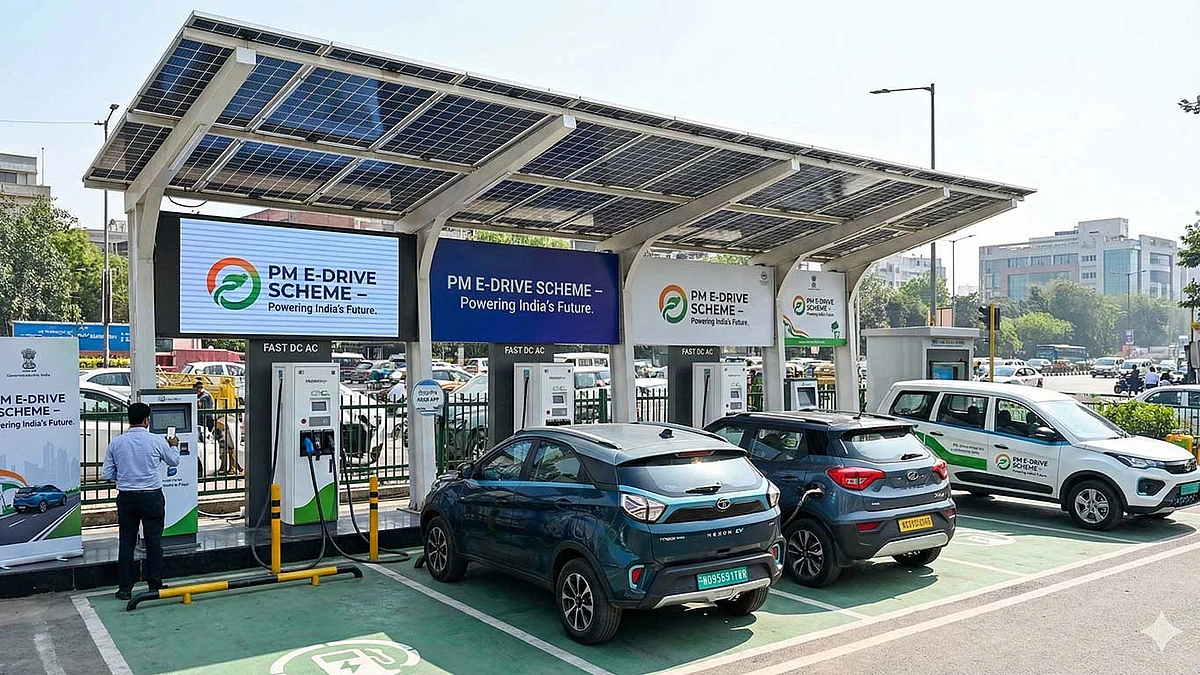
The Electric Subsidy initiative has expanded support for electric mobility as the state energy department rolled out financial incentives for fast-charging public stations. The measure aims to encourage charging infrastructure, improve access for electric vehicle users, and support the development of a more reliable public charging network.
The Electric Subsidy initiative focuses on encouraging investment in fast-charging infrastructure for electric vehicles. The state energy department has introduced financial incentives for public charging stations as authorities seek to expand charging access.
Fast-charging stations can reduce the time electric vehicle users spend waiting for their vehicles to recharge. Moreover, wider availability of public chargers can make electric vehicles more practical for longer journeys and commercial use.
The new incentives could encourage businesses and other eligible operators to establish charging facilities in locations where demand is growing.
However, the available information does not specify the amount of subsidy, eligibility criteria, locations covered, or application process.
Mission Clouded Leopard: Environmentalists Launch Specialized Field Study to Protect State Animal
Electric Subsidy Supports Fast-Charging Infrastructure
The Electric Subsidy program targets the development of public fast-charging stations.
Public charging infrastructure plays an important role in supporting electric vehicle adoption because users may not always have access to private charging facilities. Furthermore, fast chargers can provide quicker charging compared with slower charging systems, making them useful at major roads, commercial areas, transport hubs, and other public locations.
Financial incentives can reduce some of the initial investment required to establish charging facilities.
However, the information provided does not clarify whether the incentives cover equipment purchases, installation costs, electricity infrastructure, land development, or other expenses.
Therefore, the exact financial structure of the program remains unclear.
Further details from the energy department will be necessary to determine how operators can access the incentives.
Electric Subsidy Could Expand Public EV Charging Access
The Electric Subsidy could help increase the availability of charging points for electric vehicle users.
A larger public charging network can reduce concerns about finding a suitable charging location during longer journeys. Moreover, convenient charging infrastructure can support electric vehicle owners who live in homes without dedicated charging facilities.
The development of fast-charging stations could also benefit commercial electric vehicles that require shorter charging times during operating schedules.
However, charging demand can vary significantly between locations.
Therefore, authorities and station operators may need to consider traffic patterns, existing charger availability, electricity capacity, and local EV adoption when selecting sites.
The available information does not identify the locations where subsidized stations will be developed.
Electric Subsidy Encourages Investment in Charging Stations
The Electric Subsidy provides a financial incentive that could encourage private or institutional investment in charging infrastructure.
Establishing fast-charging facilities can require spending on chargers, electrical connections, civil works, safety systems, and maintenance. Additionally, operators may face ongoing costs related to electricity, equipment servicing, land, and network management.
Financial support can potentially reduce the initial burden associated with infrastructure development.
However, the available information does not state whether the subsidy will cover capital expenditure, operational expenses, or both.
Consequently, the likely financial benefit for charging-station operators cannot yet be calculated.
The program’s effectiveness will depend partly on how many eligible operators participate.
Electric Subsidy Could Strengthen Electric Mobility
The Electric Subsidy forms part of a broader effort to support electric mobility by improving charging availability.
Electric vehicles require dependable charging infrastructure to operate effectively across different travel patterns. Furthermore, a stronger public charging network can support consumer confidence by reducing concerns about limited charging access.
Fast-charging facilities may prove particularly useful along busy transport corridors and in locations where vehicles remain stationary for relatively short periods.
However, charging infrastructure represents only one part of the transition toward electric mobility.
Vehicle affordability, electricity supply, maintenance services, battery technology, and consumer awareness also influence EV adoption.
Therefore, the new incentives should be viewed as an infrastructure measure rather than a complete solution to all challenges facing electric vehicle users.
Electric Subsidy Requires Reliable Charging Infrastructure
The Electric Subsidy could deliver greater benefits if subsidized stations provide reliable and accessible service.
Charging stations need appropriate electrical capacity, regular maintenance, clear pricing, and operational availability. Moreover, poorly maintained or frequently unavailable chargers can reduce the practical value of an expanding charging network.
Authorities may therefore need to monitor the performance of supported stations.
However, the information provided does not specify whether the energy department has established performance standards, uptime requirements, or monitoring mechanisms for subsidized facilities.
Similarly, no information has been provided about the number of stations targeted under the program.
Consequently, the scale of the rollout remains unclear.
Electric Subsidy Could Support Future EV Growth
The Electric Subsidy could become increasingly important as electric vehicle ownership expands.
A larger EV population can create greater demand for public charging infrastructure. Additionally, early investment in fast chargers can help prepare cities and transport corridors for increased electric mobility.
The program may also encourage businesses to view charging infrastructure as a potential commercial opportunity.
However, the long-term impact will depend on actual EV adoption and the ability of charging operators to maintain financially sustainable stations.
The available information does not provide projections for electric vehicle numbers or future charging demand.
Therefore, the program’s future scale cannot yet be assessed.
Conclusion
The Electric Subsidy initiative marks a step toward expanding public electric vehicle infrastructure, with the state energy department introducing financial incentives for fast-charging stations. The measure could encourage investment and improve charging access for EV users.
Moreover, greater availability of reliable fast chargers can support longer-distance travel and strengthen consumer confidence in electric mobility. However, the available information does not specify subsidy amounts, eligibility requirements, station targets, or the locations covered by the program.
Overall, the Electric Subsidy could help accelerate the development of a stronger public charging network if authorities implement clear standards and operators maintain reliable services. Further details from the energy department will clarify the program’s scale, eligibility rules, and expected impact on electric mobility.
FAQs
1. What is the Electric Subsidy initiative?
The Electric Subsidy initiative provides financial incentives for developing public fast-charging stations for electric vehicles.
2. Why are fast-charging stations important?
Fast-charging stations can reduce charging times and provide convenient public charging access for electric vehicle users.
3. Who can receive the incentives?
The available information does not specify the eligibility criteria. The state energy department is expected to provide details about qualifying operators and projects.
4. Does the subsidy cover the entire cost of a charging station?
The information provided does not specify whether the incentives cover equipment, installation, electricity connections, operating costs, or other expenses.
5. How could the Electric Subsidy affect EV adoption?
By encouraging more public charging infrastructure, the Electric Subsidy could make electric vehicle use more convenient and support the growth of electric mobility.