

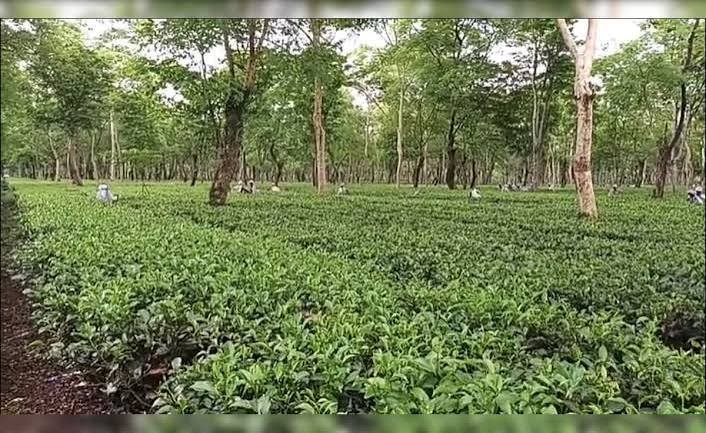
Assam tea climate strategies are becoming increasingly important as rising temperatures, erratic rainfall and longer dry spells put pressure on tea production across the state. Tea gardens in Upper Assam have reported noticeable changes in weather patterns over recent years.
The changing conditions are affecting both tea bushes and the workers who maintain them. Moreover, garden managements are increasingly looking at water availability, shade, soil protection and other measures to reduce climate-related risks.
Recent reports from Dibrugarh indicate that prolonged heat and unpredictable rainfall have already affected production and working conditions. Tea estates have consequently started adapting their practices to cope with a less predictable growing environment.
Mizoram Water Bodies Plunge 63% in Second Central Water Census
Assam Tea Climate Strategies Gain Importance as Weather Changes
Assam tea climate strategies are gaining attention because tea requires relatively stable temperature and rainfall conditions. Research on Assam plantations has found that warmer temperatures can reduce tea yields, while greater variability and intensity in rainfall can also affect productivity.
Recent conditions have made these risks more visible. Tea workers and estate managers in Upper Assam have reported rising temperatures, heatwaves and increasingly irregular weather. Samir Lodhi, manager of Borbaruah tea estate, said the weather pattern had changed substantially over the past five to six years and that production had suffered.
Tea plantations generally depend on substantial rainfall distributed through the year. However, longer dry periods can interrupt plant growth, while intense rainfall over short periods can create different problems. Therefore, the timing and distribution of rain can matter as much as the total seasonal rainfall.
A 2021 study involving tea-growing regions of Assam identified prolonged drought, excessive rainfall over short periods, temperature extremes and increased pest and disease pressure among the effects associated with changing climatic conditions. The study also recorded adaptation measures such as rainwater harvesting, irrigation, afforestation, soil mulching and wind barriers.
Rising Heat Changes Production and Working Conditions
Assam tea climate strategies also have a direct connection with labour conditions. Tea workers spend long periods outdoors, and higher temperatures can make harvesting and other field activities more difficult.
A September 2026 report from Dibrugarh highlighted the pressure on women workers, who form a large part of the tea-garden workforce. Workers and estate representatives reported that intense heat and changing rainfall were creating additional challenges.
Surya Kumar Borgohain, a doctor at Borbaruah tea estate, said women workers had experienced health problems that management was monitoring. The estate had also focused on providing adequate drinking water and health support.
Meanwhile, heat does not affect only workers. Tea plants also respond to temperature changes. A long-term study of tea plantations in Assam found declining yield returns as monthly average temperatures increased. The research identified temperatures above 26.6°C as a point where additional warming had a negative effect on yield.
Consequently, shade management has become an important consideration. Trees within and around tea gardens can moderate heat, protect plants from strong winds and help conserve soil moisture. However, gardens must balance shade with the light requirements of tea plants.
Water management is another major concern. During dry periods, irrigation and stored rainwater can help maintain soil moisture. Assam’s Directorate of Tea already lists mobile sprinkler irrigation and related assistance among measures available for low-income tea gardens.
Gardens Turn Toward Water, Soil and Crop Adaptation
Assam tea climate strategies increasingly involve measures that address both excessive rainfall and water shortages. The objective is not simply to increase irrigation but to manage water more efficiently throughout the growing cycle.
Rainwater harvesting can help gardens capture water during intense rainfall and retain it for use during dry spells. Similarly, suitable drainage can reduce waterlogging when heavy rain arrives in a short period.
Soil management also has a significant role. Mulching can help reduce moisture loss during dry conditions while protecting soil during heavy rainfall. Organic matter can improve soil structure and help gardens retain water for longer periods.
Research on climate-smart tea production has also highlighted agroforestry. Properly managed shade trees can protect tea plants from heat and wind while supporting soil health. Furthermore, trees can help reduce erosion during intense rainfall.
Some growers are also considering more resilient planting material. A study of tea plantations in Assam found that growers viewed climate-tolerant or resistant cultivars as a potential future adaptation strategy. Other measures included biodiversity conservation, clean energy, organic inputs and improved awareness among workers.
The Assam government already provides a policy framework that can support some of these interventions. Its small-grower assistance provisions include support related to irrigation, drainage, replacement of tea bushes and inputs. The policy also provides for special assistance in cases of natural calamities affecting plants and human lives.
Small Growers Face a Different Set of Challenges
Assam tea climate strategies matter particularly for small tea growers because their ability to absorb production losses can be more limited. The Directorate of Tea maintains a dedicated system for small growers and provides support through training, subsidies, infrastructure assistance and other programmes.
Small growers can also face difficulties when climate shocks occur alongside rising production costs. A poor harvest can reduce income, while irrigation, soil protection and plant replacement require additional investment.
For this reason, collective approaches can become important. Assam’s Cess Utilization Policy provides assistance to eligible small-grower groups and cooperatives for common infrastructure, including green-leaf collection centres and collective drainage. It also provides support for replacing tea bushes through replanting and infilling.
Diversification can provide another layer of resilience. Climate-smart tea research has identified the use of additional crops and activities as a possible way to reduce dependence on a single harvest. However, diversification decisions depend on local soil, water availability, market access and the economics of each garden.
At the same time, tea remains central to Assam’s agricultural economy. The state Directorate of Tea lists the development and welfare of small growers among its core objectives and also seeks to improve productivity and promote Assam tea nationally and internationally.
Therefore, adaptation is not only an environmental issue. It also involves investment, worker welfare, productivity, farm management and long-term economic stability.
Climate Pressure Could Reshape Assam Tea Production
Assam tea climate strategies are likely to become increasingly important if temperature and rainfall variability continue to intensify. The challenge is particularly complex because gardens must prepare for both extremes: prolonged dry periods and intense rainfall.
Historical research already points to the sensitivity of Assam tea production to temperature and rainfall variability. More recent observations from tea estates suggest that these climate pressures are becoming more noticeable in everyday operations.
However, adaptation does not mean that every tea garden will adopt the same measures. Conditions differ across Assam’s tea-growing areas. A garden facing water shortages may prioritise irrigation and rainwater storage, while another may need stronger drainage and erosion-control measures.
Moreover, worker safety will remain an important part of climate adaptation. Providing drinking water, managing work schedules during extreme heat and monitoring health conditions can help reduce the risks faced by outdoor workers.
The state already has institutional mechanisms for supporting small growers. The Directorate of Tea provides training on good field practices and assistance for irrigation, pest control and other agricultural inputs.
Ultimately, Assam’s tea sector may need a combination of traditional knowledge and newer climate-smart practices. Better weather monitoring, efficient water use, improved planting material, soil conservation and stronger worker protections can all contribute to greater resilience.
Conclusion
Assam tea climate strategies are becoming essential as erratic rainfall and rising temperatures create new challenges for tea gardens across the state. Recent reports from Upper Assam show that climate pressure is already affecting production and working conditions.
Research also supports concerns about the relationship between higher temperatures, rainfall variability and tea productivity. Therefore, gardens are increasingly looking toward irrigation, rainwater harvesting, shade management, soil protection, improved planting material and other adaptation measures.
For small growers, government support and collective infrastructure can help make these changes more practical. Meanwhile, protecting workers from extreme heat will remain equally important.
The future of Assam tea will consequently depend not only on maintaining production but also on how effectively gardens adapt to increasingly unpredictable weather.
FAQs
Why are Assam tea gardens changing their crop strategies?
Assam tea climate strategies are changing because rising temperatures, erratic rainfall and prolonged dry spells can affect tea growth, productivity and working conditions.
How does heat affect tea production in Assam?
Research indicates that higher temperatures can reduce tea yield. A study of Assam plantations found negative effects when monthly average temperatures rose above 26.6°C.
What measures can tea gardens use against climate stress?
Tea growers can use measures such as rainwater harvesting, irrigation, soil mulching, drainage, shade management, wind barriers and climate-tolerant planting material.
Are Assam tea workers also affected by rising heat?
Yes. Recent reporting from Upper Assam found that heatwaves and changing rainfall are making outdoor work more difficult, particularly for women workers who spend long periods in tea gardens.
Does Assam provide support to small tea growers?
The Assam Directorate of Tea provides training and assistance covering areas such as irrigation, pest control, infrastructure, replanting and other measures for eligible small tea growers.