

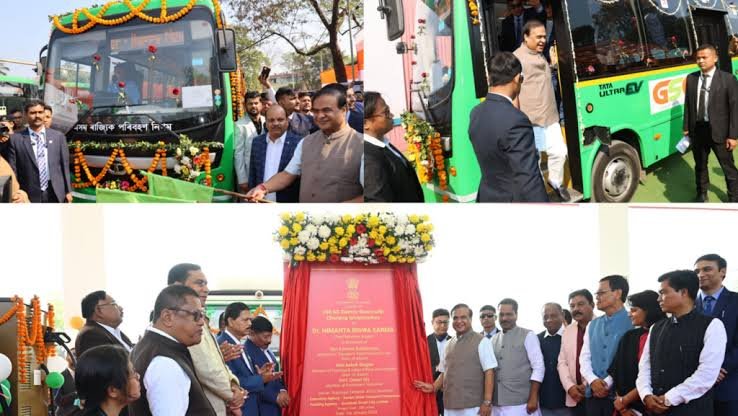
The EV Bus Expansion has gained momentum as the Assam State Transport Corporation (ASTC) introduced 20 new electric buses on routes serving the greater Kamrup metropolitan area. The move aims to expand cleaner public transportation while improving mobility options for passengers across the urban region.
The addition of electric buses represents a step toward reducing reliance on conventional fuel-powered public transport. Moreover, electric fleets can help lower tailpipe emissions and support cleaner urban mobility when operators have adequate charging and maintenance infrastructure.
The new buses could also strengthen public transport capacity on busy metropolitan routes. However, the available information does not specify the exact routes, charging locations, bus specifications, or the expected reduction in operating emissions.
Medical Infrastructure: Guwahati Medical College Hospital Opens 50-Bed Japanese Encephalitis Wing
EV Bus Expansion Strengthens Public Transport
The EV Bus Expansion adds 20 electric buses to ASTC’s metropolitan transport network.
Electric buses can provide public transportation without producing direct tailpipe exhaust during operation. Furthermore, expanding the fleet can give passengers additional options for travelling across busy urban corridors.
The introduction of the new buses therefore combines fleet expansion with a shift toward electric mobility.
However, the available information does not specify how many daily services the 20 buses will operate.
Consequently, their exact contribution to overall public transport capacity remains unclear.
EV Bus Expansion Targets Greater Kamrup Routes
The EV Bus Expansion focuses on routes across the greater Kamrup metropolitan area.
Urban bus services connect residential communities with workplaces, educational institutions, markets, and other important destinations. Additionally, reliable public transport can reduce pressure on private vehicles and improve mobility for people who do not own personal vehicles.
Adding electric buses could therefore support wider urban transportation needs.
However, the available information does not identify the individual routes that will receive the new buses.
EV Bus Expansion Supports Cleaner Urban Mobility
The EV Bus Expansion also supports Assam’s broader shift toward cleaner transportation.
Electric vehicles can reduce local air pollution because they do not produce tailpipe emissions while operating. Moreover, the overall environmental benefit can depend on factors such as the electricity source used for charging, vehicle utilization, and battery performance.
The new fleet can therefore contribute to cleaner urban mobility while supporting public transportation.
However, no specific emissions-reduction estimate has been provided for the 20 buses.
Consequently, their environmental impact cannot yet be quantified.
EV Bus Expansion Could Improve Passenger Experience
The EV Bus Expansion may also improve the public transport experience for passengers.
Modern electric buses can incorporate updated passenger amenities, quieter operation, and smoother acceleration depending on their design. Furthermore, newer vehicles can complement efforts to modernize public transportation fleets.
These features could encourage more people to consider bus travel.
However, the available information does not provide specifications regarding passenger capacity, accessibility features, or onboard facilities.
Therefore, the precise passenger benefits remain unclear.
EV Bus Expansion Requires Charging Infrastructure
The EV Bus Expansion will depend on reliable charging infrastructure.
Electric buses require charging facilities, appropriate electricity connections, and planned charging schedules to maintain regular services. Additionally, transport operators need maintenance systems and trained personnel to manage electric fleets effectively.
These requirements become increasingly important as the number of electric buses grows.
However, the available information does not identify the charging stations supporting the new buses or their charging capacity.
EV Bus Expansion Could Reduce Fuel Dependence
The EV Bus Expansion can reduce the transport corporation’s dependence on conventional automotive fuels for the newly introduced vehicles.
Electric buses use battery-powered propulsion rather than conventional internal-combustion engines. Moreover, reduced fuel consumption can potentially change operating costs over the vehicles’ service lives.
The financial impact will depend on electricity prices, maintenance requirements, battery performance, and vehicle utilization.
However, the available information does not provide operating-cost comparisons between the new electric buses and conventional ASTC buses.
EV Bus Expansion Strengthens Public Transport Capacity
The EV Bus Expansion adds capacity to a public transportation system serving a rapidly developing metropolitan region.
Greater bus availability can help authorities respond to passenger demand on busy routes. Additionally, increased public transport capacity can support efforts to manage road congestion by providing alternatives to private vehicle travel.
The 20 new buses therefore have potential mobility benefits beyond their environmental advantages.
However, the available information does not provide passenger-demand figures for the affected routes.
EV Bus Expansion Requires Long-Term Fleet Management
The EV Bus Expansion will require effective long-term management to deliver sustained benefits.
Transport operators need to monitor battery performance, charging efficiency, maintenance requirements, passenger demand, and vehicle availability. Furthermore, planned maintenance can help minimize service interruptions and extend fleet operating life.
Proper management will therefore remain important as ASTC expands electric transportation.
However, the available information does not provide details about the fleet’s maintenance programme or expected service life.
EV Bus Expansion Could Encourage Wider Electric Mobility
The EV Bus Expansion could contribute to broader acceptance of electric transportation in Assam.
Public buses operate visibly across cities, allowing passengers to experience electric mobility as part of their daily travel. Moreover, greater public familiarity with electric vehicles can support wider awareness of cleaner transportation technologies.
The initiative could therefore have an impact beyond the ASTC fleet itself.
However, the available information does not indicate whether authorities have announced additional electric buses beyond the current 20.
Conclusion
The EV Bus Expansion has moved forward as the Assam State Transport Corporation introduced 20 new electric public transport buses on routes serving the greater Kamrup metropolitan area. The move aims to strengthen urban mobility while supporting a shift toward cleaner public transportation.
Moreover, electric buses can reduce tailpipe emissions, lower dependence on conventional fuels, and potentially improve the passenger experience. However, the available information does not specify the exact routes, charging infrastructure, vehicle specifications, operating costs, or projected emissions savings.
Overall, the EV Bus Expansion represents a step toward modernizing Assam’s urban bus fleet. Reliable charging facilities, effective maintenance, appropriate route planning, and continued investment will remain important for ensuring that electric public transport delivers long-term benefits.
FAQs
1. What is the EV Bus Expansion?
The EV Bus Expansion refers to ASTC introducing 20 new electric buses on public transport routes in the greater Kamrup metropolitan area.
2. Which transport agency introduced the buses?
The Assam State Transport Corporation (ASTC) introduced the new electric buses.
3. What are the benefits of electric buses?
Electric buses produce no direct tailpipe emissions during operation and can reduce dependence on conventional transport fuels.
4. Where will the new buses operate?
The buses will serve routes across the greater Kamrup metropolitan area, although the specific routes have not been provided.
5. Will more electric buses be introduced?
The available information does not confirm whether ASTC has announced another specific batch beyond the 20 newly introduced buses.