

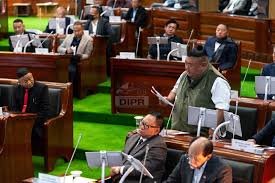
FGN termination announcement created fresh political discussion in Nagaland after the Federal Government of Nagaland officially confirmed the removal of its ‘rali wali kilonser,’ commonly known as the information minister. Meanwhile, the organization released a formal statement explaining that the decision followed internal administrative considerations. Political observers across the region immediately reacted to the development because the position plays an important role in communication within the organization. Additionally, community leaders and analysts began assessing the possible impact of the decision on regional political dynamics.
BJP MLA Diganta Kalita Demands Azan Loudspeaker Restrictions in Assam
Falta Fray Shakeup Alters Repoll Race
Organization Confirms Leadership Decision
The Federal Government of Nagaland publicly announced the termination through an official communication circulated among affiliated groups and supporters. Consequently, discussions quickly emerged regarding the reasons behind the leadership change. Representatives linked to the organization stated that the action formed part of internal restructuring measures.
Officials did not disclose detailed information about the circumstances surrounding the removal. However, sources familiar with the development indicated that administrative disagreements may have contributed to the decision. At the same time, observers noted that leadership transitions within political organizations often attract wider public interest in Nagaland.
The FGN termination announcement also prompted reactions from civil society members who closely follow regional political affairs. Furthermore, analysts stated that changes involving senior communication figures can influence public messaging and organizational coordination.
Political Observers Monitor Regional Impact
Political experts across northeastern India said the development may affect discussions surrounding local governance and organizational leadership. Meanwhile, several observers urged caution against speculation until additional details become available. Community representatives also encouraged all parties to maintain stability and avoid inflammatory statements.
Regional analysts noted that the information minister position traditionally carries responsibility for official communication and policy messaging. Specifically, the role often serves as a bridge between leadership structures and the public. Earlier, similar internal decisions within regional organizations generated significant political debate across Nagaland.
The FGN termination announcement gained wider attention because of ongoing political conversations in the region. Consequently, some experts believe the decision could influence future administrative strategies within the organization. Others argued that leadership restructuring remains a common process in political institutions.
Public Reactions Continue Across Nagaland
Residents and local political followers discussed the development widely on social platforms and community forums. Meanwhile, several youth organizations requested transparency regarding the reasons behind the termination. Public reactions remained mixed, with some citizens supporting organizational discipline while others questioned the timing of the decision.
Community elders in parts of Nagaland called for restraint in public discourse surrounding the issue. In addition, social groups emphasized the importance of peaceful dialogue and responsible communication. Local observers also noted that politically sensitive developments often generate speculation in the absence of detailed official clarification.
The FGN termination announcement further intensified discussions about internal governance practices within regional organizations. Moreover, political commentators highlighted the growing role of public communication in shaping perceptions during leadership transitions.
Analysts Highlight Communication Challenges
Experts in regional politics explained that information management remains crucial during periods of organizational change. However, limited public details can sometimes increase uncertainty and misinformation. Analysts therefore encouraged authorities and leadership bodies to maintain clear communication with supporters and stakeholders.
Several academics studying northeastern political movements noted that organizational unity often depends on transparent administrative processes. At the same time, they stressed that leadership decisions should be handled carefully to avoid unnecessary tensions. Political researchers also stated that public confidence frequently depends on consistent messaging from senior officials.
The FGN termination announcement has therefore become a subject of discussion beyond Nagaland. Consequently, observers from neighboring northeastern states are also monitoring developments connected to the organization’s internal restructuring.
Historical And Political Context
The Federal Government of Nagaland has remained part of broader historical and political discussions connected to Naga identity and regional negotiations. Meanwhile, various organizations in the region continue engaging with issues related to governance, representation, and political dialogue. Analysts believe that leadership changes within such bodies often attract close public attention because of their historical significance.
Political commentators stated that organizational restructuring may reflect efforts to adapt to evolving regional circumstances. Furthermore, experts observed that communication roles have become increasingly influential in the digital information era. Public messaging now shapes both internal coordination and external perception more rapidly than before.
Several scholars also noted that northeastern political organizations face growing public scrutiny through online media platforms. As a result, leadership decisions now spread quickly across communities and regional networks.
Historical And Political Context
The organization has not yet announced a replacement for the terminated information minister. Meanwhile, supporters and observers continue waiting for further clarification regarding future administrative plans. Political analysts stated that upcoming appointments may provide additional insight into the organization’s direction.
Community leaders urged members and supporters to prioritize peaceful engagement while discussions continue. In addition, social organizations encouraged responsible public debate to prevent unnecessary division or misinformation. Security experts also emphasized the importance of maintaining stability during politically sensitive developments.
The FGN termination announcement may continue influencing political conversations in Nagaland during the coming weeks. Ultimately, observers believe future official statements and leadership decisions will shape public understanding of the situation.
Conclusion
The FGN termination announcement has generated significant attention across Nagaland and neighboring regions following the removal of the organization’s information minister. Meanwhile, political observers, community groups, and local residents continue discussing the broader implications of the decision. Analysts believe transparent communication and stable leadership management will remain important in the coming period. Ultimately, future developments within the organization may determine how the situation influences regional political discussions.
FAQs
Q1. What did the Federal Government of Nagaland announce? The organization officially confirmed the termination of its ‘rali wali kilonser,’ also known as the information minister.
Q2. Why is the information minister position important? The role traditionally manages communication, public messaging, and organizational information coordination.
Q3. What is the FGN termination announcement about? The FGN termination announcement refers to the official removal of the organization’s information minister as part of an internal decision.
Q4. Did officials explain the exact reason for the termination? No, authorities released only limited details regarding the circumstances behind the leadership change.
Q5. How have people reacted to the decision? Public reactions remained mixed, with political observers, civil groups, and residents discussing the possible implications.
Q6. Has a replacement been announced? As of now, the organization has not publicly confirmed a successor for the terminated official.