

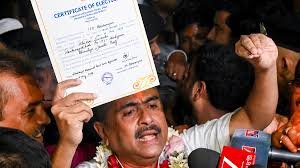
First Cabinet Meeting Nabanna marked a major administrative development in West Bengal as Chief Minister Suvendu Adhikari chaired his first formal cabinet session at Nabanna on 11 May. The meeting came shortly after the formation of the new government and focused on immediate governance priorities, departmental coordination, and policy implementation across the state.
Mamata Banerjee Calls For Opposition Unity
Drug Seizure Conducted Near Churachandpur Hilltown
Cabinet Meeting Focuses on Governance Priorities
The newly formed cabinet gathered at the state secretariat in Nabanna to discuss administrative planning and departmental responsibilities. Officials said the meeting reviewed key sectors including infrastructure, healthcare, education, agriculture, and employment generation.
Chief Minister Suvendu Adhikari reportedly instructed ministers to ensure faster delivery of public services and stronger coordination between departments. Government officials also discussed strategies to improve transparency and streamline administrative procedures.
Meanwhile, senior bureaucrats briefed cabinet members on ongoing state projects and pending policy matters. Sources indicated that the administration plans to accelerate infrastructure projects and welfare initiatives during the initial phase of governance.
New Government Signals Administrative Direction
Political observers noted that the first cabinet session often reflects the broader priorities of a newly elected administration. Therefore, analysts closely monitored the discussions held at Nabanna for indications of future policy direction.
First Cabinet Meeting Nabanna also attracted attention because the new government assumed office during a period of economic and administrative challenges. Experts believe the administration may focus heavily on investment promotion, industrial growth, and employment opportunities in the coming months.
In addition, the cabinet reportedly discussed urban development and digital governance systems aimed at improving public service accessibility. Officials emphasized the importance of timely execution of welfare programmes and development projects across districts.
Ministers Assigned Key Responsibilities
Several ministers received formal departmental briefings during the meeting. Government insiders stated that each department was asked to prepare short-term and long-term action plans aligned with the administration’s policy agenda.
The cabinet also reviewed financial allocations and existing state liabilities. Economic advisors reportedly presented updates regarding revenue generation, fiscal management, and investment opportunities.
At the same time, officials discussed improving coordination between district administrations and state-level authorities. Analysts believe stronger administrative communication could help the government respond more effectively to public issues and regional demands.
Opposition Parties Monitor Early Decisions
Opposition leaders reacted cautiously to the developments following the cabinet session. Representatives from All India Trinamool Congress stated that they would closely monitor the decisions taken by the new administration.
Political analysts observed that early cabinet decisions could shape public perception regarding the effectiveness of the government. Therefore, several civic groups and policy experts are expected to examine the implementation of promises made during the election campaign.
First Cabinet Meeting Nabanna further generated discussion across political circles because the session symbolized the formal beginning of the administration’s functioning after the leadership transition in the state.
Administrative Challenges Ahead
Experts noted that the new government faces several immediate challenges including economic recovery, infrastructure expansion, employment generation, and welfare implementation. Analysts believe the cabinet will need to maintain coordination across departments to achieve policy goals effectively.
Meanwhile, public expectations remain high following the recent political transition. Citizens across urban and rural areas are expected to closely watch the government’s performance during its initial months in office.
Business organizations and trade groups welcomed the beginning of formal cabinet operations. Industry representatives expressed hope that faster decision-making and administrative stability could encourage new investment opportunities in the state.
Public Attention on Nabanna Proceedings
The cabinet session at Nabanna became a major topic across television channels and social media platforms throughout the day. Supporters described the meeting as the beginning of a new administrative phase, while critics emphasized the need for accountability and policy transparency.
Officials stated that additional cabinet meetings would take place regularly to monitor departmental progress and governance implementation. The administration is also expected to announce detailed policy measures after reviewing recommendations from various departments.
Conclusion
The first formal cabinet session chaired by Chief Minister Suvendu Adhikari at Nabanna marked an important step in the functioning of the new government in West Bengal. The meeting highlighted the administration’s focus on governance, infrastructure, public welfare, and economic management. As the government begins implementing its policy agenda, political observers and citizens alike will continue monitoring its administrative decisions and performance.
FAQs
1. Who chaired the first cabinet meeting at Nabanna?
Chief Minister Suvendu Adhikari chaired the first formal cabinet meeting.
2. Where was the cabinet meeting held?
The meeting took place at Nabanna, the state secretariat.
3. What topics were discussed during the session?
Ministers discussed infrastructure, healthcare, education, employment, welfare schemes, and administrative coordination.
4. Why is the first cabinet meeting important?
The first cabinet session usually outlines the policy priorities and governance direction of a new administration.
5. How did opposition parties react?
Opposition leaders stated that they would closely monitor the government’s policy decisions and administrative actions.
6. What are the expected priorities of the government?
The administration is expected to focus on economic growth, infrastructure, investment, and public service delivery.