

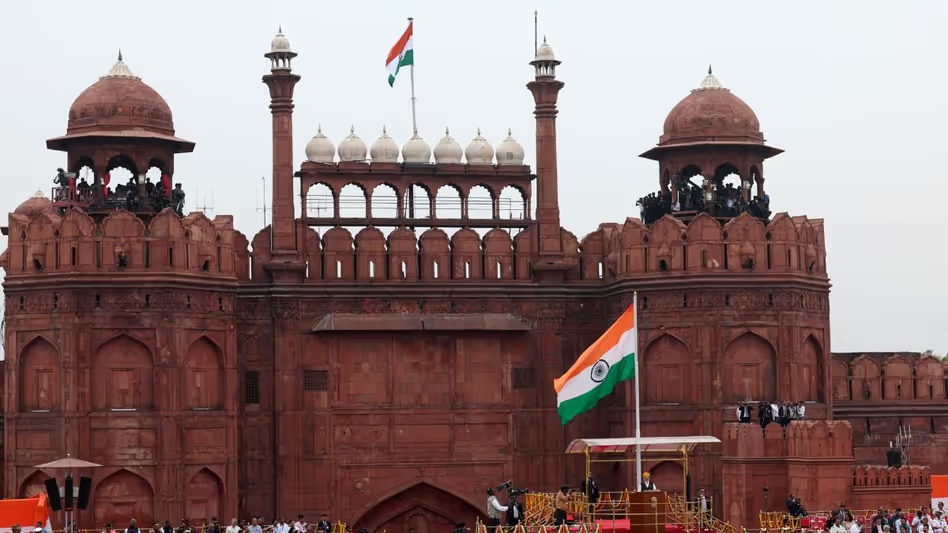
Four Assam Panchayat leaders to attend I-Day celebrations at Red Fort, marking a proud and historic milestone for grassroots governance in India. Discover their inspiring journey and significance of the event.
Four Assam Panchayat Leaders to Attend I-Day Celebrations at Red Fort – A Proud and Historic Moment
Four Assam Panchayat leaders to attend I-Day celebrations at Red Fort — this year’s Independence Day will hold a special significance for the rural governance system of Assam. The inclusion of four grassroots leaders from the state’s Panchayati Raj institutions in the national celebrations is not just a ceremonial honor, but a recognition of their hard work, dedication, and commitment to community service.
Their journey from remote villages of Assam to the historic Red Fort in New Delhi reflects the growing influence of rural leadership in shaping India’s democratic fabric. This participation will serve as an inspiration for countless other panchayat members across the country who work tirelessly at the grassroots level.
Why This Event is a Landmark for Assam’s Panchayat Leaders
The decision to invite Four Assam Panchayat leaders to attend I-Day celebrations at Red Fort marks a turning point in acknowledging the role of village-level governance in India’s progress. Panchayats, being the closest government bodies to the people, deal directly with issues like sanitation, drinking water, rural development, and women empowerment.
This recognition sends a strong message that their contribution to nation-building is valued at the highest level. It is also a way of encouraging young people to take active interest in grassroots politics, which is often overlooked compared to state or national-level leadership.
The Selection Process for the Assam Panchayat Leaders Representatives
Not every Panchayat member gets a chance to be part of such a historic celebration. The four leaders were chosen based on their exceptional work in governance, community welfare, and rural development. The criteria included:
- Implementation of Government Schemes – Efficiently utilizing funds under programs like MGNREGA, Swachh Bharat Mission, and PMAY.
- Community Impact – Bringing measurable changes in education, healthcare, and infrastructure.
- Transparency and Accountability – Maintaining open and honest governance practices.
- Innovative Solutions – Introducing unique methods to solve local issues.
Their achievements go beyond paperwork; they have transformed their villages into examples of development and civic responsibility.
A Closer Look at the Four Assam Panchayat Leaders
While the official list of names has been released by the state authorities, each of these leaders represents a unique story of dedication:
- Leader 1 – A woman sarpanch who transformed her village’s sanitation facilities, making it 100% open-defecation-free.
- Leader 2 – A young panchayat member who introduced digital record-keeping to make governance more transparent.
- Leader 3 – A social worker-turned-leader who championed women’s self-help groups and rural entrepreneurship.
- Leader 4 – A veteran community leader who led successful campaigns for clean drinking water in remote areas.
Each of these individuals embodies the spirit of “Sabka Saath, Sabka Vikas” by ensuring that no one in their community is left behind.
Historic Significance of Red Fort for Assam Panchayat Leaders
For any Indian citizen, stepping into the Red Fort grounds on Independence Day is a matter of great pride. For Panchayat leaders, it holds even deeper meaning — it is a bridge connecting rural India with the heart of the nation’s democracy.
The Red Fort has been the site of the Prime Minister’s annual address to the nation since 1947. Being part of this ceremony allows the Panchayat representatives to witness history in the making and strengthens their resolve to contribute to India’s growth.
Boost for Grassroots Democracy
The presence of Four Assam Panchayat leaders to attend I-Day celebrations at Red Fort reinforces the idea that democracy is strongest when it grows from the ground up. Grassroots democracy ensures that policies and development reach even the remotest corners of the country.
Such recognition also encourages better performance among Panchayat leaders. When they know that their efforts can earn them a place in national ceremonies, the motivation to serve their communities with dedication naturally increases.
Reactions from Assam’s Political and Social Circles
The announcement has been met with applause from across the state. Political leaders have praised the government’s move to honor rural governance, while citizens have expressed pride in seeing their representatives receive national attention.
Social activists have also highlighted that this recognition can help bring more funding and development to rural Assam, as it places Panchayat work in the national spotlight.
The Role of Assam Panchayat Leaders in India’s Development
Panchayats are the backbone of India’s rural administration. They handle local governance and development activities, acting as the bridge between the government and the people.
Key functions include:
- Managing local infrastructure like roads, water supply, and electricity.
- Implementing social welfare programs.
- Ensuring rural healthcare facilities are accessible.
- Promoting education, especially for girls.
- Encouraging sustainable agricultural practices.
By inviting Four Assam Panchayat leaders to attend I-Day celebrations at Red Fort, the government is indirectly recognizing the importance of these roles.
Impact on Rural Youth and Women Leadership
When rural youth and women see leaders from their own communities standing at the Red Fort during Independence Day, it sparks a belief that they too can achieve similar heights. This can lead to increased participation of women in local governance and encourage young people to work for their villages instead of migrating to cities.
Such representation is vital in breaking stereotypes about rural leadership being less influential compared to urban politics.
What This Means for Assam’s Future
The recognition of these four Panchayat leaders is not just an individual honor; it is a collective victory for Assam’s rural governance system. It can lead to:
- Better Funding – More government schemes being allocated to high-performing Panchayats.
- Increased Participation – More villagers willing to take up leadership roles.
- Stronger Policy Implementation – Learning from these leaders’ best practices and replicating them statewide.
Read More: Meghalaya Targets Doubling Coffee Production as Specialty Crop Gains Remarkable Momentum