


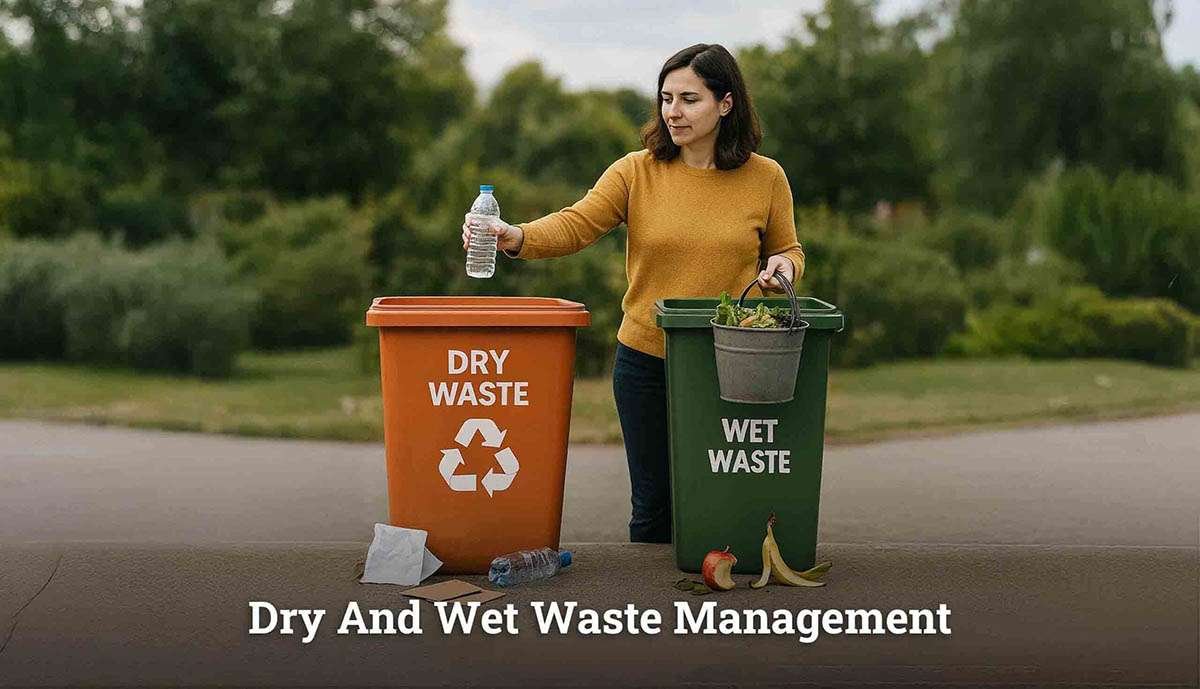
Municipal bodies have mandated Garbage Segregation through a two-tier system requiring separate handling of dry and wet waste across municipal wards. The measure aims to improve waste management at the local level, strengthen collection practices, and encourage households and institutions to separate waste before disposal.
The Garbage Segregation mandate introduces separate handling requirements for dry and wet waste across municipal wards. Municipal authorities are seeking to make waste separation a more consistent part of everyday collection and disposal practices.
Separating waste at the source can help sanitation systems handle different materials more efficiently. Moreover, proper segregation can make it easier to process recyclable materials while directing biodegradable waste toward suitable treatment methods.
The move places responsibility on municipal systems and waste generators to maintain separation during collection and handling.
However, the information provided does not identify the municipalities covered by the mandate, the implementation date, or the penalties, if any, for non-compliance.
Organic Pineapple Push: Nagaland Cooperatives Flag Off First International Export Consignment
Garbage Segregation Mandate Expands Ward-Level Waste Separation
The Garbage Segregation requirement calls for separate dry and wet waste streams across municipal wards.
Dry waste can include materials such as paper, packaging, plastics, and other recyclable or non-biodegradable items, while wet waste generally consists of biodegradable household and food waste. Furthermore, keeping the two streams separate can reduce contamination and improve the quality of materials available for recycling or composting.
Municipal collection systems can then direct each category toward appropriate processing or disposal facilities.
However, the available information does not specify the exact categories that municipal bodies will classify as dry or wet waste.
Therefore, residents should follow the detailed guidelines issued by their respective local authorities once implementation instructions become available.
Garbage Segregation Could Improve Municipal Waste Management
The Garbage Segregation mandate could improve the efficiency of municipal waste management by reducing the amount of mixed waste collected from individual wards.
When residents separate waste before collection, sanitation workers can handle different material streams more effectively. Moreover, cleaner recyclable materials may become easier to recover and process.
Wet waste can also receive separate treatment when municipalities have appropriate composting or organic-waste processing facilities.
However, segregation at the household level alone cannot guarantee effective waste management. Municipal bodies also need suitable collection vehicles, trained workers, transfer facilities, processing capacity, and disposal systems.
Consequently, the success of the mandate will depend on coordination between residents, sanitation workers, waste collectors, and municipal authorities.
The available information does not provide details about infrastructure upgrades accompanying the new requirement.
Garbage Segregation Focuses on Dry and Wet Waste
The Garbage Segregation system establishes two primary waste streams: dry and wet.
Separating these materials can help reduce the amount of recyclable material that becomes contaminated by food or other organic waste. Additionally, proper wet-waste separation can support composting or other biological treatment processes where suitable facilities exist.
The approach can also improve the visibility of waste-generation patterns within individual wards.
However, residents may need clear instructions to separate waste correctly and understand which materials belong in each category.
Municipal authorities may therefore need to conduct awareness campaigns and provide appropriate collection arrangements.
The information provided does not confirm whether municipalities will distribute separate bins or containers to households.
Garbage Segregation Requires Public Participation
The Garbage Segregation mandate will depend heavily on public participation.
Households, businesses, institutions, and other waste generators must separate waste consistently if municipal systems are to maintain distinct dry and wet streams. Furthermore, regular participation can help sanitation workers avoid mixing materials during collection.
Municipal bodies can support compliance through clear communication, accessible collection schedules, and convenient disposal arrangements.
However, the available information does not specify how authorities will monitor compliance or address repeated violations.
Similarly, it does not identify whether municipalities plan to introduce fines, warnings, incentives, or other enforcement mechanisms.
Therefore, the implementation framework remains an important detail for residents and waste-management workers.
Garbage Segregation Could Support Recycling and Organic Waste Processing
The Garbage Segregation initiative could strengthen recycling and organic waste management when municipalities have suitable downstream facilities.
Dry waste can potentially enter recycling and recovery systems after collection and sorting. Meanwhile, properly separated wet waste can support composting or other organic waste treatment methods.
Moreover, improved segregation can reduce the volume of mixed waste that ultimately requires disposal.
However, the actual benefits depend on what happens after collection. If separated waste becomes mixed during transportation or reaches facilities without adequate processing capacity, the value of source segregation can decline.
Consequently, municipalities will need to maintain separation throughout the collection, transportation, processing, and disposal chain.
The current information does not provide details about the processing facilities available in the affected municipal wards.
Conclusion
The Garbage Segregation mandate marks a move toward stronger separation of dry and wet waste across municipal wards. By requiring distinct waste streams, municipal bodies aim to improve collection practices and create better conditions for recycling and organic waste processing.
Moreover, effective segregation can reduce contamination and support more efficient waste management. However, the success of the measure will depend on consistent public participation, appropriate collection infrastructure, trained sanitation workers, and sufficient processing capacity.
Overall, the Garbage Segregation system can strengthen municipal waste management if authorities maintain separation throughout the entire waste chain. Further details about implementation dates, covered municipalities, monitoring procedures, and enforcement measures will determine how effectively the new requirement operates at the ward level.
FAQs
1. What is the new Garbage Segregation requirement?
The Garbage Segregation requirement mandates separate handling of dry and wet waste across municipal wards.
2. Why should residents separate dry and wet waste?
Separation can help municipalities recover recyclable materials, process biodegradable waste more effectively, and reduce contamination between different waste streams.
3. Who needs to follow the segregation system?
The requirement applies across municipal wards, although the available information does not specify the exact categories of households, businesses, and institutions covered.
4. Can segregation improve recycling?
Yes. Keeping dry waste separate can reduce contamination and make recyclable materials easier to recover and process.
5. Will municipalities provide separate bins?
The available information does not confirm whether municipal bodies will provide separate containers. Residents should follow local implementation instructions once authorities issue them.