


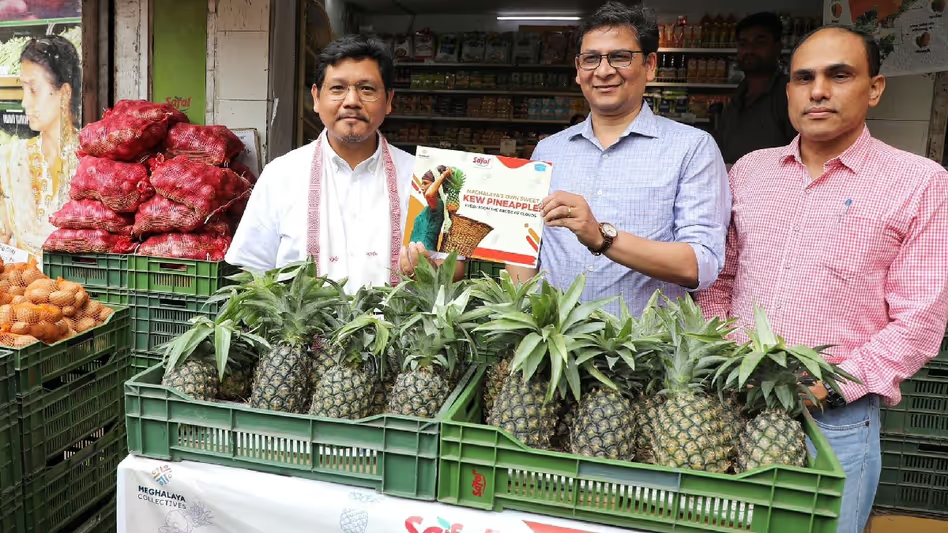
The Organic Pineapple Push gained momentum as farmer cooperatives in Nagaland flagged off their first international export consignment of organic pineapples. The development marks an important step for local growers seeking to connect Nagaland’s agricultural produce with overseas markets.
The export initiative highlights the potential of cooperative farming and value-added agricultural trade. Moreover, international market access can encourage farmers to improve production standards, strengthen post-harvest handling, and explore higher-value opportunities for regional crops.
The first consignment also creates greater visibility for Nagaland’s pineapple sector. However, the available information does not specify the export destination, shipment volume, exporter details, or financial value of the consignment.
Ginger Processing Plant: Ri Bhoi Farmers Inaugurate Co-Operatively Run Mechanized Facility
Organic Pineapple Push Opens International Market Opportunities
The Organic Pineapple Push represents a new opportunity for Nagaland’s pineapple growers to access international markets.
Exporting fresh agricultural produce requires careful coordination between farmers, cooperatives, logistics providers, quality-control agencies, and buyers. Furthermore, successful shipments can help producers understand international market requirements and improve future consignments.
The first export therefore provides an important starting point for expanding overseas trade.
However, the available information does not identify the destination country or international buyer involved in the shipment.
Therefore, the immediate market reach of the initiative remains unclear.
Organic Pineapple Push Strengthens Farmer Cooperatives
The Organic Pineapple Push also highlights the role of farmer cooperatives in organizing agricultural exports.
Cooperatives can bring growers together, improve production coordination, and help farmers access larger markets. Additionally, collective marketing can strengthen bargaining capacity and reduce some of the challenges individual small-scale producers face when entering distant markets.
The first international consignment demonstrates the potential of coordinated farmer participation.
However, the available information does not specify how many farmers belong to the participating cooperatives.
Consequently, the number of growers directly benefiting from the export remains unknown.
Organic Pineapple Push Highlights Nagaland’s Agricultural Potential
The Organic Pineapple Push draws attention to Nagaland’s potential as a producer of specialty agricultural products.
The state’s climate and farming traditions support the cultivation of various fruits and crops. Moreover, demand for organically produced and traceable food products can create opportunities for farmers who meet recognized quality and certification requirements.
International exports can increase visibility for these agricultural products.
However, the available information does not provide details about the certification standards applied to the exported pineapples.
Therefore, the specific organic certification framework behind the shipment requires further clarification.
Organic Pineapple Push Could Increase Farmer Incomes
The Organic Pineapple Push could create opportunities for better returns if international buyers provide competitive prices.
Export markets can sometimes offer additional value for products that meet specific quality, traceability, and certification requirements. Furthermore, stronger demand can encourage farmers to invest in improved cultivation and post-harvest practices.
However, export success does not automatically guarantee higher incomes.
Farmers also face costs related to production, packaging, transportation, storage, certification, and market compliance.
The available information does not provide the price received by growers or the expected income impact.
Organic Pineapple Push Requires Strong Post-Harvest Management
The Organic Pineapple Push will depend heavily on effective post-harvest handling.
Fresh pineapples require careful harvesting, grading, packaging, storage, and transportation to maintain quality during long-distance shipments. Additionally, exporters must coordinate logistics to ensure that produce reaches buyers within appropriate timeframes.
The first consignment provides an opportunity to test and strengthen these systems.
However, the available information does not specify the packaging technology, transportation method, or storage arrangements used for the shipment.
Consequently, the logistics framework behind the export remains unclear.
Organic Pineapple Push Expands Agricultural Trade
The Organic Pineapple Push could contribute to the diversification of Nagaland’s agricultural trade.
Expanding beyond local and domestic markets can create new opportunities for farmers and cooperatives. Moreover, successful exports can encourage buyers to consider other agricultural products from the region.
The pineapple shipment could therefore serve as a demonstration for future agricultural exports.
However, the available information does not indicate whether cooperatives plan additional international consignments.
Therefore, the long-term export strategy remains uncertain.
Organic Pineapple Push Encourages Better Farming Practices
The Organic Pineapple Push may encourage growers to strengthen production practices that meet international market expectations.
Export-oriented farming often requires attention to traceability, quality control, harvesting standards, and responsible production. Furthermore, meeting these requirements can improve consistency across batches and strengthen buyer confidence.
Such improvements could benefit farmers beyond the first shipment.
However, the available information does not specify whether participating growers received additional training for export-oriented production.
Consequently, the extent of capacity-building remains unclear.
Organic Pineapple Push Builds Nagaland’s Global Agricultural Identity
The Organic Pineapple Push can increase recognition of Nagaland as a source of distinctive agricultural products.
International shipments can help introduce regional produce to new consumers and buyers. Additionally, successful exports can support broader branding efforts around locally grown products and traditional farming communities.
This visibility can create opportunities for future agricultural partnerships.
However, sustained international recognition requires consistent quality and reliable supply.
The available information does not indicate how cooperatives plan to maintain export volumes over the long term.
Organic Pineapple Push Could Support Rural Economies
The Organic Pineapple Push can have wider effects on rural communities if international demand grows.
Higher agricultural activity can generate opportunities in cultivation, sorting, packaging, transportation, processing, and marketing. Moreover, cooperative-led exports can distribute economic opportunities across groups of farmers rather than benefiting only individual producers.
The first consignment therefore carries significance beyond the shipment itself.
However, the available information does not provide employment or income estimates linked to the export initiative.
Conclusion
The Organic Pineapple Push has marked an important milestone for Nagaland’s agricultural sector as farmer cooperatives flagged off their first international export consignment of organic pineapples. The shipment opens a pathway toward overseas markets while highlighting the potential of cooperative farming and specialty agricultural products.
Moreover, international trade can encourage better production standards, stronger post-harvest systems, and greater market visibility for local growers. However, the available information does not specify the destination, shipment volume, financial value, certification details, or future export plans.
Overall, the Organic Pineapple Push represents a promising step toward expanding Nagaland’s agricultural exports. Continued quality control, reliable logistics, certification, market development, and farmer support will remain important for turning the first shipment into a sustainable international trade opportunity.
FAQs
1. What is the Organic Pineapple Push?
The Organic Pineapple Push refers to Nagaland farmer cooperatives sending their first international export consignment of organic pineapples.
2. Why is the first export important?
It gives local farmers and cooperatives an opportunity to enter international markets and build experience with overseas agricultural trade.
3. Who organized the export?
Farmer cooperatives in Nagaland organized the first international pineapple export consignment.
4. Can international exports benefit farmers?
Exports can create new markets and potentially improve returns, although actual benefits depend on prices, production costs, certification, logistics, and market demand.
5. What will determine future pineapple exports?
Consistent quality, reliable supply, organic certification, efficient logistics, competitive pricing, and stable international demand will influence future export opportunities.