


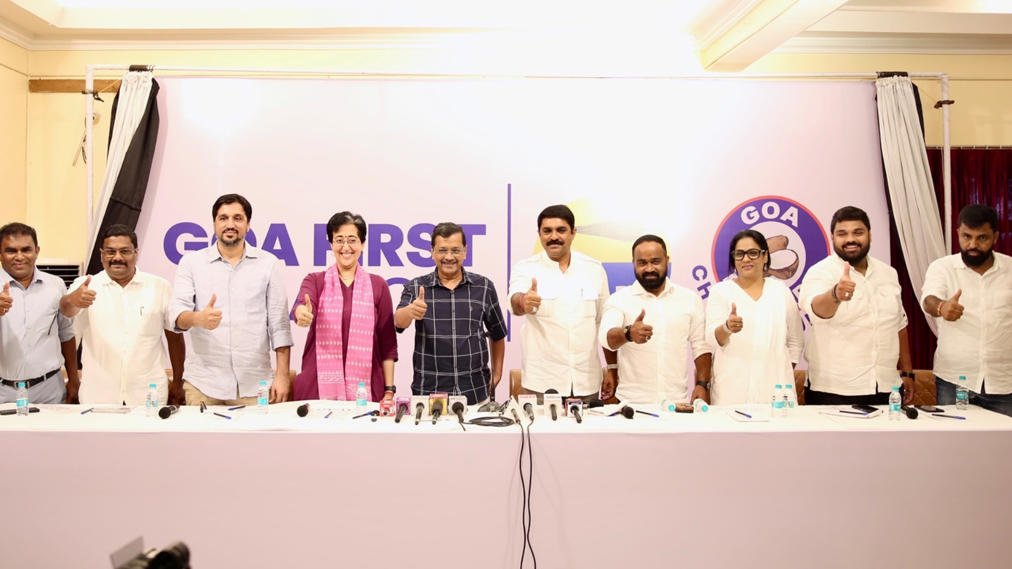
Goa’s opposition politics is facing fresh uncertainty as differences emerge within the anti-BJP camp. An ally of the Aam Aadmi Party has renewed the call for a broader opposition alliance in the state.
The proposal comes amid concerns that multiple opposition parties could divide votes if they contest separately. Supporters of a wider alliance argue that greater coordination could help opposition parties present a common political front.
AAP Ally Pushes for Wider Unity
The AAP ally has made a case for bringing opposition parties together under a broader platform. The proposal includes parties that have traditionally competed against one another in Goa.
The argument centres on the need to avoid a fragmented opposition. Supporters of the idea believe a common strategy could help parties coordinate candidates, campaigns and organisational resources.
However, building such an alliance remains difficult. Different parties have their own political interests and voter bases in the state.
Anti-BJP Camp Faces Internal Differences
Goa has seen several attempts to bring opposition parties together during elections. These efforts have often faced disagreements over seat-sharing and leadership.
The latest push for unity has again brought those challenges into focus. Parties must decide whether cooperation can serve their individual interests while creating a broader electoral platform.
The AAP has established itself as one of the opposition forces in Goa. The Congress also remains a major player in the state’s opposition politics.
Other smaller parties and regional groups could also influence the shape of any future alliance.
Seat Sharing Could Become Key Challenge
Seat sharing is likely to remain one of the biggest challenges for opposition unity. Each party will want to contest constituencies where it has an established organisation or support base.
A common alliance would require parties to make compromises. They would also need to agree on campaign priorities and a mechanism for resolving disputes.
Without such arrangements, an alliance could struggle to function effectively during an election campaign.
Goa’s Political Landscape
Goa has a relatively small Assembly and a competitive political environment. Electoral contests often involve several parties and candidates.
This makes coordination particularly important for parties seeking to challenge the ruling BJP. At the same time, local political equations can change quickly.
Issues such as development, employment, tourism, infrastructure and governance often influence voter debates.
The opposition’s unity discussions will therefore need to address both state-level issues and broader political differences.
Calls for a Common Platform
The latest proposal for opposition unity reflects a wider debate within Goa’s political circles. Supporters want parties to focus on common objectives instead of competing against one another.
A broader alliance could involve joint campaigning and a coordinated approach to constituency-level contests. It could also allow smaller parties to play a role in a larger opposition structure.
However, the parties have not yet reached any final agreement on such an arrangement.
What Lies Ahead for Goa Opposition
The coming months could determine whether Goa’s opposition parties can translate calls for unity into a formal political arrangement.
The AAP ally’s proposal has opened a fresh conversation about cooperation. The next challenge will be to bring different parties to the negotiating table.
Any alliance will ultimately depend on agreement over candidates, constituencies and campaign strategy. Until then, Goa’s anti-BJP camp remains divided over how best to approach the state’s next political contest.