


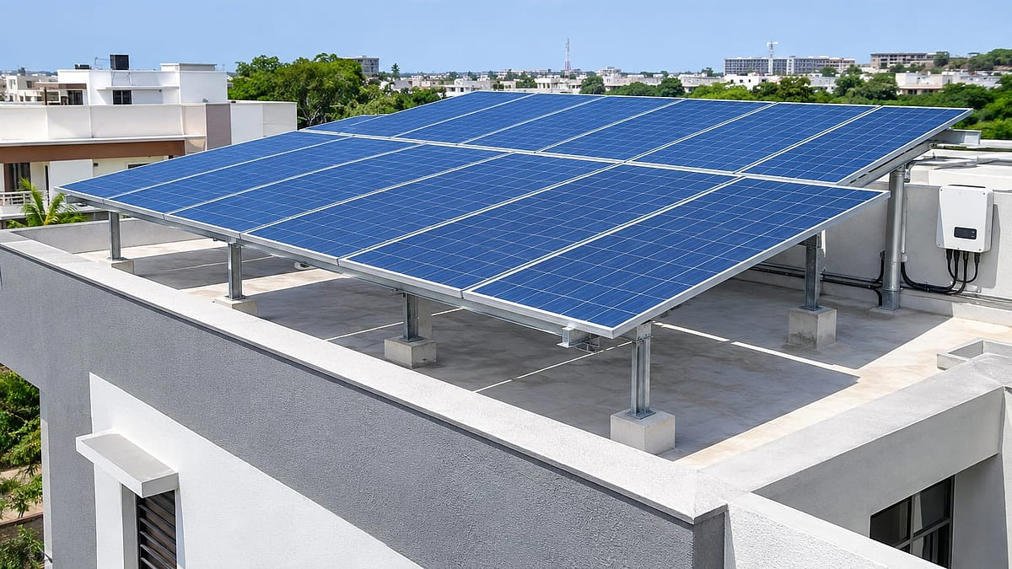
Gujarat is strengthening its renewable energy infrastructure by installing solar power systems across government buildings, with 95 MW of solar capacity already commissioned and another 65 MW planned in the next phase.
The initiative is part of the state’s wider efforts to increase the use of clean energy, reduce dependence on conventional power sources and lower electricity expenditure in government establishments.
The solar installations cover various public buildings and government facilities, helping expand the use of renewable energy at the institutional level.
95 MW Solar Capacity Already Installed
According to the state government’s latest figures, government buildings across Gujarat currently have around 95 MW of installed solar capacity.
The installations include rooftop solar systems and other solar projects designed to generate electricity for government offices and public facilities.
The move allows government institutions to produce a portion of their electricity requirements through renewable sources. It can also help reduce electricity costs over the longer term, depending on the size and efficiency of individual installations.
The government has been encouraging greater adoption of solar power as part of Gujarat’s broader renewable energy strategy.
Another 65 MW Planned
The state has set its sights on adding another 65 MW of solar capacity at government buildings.
The proposed expansion will further increase the share of renewable energy being used by public institutions and could reduce their reliance on electricity supplied from conventional sources.
The additional installations are expected to be developed in phases, with government departments and agencies identifying suitable buildings and locations for solar systems.
The expansion also reflects the growing focus on rooftop solar as a practical way to generate clean electricity close to the point of consumption.
Reducing Electricity Costs
One of the key advantages of installing solar systems on government buildings is the potential reduction in electricity expenditure.
Public buildings typically consume significant amounts of electricity for lighting, air-conditioning, computers, equipment and other operations. Generating part of this electricity through solar energy can help lower the amount of power purchased from the grid.
Over time, savings from solar generation can help offset the initial investment required for installing the systems.
The initiative therefore combines environmental objectives with efforts to improve energy efficiency in government operations.
Supporting Gujarat’s Renewable Energy Goals
Gujarat has emerged as one of India’s major renewable energy hubs, with significant investments in solar and wind power.
The state has promoted large-scale renewable energy projects as well as decentralised solar generation. Government buildings provide an additional opportunity to expand solar capacity because many public facilities have suitable rooftop spaces.
The expansion of solar power in government establishments also demonstrates the state’s efforts to increase renewable energy consumption beyond large power-generation projects.
Solar Power Gains Importance in Public Infrastructure
The use of solar energy in government buildings can also contribute to reducing carbon emissions.
Replacing a portion of conventional electricity consumption with renewable generation can lower the environmental impact associated with public infrastructure.
Government offices, schools, hospitals and other public institutions can potentially benefit from rooftop solar installations, particularly where electricity consumption is high during daylight hours.
The approach can also encourage wider awareness of renewable energy among citizens and other institutions.
Focus on Clean Energy Transition
The planned addition of 65 MW will take Gujarat’s government-building solar capacity significantly beyond its current 95 MW level.
The initiative is part of a broader transition towards cleaner sources of electricity and more efficient energy consumption. By expanding solar generation on public buildings, the state can simultaneously address energy costs, renewable energy adoption and environmental concerns.
The programme also demonstrates how existing infrastructure can be used to increase renewable energy generation without requiring large amounts of additional land.
Gujarat’s Solar Push Continues
With 95 MW already installed and another 65 MW targeted, Gujarat is continuing to expand the role of solar energy across its government infrastructure.
The initiative is expected to provide public institutions with greater access to clean electricity while potentially reducing their long-term power costs.
As the next phase of installations progresses, the state’s government buildings could become an increasingly important component of Gujarat’s wider renewable energy landscape.