

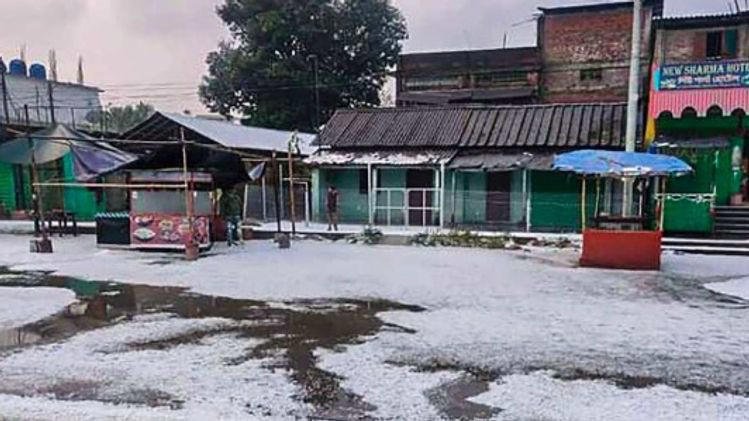
A sudden and intense hailstorm struck Banderdewa in Arunachal Pradesh, causing widespread damage to property, crops, and infrastructure. The unexpected weather event disrupted normal life in the region, leaving residents grappling with its aftermath. Meanwhile, the India Meteorological Department (IMD) has issued a warning of continued thunderstorms and adverse weather conditions across parts of Northeast India until March 29.
The hailstorm, which occurred during the late afternoon hours, brought heavy rain, strong winds, and large hailstones. As a result, several homes, vehicles, and agricultural fields suffered significant damage in Banderdewa.
Read More: Kuki CSOs Welcome Bunker Demolition in Ukhrul, Warn of Threat
Hailstorm Causes Widespread Damage
The sudden hailstorm caught residents off guard, leading to extensive damage in the area. Roofs of houses were damaged due to the impact of hailstones, while trees were uprooted in several locations.
In addition, parked vehicles sustained dents and broken windshields. Power lines were also affected, resulting in temporary disruptions in electricity supply.
Local authorities have started assessing the damage, and initial reports suggest that agricultural losses could be significant. Farmers in the region have expressed concern over the destruction of crops, which may impact their livelihoods.
IMD Issues Thunderstorm Warning
Following the hailstorm, the IMD has issued a weather advisory warning of thunderstorms, lightning, and gusty winds in several parts of the Northeast.
According to the India Meteorological Department, the current weather pattern indicates continued instability in the atmosphere. Therefore, similar events may occur in the coming days.
The advisory remains in effect until March 29, and residents have been urged to stay alert and take necessary precautions.
Weather Pattern Behind the Storm
Meteorologists have attributed the hailstorm to a combination of moisture-laden winds and local atmospheric instability. These conditions often lead to the formation of severe thunderstorms and hail events.
During this time of the year, transitional weather patterns can trigger sudden changes in temperature and wind direction. As a result, regions like Arunachal Pradesh become vulnerable to such extreme weather events.
Experts have noted that climate variability may also play a role in increasing the frequency and intensity of such incidents.
Impact on Daily Life
The hailstorm has significantly disrupted daily life in Banderdewa and nearby areas. Many residents faced difficulties due to damaged homes and power outages.
Transportation was also affected, as fallen trees and debris blocked roads in certain areas. Authorities worked to clear the roads and restore normal movement.
Schools and local businesses experienced temporary disruptions as people focused on managing the immediate impact of the storm.
Administration Begins Relief and Assessment
Local administration officials have begun assessing the extent of damage and coordinating relief efforts. Teams have been deployed to affected areas to evaluate losses and provide assistance.
Authorities have assured residents that necessary support will be extended to those affected. This includes compensation for damaged property and assistance for farmers who have suffered crop losses.
Emergency services remain on standby to respond to any further incidents caused by adverse weather.
Precautionary Measures Advised
In light of the IMD warning, authorities have issued guidelines for residents to stay safe. People have been advised to remain indoors during thunderstorms and avoid open areas.
Farmers have been urged to take precautions to protect their crops and livestock. Additionally, residents have been asked to secure loose objects that could be carried away by strong winds.
Electrical safety measures have also been emphasized, as lightning poses a significant risk during such weather conditions.
Northeast Braces for Continued Weather Activity
The weather warning extends beyond Arunachal Pradesh, with several northeastern states expected to experience similar conditions. This has prompted authorities across the region to remain on high alert.
Disaster management teams are closely monitoring the situation and coordinating with local agencies. Early warning systems are being used to inform residents about potential risks.
The focus remains on minimizing damage and ensuring public safety during this period of unstable weather.
Conclusion
The hailstorm in Banderdewa has highlighted the vulnerability of the region to sudden and severe weather events. With the IMD warning of continued thunderstorms until March 29, residents must remain cautious and prepared.
While authorities are taking steps to manage the situation and provide relief, the incident underscores the importance of preparedness and timely response. As weather patterns continue to evolve, proactive measures will be essential in reducing the impact of such natural events in the future.
Read More: Delhi Assembly receives bomb threat ahead of CM Rekha Gupta’s budget