

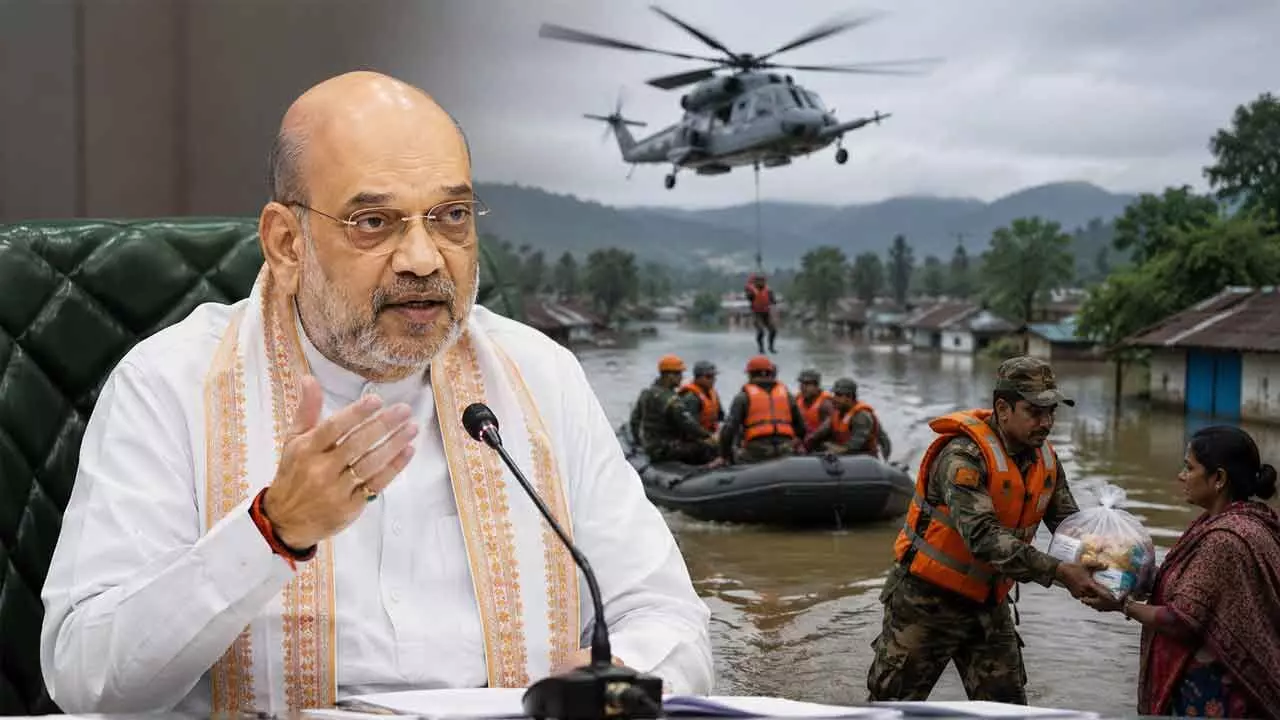
Union Home Minister Amit Shah held telephonic consultations with state authorities on June 30 to review the evolving flood situation and assure comprehensive logistical support from the National Disaster Response Force (NDRF). The high-level intervention comes amid worsening monsoon conditions affecting several parts of Northeast India. Moreover, the Home Minister emphasized the Centre’s commitment to ensuring rapid deployment of rescue personnel, relief materials, and emergency resources to support affected populations. The review underscores the importance of coordinated disaster response during large-scale flooding emergencies.
NH-2 Economic Blockade Disrupts Freight Movement
Union Home Minister Conducts Emergency Flood Review
Home Ministry coordinates relief efforts following extensive discussions between Union Home Minister Amit Shah and state administrations dealing with severe flood conditions. Consequently, central agencies have been directed to maintain close coordination with local authorities.
During the telephonic review, officials reportedly briefed the Home Minister on the extent of flooding, ongoing rescue operations, and immediate relief requirements. Moreover, discussions focused on ensuring uninterrupted support for affected districts. Therefore, emergency response mechanisms have been strengthened.
Officials emphasized that continuous communication between the Centre and states remains critical during disaster situations. Furthermore, rapid information sharing helps improve the efficiency of relief operations. As a result, authorities have intensified monitoring and coordination efforts.
Meanwhile, disaster management agencies continue to assess developments on the ground. Consequently, response strategies are being adjusted based on evolving conditions.
Full NDRF Logistical Support Assured
Home Ministry coordinates relief operations with the assurance of comprehensive logistical support from the National Disaster Response Force. Moreover, NDRF teams remain among the primary agencies responsible for rescue and emergency response operations during major natural disasters. Therefore, their deployment has been prioritized.
The Centre has assured support in areas including rescue equipment, emergency personnel, transportation, and relief logistics. Consequently, affected states are expected to receive additional operational assistance where required. Such support is essential during widespread flood emergencies.
Furthermore, NDRF units have been instructed to maintain operational readiness for immediate deployment. As a result, emergency response capacity has been reinforced.
Meanwhile, coordination between the NDRF, state disaster response forces, and local administrations continues. Similarly, emergency communication systems remain active.
Focus on Rescue, Relief, and Public Safety
The Home Ministry coordinates relief efforts with a strong emphasis on protecting lives and supporting displaced populations. Moreover, severe flooding has affected vulnerable communities across multiple regions. Therefore, rescue and relief operations remain the highest priority.
Officials stated that relief camps, food supplies, medical assistance, and evacuation arrangements are being closely monitored. Consequently, authorities aim to ensure uninterrupted support to affected residents. Such measures are crucial during humanitarian emergencies.
Furthermore, emergency agencies continue to monitor river levels, weather conditions, and infrastructure impacts. As a result, authorities remain prepared for additional contingencies.
Meanwhile, healthcare and sanitation services are being strengthened in relief camps. Similarly, efforts to prevent secondary health emergencies are ongoing.
Centre and States Strengthen Disaster Response Coordination
The current flood emergency has highlighted the importance of effective coordination between central and state governments. Moreover, large-scale disasters require integrated response mechanisms. Therefore, continuous collaboration remains essential.
Officials emphasized that coordinated disaster management enables faster deployment of resources and more efficient relief operations. Consequently, communication channels between ministries and state administrations have been reinforced. Such cooperation helps minimize delays during emergencies.
Furthermore, central agencies continue to evaluate additional assistance requirements. As a result, support measures may be expanded if flood conditions worsen.
Meanwhile, monitoring centers remain operational around the clock. Similarly, disaster preparedness mechanisms continue to be reviewed and strengthened.
Conclusion
The telephonic review conducted by Union Home Minister Amit Shah on June 30 underscores the Centre’s commitment to supporting flood-affected states through coordinated relief and rescue operations. Moreover, the assurance of full logistical support from the National Disaster Response Force strengthens ongoing emergency response efforts.
The development highlights the critical importance of cooperation between central and state authorities during natural disasters. Therefore, continued coordination remains essential to safeguarding lives and minimizing damage.
As flood conditions continue to evolve across parts of Northeast India, authorities remain focused on ensuring timely assistance, effective disaster management, and comprehensive relief support.
FAQs
1. Who conducted the flood review discussions?
Union Home Minister Amit Shah conducted the telephonic review.
2. When did the consultations take place?
The discussions were held on June 30.
3. Which agency’s support was assured?
The National Disaster Response Force (NDRF).
4. What type of support was promised?
Rescue personnel, logistics, equipment, and emergency assistance.
5. What was the purpose of the review?
To coordinate relief operations and strengthen disaster response efforts.