


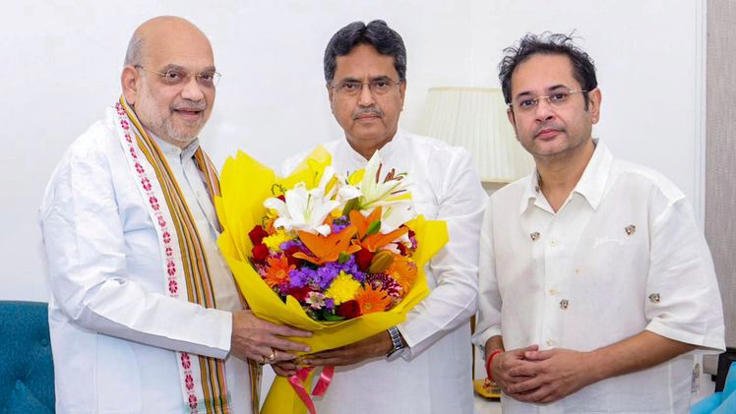
Tripura royal scion and Tipra Motha chief Pradyot Kishore Manikya Debbarma has urged the Centre to take concrete steps to implement the Tiprasa Accord, questioning how he could return to the people without delivering on the commitments made to them.
His remarks have renewed attention on the agreement reached between the Centre, the Tripura government and the Tipra Motha-led Indigenous Progressive Regional Alliance (TIPRA) over the long-standing demands of the state’s indigenous communities.
Debbarma has repeatedly maintained that the accord must translate into tangible measures for the people of Tripura. His latest appeal comes amid growing expectations among indigenous groups for progress on the commitments made under the agreement.
‘How Can I Go to the People Again?’
Addressing the issue, Debbarma raised an emotional question about his ability to face the people if the promises contained in the Tiprasa Accord remain unfulfilled.
“How can I go to the people again?” he asked, highlighting the political pressure surrounding the implementation of the agreement.
For Debbarma, the issue is not merely about an administrative decision but about the credibility of the political process through which the accord was reached. He has argued that the indigenous population has placed its trust in the commitments made by the Centre and expects those commitments to be honoured.
The Tipra Motha chief has therefore called upon the central government to move beyond discussions and ensure that the accord is implemented on the ground.
What Is the Tiprasa Accord?
The Tiprasa Accord was signed in March 2024 between the Centre, the Tripura government and TIPRA. The agreement was aimed at addressing various issues concerning the indigenous population of Tripura.
The accord focuses on finding an honourable and constitutional solution to issues related to the political, cultural, social and economic interests of the state’s indigenous communities.
The agreement was seen as a significant development because Tipra Motha had built much of its political campaign around protecting indigenous identity and rights.
However, questions over the pace and extent of implementation have continued to remain a major concern for the party and its supporters.
Indigenous Rights at the Centre of the Demand
The demand for implementation is closely linked to concerns over the protection of Tripura’s indigenous identity. Debbarma has consistently raised issues involving land, political representation, cultural identity and the socio-economic development of indigenous communities.
Tripura’s demographic and political landscape has changed considerably over the decades, making questions surrounding indigenous rights particularly sensitive.
Tipra Motha has argued that the interests of indigenous people require specific constitutional and administrative safeguards. The party’s demand for implementation of the accord is therefore being presented as part of a larger effort to secure these safeguards.
Pressure on the Centre Grows
Debbarma’s latest statement also reflects the increasing political pressure on the Centre to clarify its position on the implementation process.
While the signing of the agreement created expectations among indigenous communities, delays in translating its provisions into concrete action have generated frustration.
For Tipra Motha, implementation has become an important test of the government’s commitment to the agreement. The party has maintained that the concerns raised by indigenous communities cannot be addressed merely through political assurances.
Debbarma’s appeal consequently seeks a clearer roadmap and visible action from the Centre.
Tipra Motha’s Role in Tripura Politics
Tipra Motha has emerged as an influential political force in Tripura by focusing heavily on indigenous issues. The party’s rise has changed the state’s political dynamics and made tribal concerns a central part of political discussions.
The party’s participation in the state government has also created a different political equation, while questions surrounding the Tiprasa Accord remain important to its support base.
Debbarma has continued to position the accord as a commitment to the people rather than simply a political arrangement between parties.
Implementation Remains the Key Challenge
The central question now is how quickly and effectively the commitments under the Tiprasa Accord can be implemented.
For Debbarma, delivering on the agreement is essential to maintaining the confidence of indigenous communities. His statement reflects the difficulty of returning to voters with promises when people are waiting for visible results.
As pressure mounts, the Centre’s next steps could have significant political implications in Tripura. For the indigenous population and Tipra Motha, the focus remains firmly on implementation rather than further assurances.
The demand from Debbarma is therefore straightforward: the Tiprasa Accord must move from paper to action, providing a concrete response to the long-standing concerns of Tripura’s indigenous people.